


Every Martin Scorsese and Robert De Niro movie ranked from worst to best

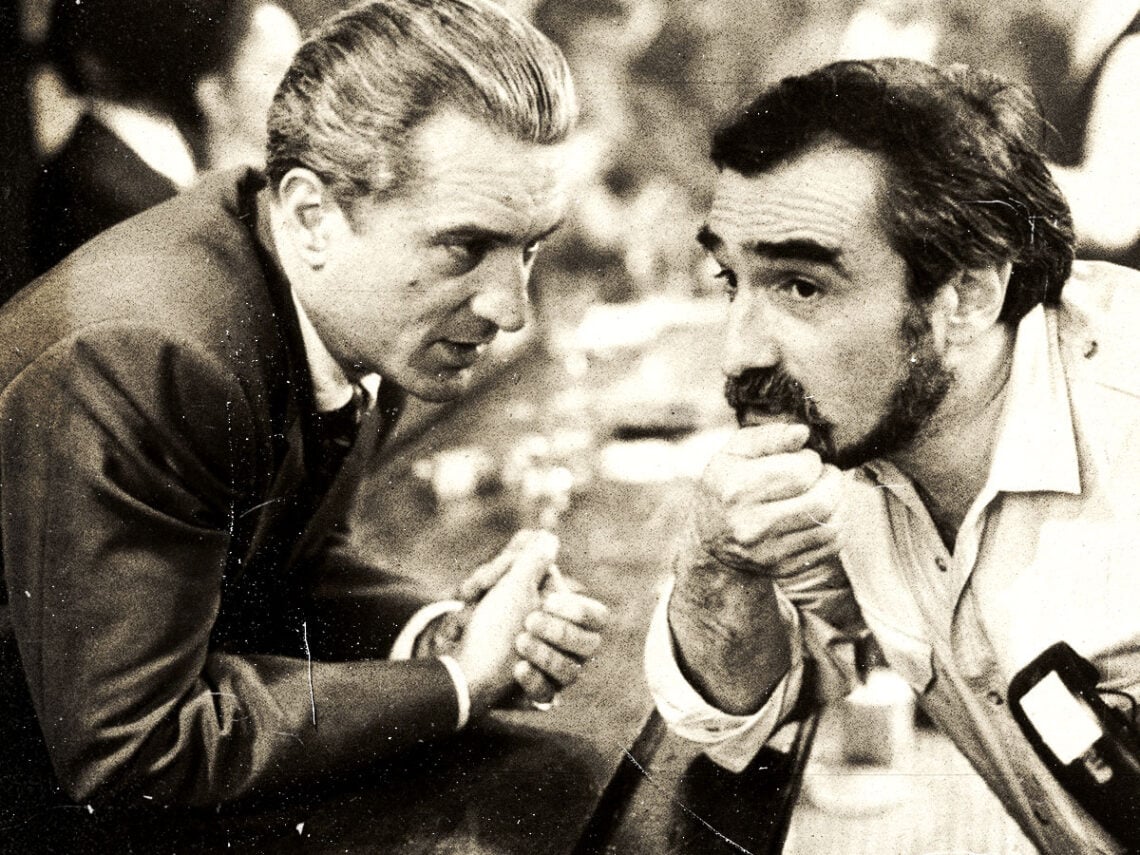
A powerhouse duo in American film, acclaimed director Martin Scorsese and award-winning actor Robert De Niro have worked together to create some of the most outstanding movies. Under Scorsese’s direction, De Niro has turned out some of his most notable performances in truly spectacular narratives.
Scorsese’s films often explore themes such as money, violence, masculinity and choices, all carried out through a gritty yet beautiful style of filmmaking. De Niro’s characters, within those frameworks, are essential vehicles of progression in the films’ stories.
“I’ve come to know De Niro fairly well down the years,” Scorsese once said. “He’s a very compassionate man. He’s basically a very good man and you can see that in him. So he can take on characters that are pretty disturbing and make them human because of that compassion. It’s taken me years to figure it out. He has an ability to make audiences feel empathy for very difficult characters because there is something very decent in him”.
The director later added: “He comes from the same area that I did and somehow through Mean Streets and Taxi Driver, we found that we were drawn to the same subject matter, same psychological, emotional conflicts in people, in character and in ourselves”.
Their collaborations have come in different genres – crime, psychological or drama – and span nearly five decades. Some of these titles are studied and loved years after release, while others are more underrated gems.
Check out the list below.
Ranking Martin Scorsese and Robert De Niro movie:
New York, New York (1977)

The third film Scorsese and De Niro worked on is a musical love story between a big-headed sax player and a young singer with a dream. The film explores the conflicting balance between careers and relationships, as the former rises for the two, the latter falls.
This rocky romance offers a realistic look at toxic love, with De Niro’s performance as Jimmy revealing a fair share of unideal traits that complicate things for the woman he loves. Scorsese was aiming for a love letter to the jazzy musicals of the golden age, yet there’s a general consensus that the film could have been a bit more coherent.
The Audition (2015)

The first Scorsese and De Niro collaboration of the 2010s has the shortest run time of just 15 minutes. However, there is a lot to offer in this short amount of time, as the story holds some satire on the entertainment industry. De Niro stars alongside heartthrob Leonardo DiCaprio, the two playing caricatures of themselves in a competition to star in an upcoming movie directed by one of the most famous directors.
The dialogue is entertaining for De Niro and DiCaprio buffs because both stars spend their screen time poking fun at the other’s expense, giving the script a feel of Curb Your Enthusiasm. The film also had the more sinister intention of promoting a casino in China.
Cape Fear (1991)

Scorsese reinvented J Lee Thompson’s American noir thriller, released in 1962, by reimagining it through his unique definitions of cinema. A convicted offender seeks revenge for his 14-year imprisonment, something he misbelieves happened to him due to some disingenuous tactics.
De Niro gives a sinister and terrifying performance in this picture; he completely throws himself into the rage and venom of the character. The story is an anxiety-inducing pressure cooker that will make every hair stand up. This film is the result of Scorsese taking some inspiration from the standard Hitchcock thrillers, but with just a little more edge.
Mean Streets (1973)

This seminal crime film is the one that started it all. Mean Streets focuses on an Italian-American hood called Charlie (Harvey Keitel), who negotiates between his relationships and the opportunity to make a name for himself in the mob. De Niro steals some of the show in the supporting role of his complex companion Johnny Boy, a reckless and self-destructive time bomb.
Even though Johnny Boy is not the film’s main character, it’s impossible not to pay full attention to him whenever he’s onscreen. His performance earned him a ‘Best Supporting Actor’ award from the New York Film Critics Circle. Alongside this magnetic performance, Scorsese shows some of his best character and story direction in this film. He incorporates both setting and soundtrack to work alongside the performances to elevate every unspoken thought or goal the characters have.
The King of Comedy (1982)

This 1980s flick provides a break in tone due to its black comedy tone. De Niro plays an aspiring stand-up comedian who convinces himself that stalking his idol, a talk show host played by Jerry Lewis, is the way to success and fame.
In what was his fifth collaboration with his beloved Marty, De Niro plays the deranged, sympathetic psychopath, Pupkin, who wants nothing more than recognition from his idol. The film is a macabre satire on the hero-worship of celebrities and the effects of media culture, which includes the perverted and voyeuristic ambition of aspiring stars motivated by the success stories of their idols.
Scorsese’s direction provides a satirical take on American culture’s obsession with media and celebrity worship. De Niro represents an unsettling yet painfully realistic delusion that drives the struggling artist to extreme lengths as he slowly becomes a stalker. However, Todd Phillips soon placed him on the other end of this dynamic.
Killers of the Flower Moon (2023)

Many of Scorsese’s great epics were confined to the 20th century, with the director instead preferring more bright, bold and loud movies in the new millennium. However, Killers of the Flower Moon was a throwback to the Scorsese that the world of cinema fell in love with, telling the story of the Osage tribe who were savagely murdered all in the name of the oil their land happened to be on top of.
The story is set in the 1920s and centres around a series of killings of wealthy Osage Native Americans in Oklahoma. These murders occurred after oil was discovered on their land, leading to an influx of wealth for the Osage people. As members of the community began to die under mysterious circumstances, the case garnered national attention and led to one of the FBI’s first major homicide investigations.
Starring De Niro in his tenth collaboration with Scorsese, alongside Leonardo DiCaprio, Jesse Plemons and Lily Gladstone, Killers of the Flower Moon is a delicious piece of visual cinema that is utterly captivating from start to finish in spite of its broad runtime. An essential piece of cinema that chronicles the rising capitalist growth of the United States, this is Scorsese at his very best.
The Irishman (2019)

This epic crime drama film is the most recent Scorsese-De Niro collaboration, featuring a powerhouse cast alongside De Niro as Al Pacino and Joe Pesci join him onscreen. De Niro takes the role of a truck driver turned hitman after getting mixed up with a mobster.
The film gained attention and praise for its quality storytelling and performances, as well as the digital technique of de-ageing its main cast. It taps into that nostalgia that lifelong Scorsese and De Niro fans hold. With a budget of $250 million and a hefty runtime of 209 minutes, this collaboration between the two is the lengthiest and most expensive contribution to Scorsese’s filmography.
The Irishman is a contemplative and introspective take on the mob genre, focusing on the consequences of a life steeped in violence and crime. Scorsese’s direction meticulously crafts a narrative that examines the moral dilemmas faced by Sheeran as he navigates his loyalty to both Hoffa and the Bufalino family.
Casino (1995)

This film takes place in the early 1970s in Las Vegas. A low-ranking mobster – played by De Niro – starts a new job at a casino and, despite his initial success, faces a few problems with enforcers, con artists and women.
Scorsese’s direction in Casino is marked by his trademark style: dynamic camerawork, vivid storytelling, and an expertly crafted narrative that immerses viewers into the glitz and seedy underbelly of Las Vegas. The film’s pacing is intense, capturing both the thrill of the casino world and the darker, violent aspects of organised crime.
Scorsese’s direction emphasises the vivid vision, with colourful suits and excessive artificial lighting decking the casino from top to bottom. De Niro is consistent in his performance, carrying out alongside the wildly entertaining story that has a little history hidden within it.
Goodfellas (1990)

This entry is another biographical film which explores the world of crime instead of sports. A half-Irish and half-Italian youngster, Henry (played by Ray Liotta) finds himself caught up in the materialistic and dangerous world of American gangsters; the last thing he wants is to be pulled away. With De Niro’s Jimmy taking him under his wing, Henry learns the role of a gangster dangerously well and fast.
Goodfellas presents a raw and unflinching portrayal of the criminal underworld, depicting the allure of power and wealth juxtaposed with the brutality and moral decay inherent in organised crime. Scorsese’s direction is marked by its kinetic energy, utilising frenetic camera work, a pulsating soundtrack, and a non-linear narrative to immerse viewers into the world of the mob.
Scorsese’s movie, often cited as the greatest gangster film ever made, builds up and up from a luxurious paradise into one of emotional turmoil. De Niro’s performance as Jimmy is one of the film’s hooks, with every emotion and plan to hide dead bodies delivered perfectly.
Taxi Driver (1976)

You talkin’ to me?
This gritty and heavy thriller features De Niro in his most iconic role as a veteran who slowly loses his sense of reality in a morally decaying city. He barely attempts to suppress his taste for destruction and takes it upon himself to rescue an abused child, played brilliantly by a young Jodie Foster.
Scorsese’s direction in Taxi Driver is marked by its dark and atmospheric portrayal of the city he called home, capturing the grit and grime of the urban landscape. The film’s narrative unfolds as a psychological character study, delving into Travis’ disturbed psyche and the mounting tension that leads to a shocking and explosive climax.
Scorsese directs and shows the hidden urge for familiar violence that war creates, all while building a story world where no corner feels genuinely safe. De Niro plays Travis, the taxi driver, with a magnetic yet chaotic pull. His complete immersion in the psychological breakdown is unarguably authentic and earned him an Oscar nomination. This masterpiece is the definitive addition to both their illustrious legacies.
Raging Bull (1980)

Scorsese takes a more biographical route with the now-iconic sports drama Raging Bull. De Niro comes under his direction as Jake LaMotta, an unstoppable force in the form of a boxer. He may be a champion in the ring, but he is far from one at home.
Scorsese’s direction is notable for its black-and-white cinematography, which contributes to the film’s raw and gritty atmosphere. The use of dynamic camera work during the boxing sequences immerses the audience in the intensity and brutality of the sport, while the film’s slow-motion shots and evocative editing create a visceral experience.
It’s a powerful, heartbreaking film that explores the Madonna-Whore complex alongside good sportsmanship, all elevated by another brilliant performance by De Niro.
“I made it as if this was the end of my life,” Scorsese once said. “Over. Suicide film. I didn’t care if I made another movie … In a way, it wiped me out. I had to start all over and learn again. Every day on the shoot, ‘This is the last one, and we’re going for it.’”
And boy does it show.
