


Exploring the lyrical power of “fuck” in music and poetry

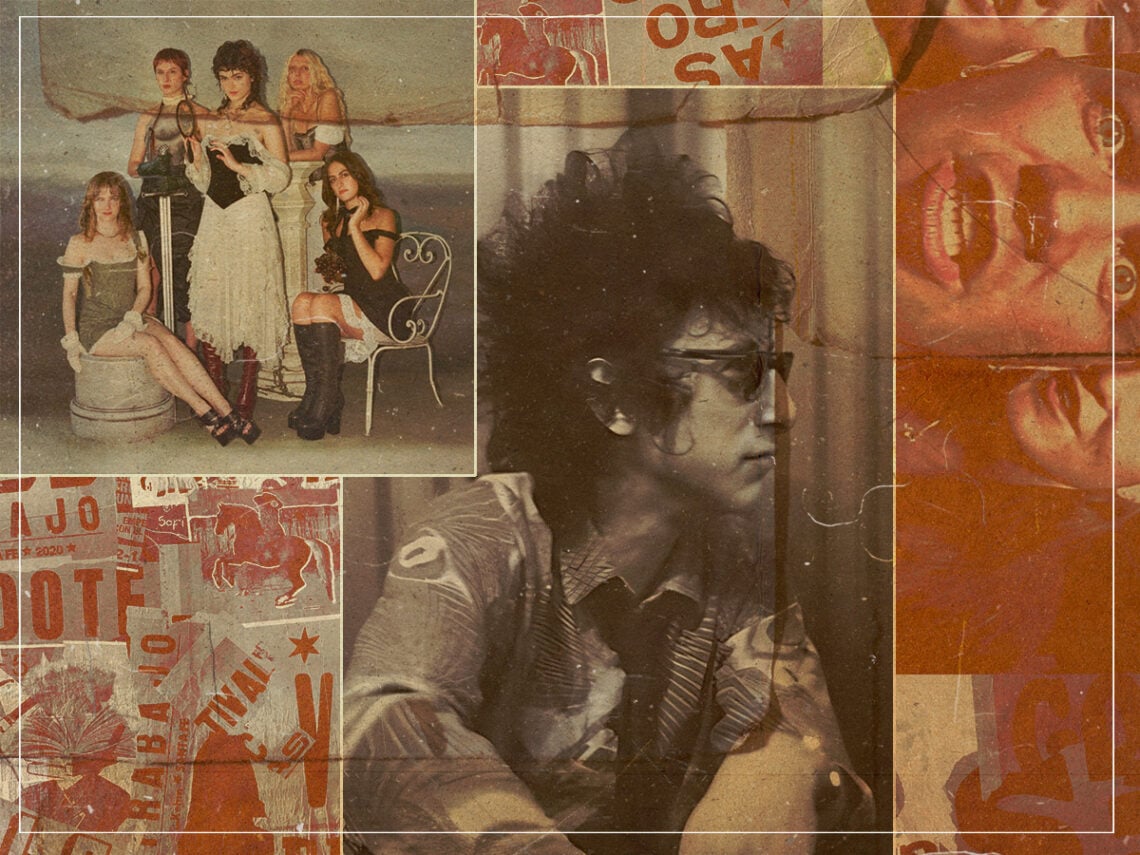
The Last Dinner Party recently released their debut album, Prelude To Ecstasy, which has been received how most people expected it to be, extremely well with sprinkles of pessimism. It’s been met well because it’s a good album; the controversy comes because many people question the band’s validity. The words ‘nepo baby’ and ‘industry plant’ were thrown around before the five-piece had even announced the LP, claims which have since been repeatedly dismissed. It leaves the two camps arguing over why the group has become so successful so quickly; while some say it’s because they’re excellent songwriters and performers, others claim external powers have had a hand in it. I would argue there is a third option, one which stems from the former: their use of the word ‘fuck’.
‘Fuck’ is the most versatile word in the English language. There isn’t an emotion that cannot be expressed using it. Regardless of whether you’re happy, sad, angry, horny, tired, energised, and all things in between, you can convey that feeling using ‘fuck’. As such, given the word has various meanings, it won’t be a surprise to hear that it also has multiple origins.
Many believe that it was originally an acronym that dates back to when any sexual contact had to be permitted by the King. As such, people bumping uglies to the letter of the law would have “F.U.C.K.” written on their doors, which stood for “Fornication Under Consent of the King”. Others think the word’s first use was in a manuscript from Brasenose College. However, none of these are true.
The word ‘fuck’ predates the 15th century, but back then, its meaning was strictly limited to ‘to strike’. This still applies today, as people getting into fights might make threats along the lines of “I’ll fuck you up”. It wasn’t until the 15th century that the word inherited a sexual meaning. Experts believe it came into the English language from Dutch, Low German or Frisian. Examples of the word written down are few and far between, and even if they have been committed to paper, it will likely be referring to hitting something rather than having sex with it. The reason people didn’t want to write it down using its sexual meaning was that it was simply too rude.
In a sense, this has continued until very recently, as the word is frequently uttered to the disdain of others who roll their eyes and tut at the sound of it. For many, the taboo makes it alluring, and that has likely contributed to its development to mean so much. Granted, if you asked the average person on the street what ‘fuck’ meant, they would probably say “to have sex”, but if you ended that conversation with “fuck off”, they wouldn’t be confused as to what you meant, either.
Music and language are both important. Both can communicate a message in their own unique ways. Plato once said, “Forms and rhythms in music are never altered without producing changes in the entire fabric of society”. This is true, as with musical change comes cultural change, too. The likes of ragtime, jazz, rock, punk and rap have all brought various movements that many radio stations and listeners turned their noses up at. Sound has power alone, so when that power is paired with language, there can be huge repercussions and not ones that people are often keen to embrace.
It wasn’t until the 1950s that songs started to get banned on the radio because of their lyrical content. Generally, this wasn’t because of individual words but instead pertained to the theme of a track. If something were inherently sexual or violent, even if swear words such as ‘fuck’ were missing, radio stations wouldn’t play the piece.
In 1951, The Dominoes shocked the world with their song ‘Sixty Minute Man’, the lyrics of which said, “There’ll be 15 minutes of kissing, then you’ll holler, ‘please don’t stop’. There’ll be 15 minutes of teasing, and 15 minutes of pleasing, and 15 minutes of blowing my top.”
When rock and rap music eventually came into the mainstream, out-and-out swear words were used in music. Since then, as suggested by Plato, the fabric of society has changed so that these swear words are used a lot more frequently and aren’t as shocking as they once were. These days, the argument isn’t whether or not it is right to use swear words in music, but rather, how they should be used. Some people use them excessively, and it works. Others use them excessively, and it sounds stupid. Some people use them sporadically, and it sounds silly. Others use them sporadically, and it works very well. We no longer ask if swearing is necessary; instead, we ask if the way swearing has been used in this specific instance is correct.
Let’s look at The Last Dinner Party. When they released their single ‘Nothing Matters’, people in the music world weren’t talking about much else. Great vocals, great melody, killer guitar solo, existential lyricism, what’s not to love? In the run-up to their album being released, that song was hard to escape, but something was wrong. The track didn’t have the same impact that it usually did upon listening; it didn’t have the regular effect of making you want to stop what you were doing and listening. Why? Well, some might argue it’s because it had been out a while, and so, as a listener, I was growing a bit more used to hearing it. I would argue differently. There was no fucking ‘fuck’!

Because these adverts ran everywhere, the label made the smart decision to use the radio-friendly version of the song. The original lyrics say, “You can hold me, like he held her, and I will fuck you, like nothing matters”. The PG version states the same thing, except rather than “I will fuck you,” it says, “I will have you.”
The word ‘fuck’ lifts that chorus to new heights. There is something feral in its use, plus the theme of ‘nothing matters’ is better personified by the use of the word fuck. Why would you want to have somebody if nothing mattered? No, it’s fuck. Nothing matters, so let’s just fuck and get it over with. Plus, it makes the listener’s ears prick; the song is sweet sounding and sonically romantic, so to hear the word fuck is a surprise that entices the listener.
The other reason why the word ‘fuck’ works so well in the track is because it is the only time that it’s used. The song is about sex; there is no escaping that. In the way The Dominoes wrote about the theme of sex without explicitly mentioning the act, so too does The Last Dinner Party. The way they write about intimacy is incredibly poetic, as lines like “I dig my fingers in, expecting more than just the skin” have an artistic license that, though having a precise meaning, also allow themselves to be read into.
That poetry, followed up by the straightforward line, “I will fuck you”, shows both sides of the art of sex. The sweet romantic side that is sometimes experienced and the raw nature of it also exists. If the lyrics mimicked the chorus and lines like “a sailor and a nightingale slow dancing in convertibles” were replaced with, “I take off your pants and get to work”, the shock of the chorus wouldn’t hit as hard, and the song loses its edge. In that sense, when you listen to ‘Nothing Matters’ by The Last Dinner Party, you are listening to an exceptional use of sporadic swearing.
It works the other way too. Granted, it’s not a pop song, but if you look at John Cooper Clarke’s poem ‘Evidently Chickentown’, this is an excellent example of how the excessive use of the word ‘fuck’ can also be effective for the right reasons. Here, Cooper Clarke uses the word in every single line to create a smattering of expletives that many people find offensive.
“The fucking view is fucking vile, for fucking miles and fucking miles, fucking babies fucking cry, fucking flowers fucking die, fucking food is fucking muck, fucking drains are fucking fucked, colour scheme is fucking brown, evidently Chickentown.”
Here, the word adopts one of its other meanings aside from sex, which interestingly is a sense of meaninglessness. The poet uses it to convey hopelessness and futility; the word loses all meaning, and you become numb to it in the same way that the residents of Chickentown have become numb to the dire situation around them. Many people believe this is used to shock, but it’s the opposite, it’s a very clever way of excessively using the word fuck, and the poem wouldn’t carry the same weight without it.
Contrast that with Limp Bizkit’s, ‘Hot Dog’, where the word ‘fuck’ is used excessively just to shock the listener. Here, the word also takes on a sense of meaningless, but rather than using it like how Cooper Clarke does to make the listener numb to it; they want the listener to be appalled, not by the individual uses of the word, but by the number of uses as a whole. They even highlight it in the lyrics, “Jealously filling up a fucked mind, it’s real fucked up like a fucked up crime; if I say fuck two more times, that’s 46 fucks in this fucked up rhyme.”
At the time, when the track came out, it achieved its goal, and people were shocked. But going back to Plato, as the fabric of society changes, using words like this stops being shocking and starts being cringe-inducing. No one gives a fuck if you use the word or not in a song anymore, really, so you have to put more thought into it than just, “That’ll get um.” Needless to say, ‘Hot Dog’ has aged pretty poorly.
The word fuck has come a long way. Formerly too controversial to write down, now there are books written about its use. As language is now such a big part of music, and fuck is such a big part of our language, it’s only natural that the two cross paths. What is important isn’t whether or not it is used but how. So, if you’re going to swear in something you create, try to channel your inner Last Dinner Party and John Cooper Clarke, not Limp Bizkit.
