


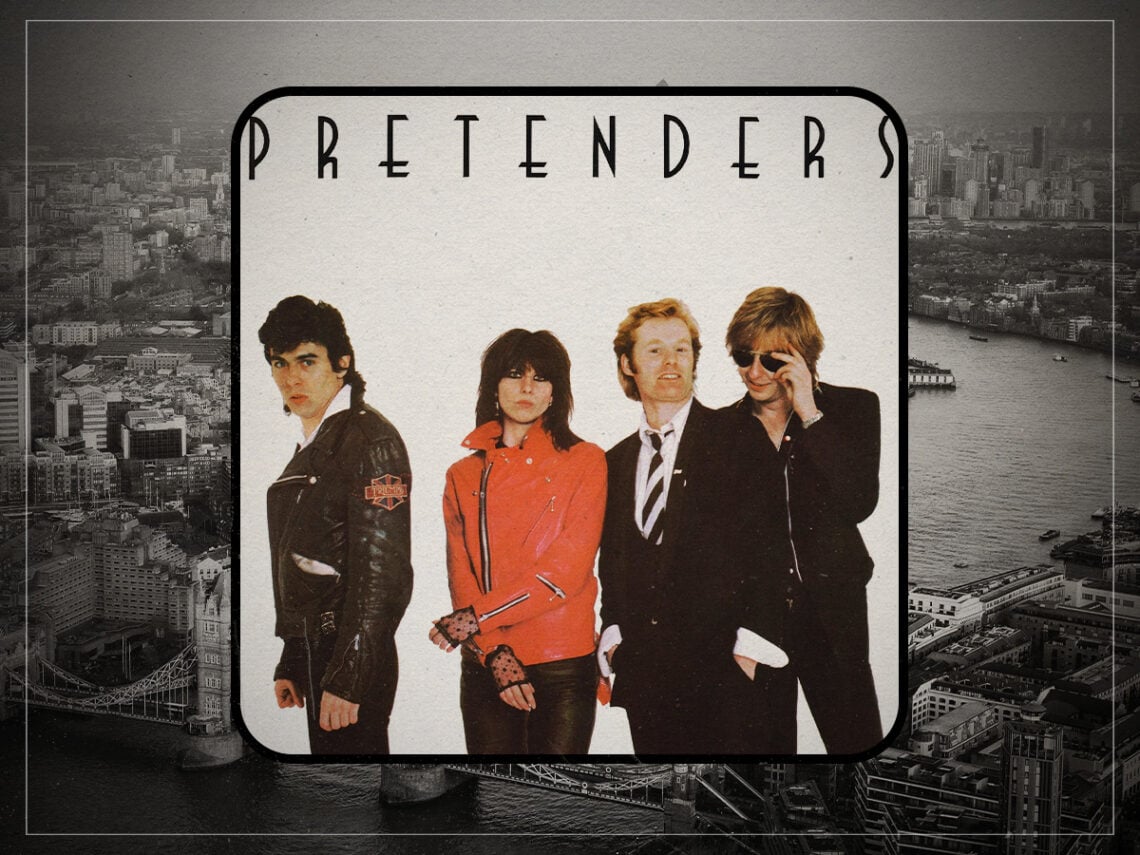
“Freezing cold”: the London neighbourhood where The Pretenders’ debut took shape

With a no-nonsense approach to life, it was almost fitting that Chrissie Hynde eventually relocated to Great Britain for good, where her vicious punk spirit could thrive in the rather dour, albeit honest outlook of the country.
Amidst one of her many tirades that the local sat in the corner of a British pub would be proud of, Hynde said, “The English are petty,” adding, “There’s no question. That’s alright, but it’s not alright when your petty-mindedness just allows you to sink into an ignorant muzz.”
But the fury she felt towards this small island of cobbled history is ultimately what made it the perfect place for her to be as an artist. Come the 1980s, Hynde, along with a catalogue of punk musicians, was beginning to realise that the modern world was ultimately one big scam, and she wanted to make music that violently rebelled against that.
So while she may have looked around, snarling at British sensibilities, there was a palpable sense of anger which made it the perfect country for her and The Pretenders to craft their gritty brand of music.
She remembered, “I’d been in England five years and thought I was too old to be in a band, but I finally met the right guys – James Honeyman-Scott [guitar], Pete Farndon [bass] and Martin Chambers [drums]. They were these rural thugs from Hereford.”
She continued to explain how, together, this line-up found a sound that juxtaposed the misguided optimism of pop with the realism of punk. “That was the beauty of The Pretenders,” she claimed. “We had this image of being a nice pop band, but really, we were pretty hardcore. We liked melodic pop music, but we liked to get fucked. It was never a problem making that first album. It was dead easy, in fact.”
That debut album came with ease simply because The Pretenders were just leveraging their real-life experiences to inspire their music; there was no artifice. It was a visceral snapshot into the everyday experience of people caught between a modern culture that was hellbent on capitalism and desperately neglecting a working-class community in the process.
So from a dingy flat in north London, The Pretenders responded. Hynde remembered, “That first album’s a pretty cohesive piece. I think the songs rely on each other; I don’t have a favourite. A lot of it was written in my room in Tufnell Park. I was in this weird girls’ rooming house. The landlord wouldn’t allow guys back there, and it was freezing cold, but that’s where things like ‘Up The Neck’ and ‘Tattooed Love Boys’ were born.”
After that self-titled debut album, The Pretenders became a crucial voice in the burgeoning world of 1980s punk, and Hynde became a foundational female figure in the industry. And no matter how far the band’s success took her from the humble origins of that Tufnell Park flat, she never compromised her straight-talking punk spirit that existed both on and off stage.
