


The sweaty show that introduced punk to the UK

When looking back at the UK’s rich music history, the punk explosion of the late 1970s remains one of the most unforgettable and iconic eras. Although the UK became known for its punk subculture, the origins of the music stem from 1960s American garage rock and proto-punk acts such as MC5 and Iggy and the Stooges in Michigan, also the home of Death, an all-Black punk outfit who were arguably one of the first true punk bands.
Meanwhile, the underground punk scene found steam in New York City during the mid-1970s, giving rise to influential punk bands such as The Ramones, Television, New York Dolls and the Patti Smith Group, who all frequented CBGBs.
Across the pond, Malcolm McLaren returned home to London after a brief period of managing the New York Dolls. Inspired by the CBGBs scene and spurred on by the reputation his clothing store, Sex, was building due to its shocking anti-fashion pieces, he assembled the Sex Pistols, who became one of the UK’s first entries into the genre. Although the band were more preoccupied with appearing outrageous and wreaking havoc than actually playing music and refining their skills, the Sex Pistols’ live performances spurred countless young gig-goers to start their own bands, resulting in the Buzzcocks, The Fall, The Smiths, Joy Division, and more.
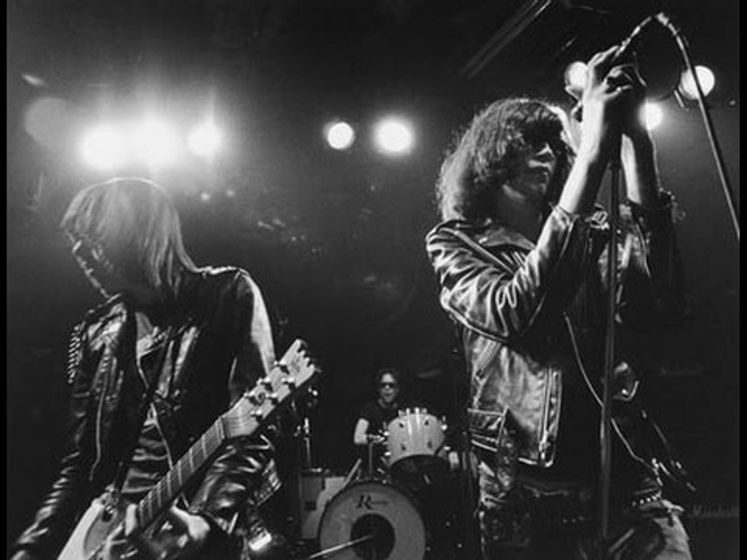
Eight months after the Sex Pistols played their first gig, the Ramones played their first performance on British soil at the Roundhouse in London. Taking place on July 4th, 1976, the leather-clad American rockers brought enough punk spirit with them to drive the UK punk scene into full gear. The country was experiencing a heatwave, but that didn’t stop a group of eager youngsters from gathering in what Alan Butts, one of the gig’s attendees, described as a “run-down, ancient, industrial shed from the steam locomotive age.”
According to Max Bell, who published his review of the revolutionary night in the NME, “the general consensus was it was too damn hot to rock, let alone roll.” First to take to the stage in the “malignantly swampy sweat box” was Surrey natives The Stranglers, who Butts described as walking on “like some small-town local band that fashion had passed over, grinding out a Doors-derived noise full of aggression and obscenity.” The band were received “politely” – much better than their previous slot supporting Patti Smith, “where the crowd were plain rude in their impatience to see them off and back in the changing room.”
However, the band that everyone was excited to see was the Ramones, who managed to divide opinions that night. Bell described them as “absolutely hilarious” and “closer to a comedy routine than a rock group,” explaining how the New Yorkers experienced technical issues before they even began playing. According to Bell, Joey Ramone appeared “closer to a stick of well-salivated chewing gum than a human being,” and Dee Dee Ramone was “the most half-witted specimen I’ve ever seen.” Despite questioning the band’s ability to play, “They were still oodles more exciting than the majority of bands who usually throw up our collective amusement, even if the songs are indistinguishable.”
For Butts, the Ramones “did the most with the least […] it was a celebration of modernity and speed.” The Adverts bassist Gaye Advert was also in attendance, sharing, “The Ramones were amazing. You wouldn’t have known the lyrics from the gigs! Thirty seconds into the track, and you would realise which song it was, and then the song was over.” The night’s final act was Flamin’ Groovies, who Butts described as “past it even then, and I loved them with the melancholy compassion one feels for life’s innocent enthusiasts.”
“Unlike The Ramones, they can play properly,” wrote Bell, who argued that the Flamin’ Grooves “didn’t quite satiate the audience” due to their polished performance and lack of earlier material being played. Regardless, the night had an undeniable lasting impression on the young gig-goers, whose eyes were opened to a new style of rock and attitude. Clearly, the Ramones proved that you didn’t have to be top-quality musicians to attract a crowd. Paired with the recent emergence of the Sex Pistols, the Ramones’ rambunctious Roundhouse performance was enough to put the UK’s punk movement into full swing.

Never Miss A Beat
The Far Out Punk Newsletter
All the latest Punk content from the independent voice of culture.
Straight to your inbox.