


Topless models and disgruntled police: The Stranglers’ disastrous attempt to dismiss accusations of sexism

The Stranglers were very different to every other punk band. They could play their instruments, for one.
They knew about highfalutin ideas like tuning, keys, and maybe even arpeggios. But this degree of competency faltered in other areas. If you were going to be a punk band, chaos had to enter the picture somewhere along the line, and for the leather-clad lads from Guildford that came to the fore with their beleaguered public relations department.
They might have toured in an ice cream van, been thrown in the slammer in France for supposedly inciting a riot that matched the scale of The Storming of the Bastille, and battled punk royalty after misinterpreting The Clash’s Paul Simonon’s nervous tic as a strange insult, but perhaps the summit of their slip-ups was reached when they attempted to quell the sexism storm that they had become embroiled with.
In November 1977, the band were at the peak of their powers as punk set about destroying anything remotely banal. Sadly, that destruction of dullness wasn’t just spiritual. They blew through towns like a literal tornado on their whistlestop tours.
When they played five nights at the Roundhouse that month, dull everyday objects like chairs, toilet doors and sinks were all under attack. The ensuing revolt against the boring beige-aries of civility resulted in a level of destruction in the region of the Roundhouse that prompted the Greater London Council to impose an unofficial ban against the ‘Peaches’ band.
Thus, when their status continued to grow, and they requested to play large venues like Stamford Bridge and the Ally Pally the next summer, all booking avenues were mysteriously blocked. So, they hatched a plan: an outdoor gig on an unmanaged field would allow them to reach a large audience, and unless punks suddenly turned against grass too, then all would surely go swimmingly. The council were on board with this plan, so a date was set to play at Battersea Park in September 1978.
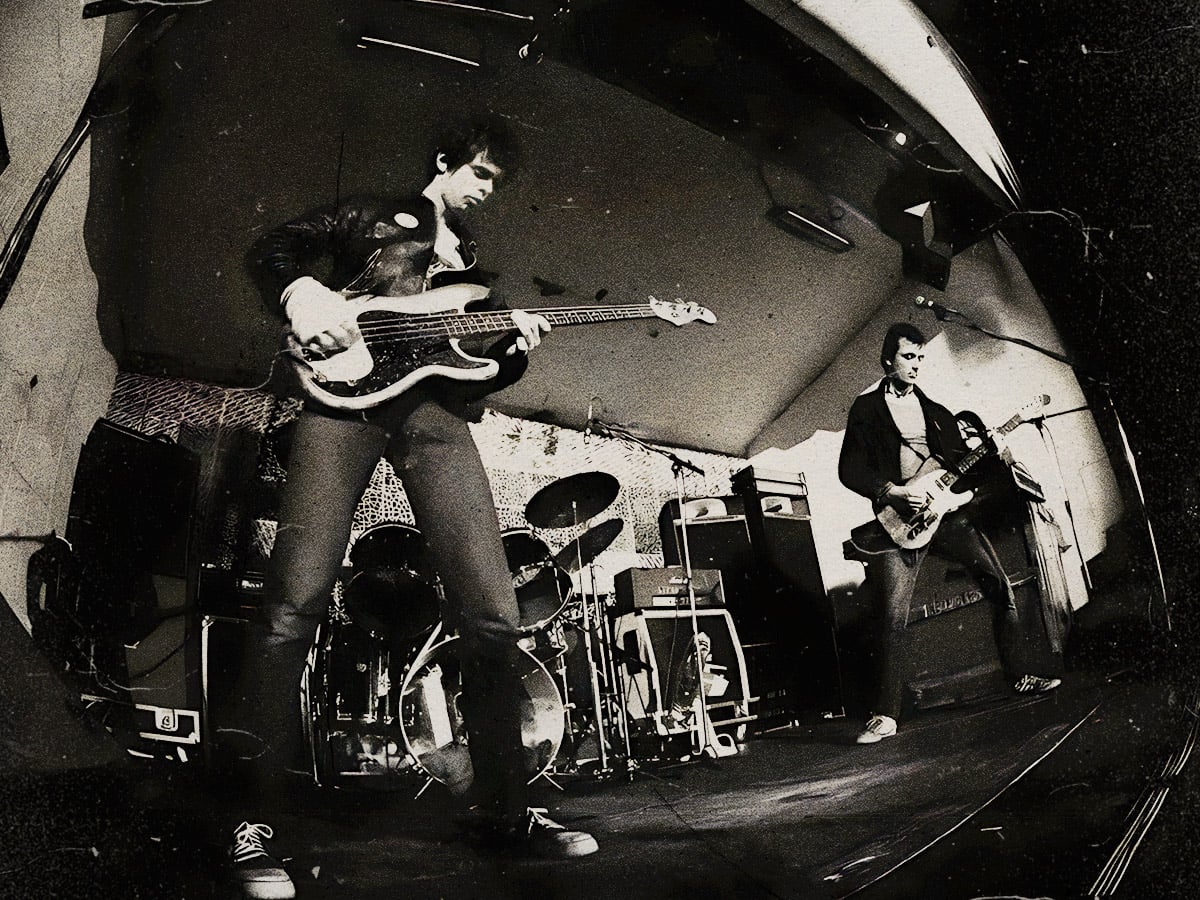
But there was another hurdle that had been bugging the band. At the time, the band found themselves castigated as “male chauvinists” for their raunchy lyrics in tracks like ‘Nice ‘N’ Sleazy’ and ‘Peaches’, which, in truth, were more like satirical lampoons of suppressed eroticism rather than their own thoughts on femininity.
However, Jean-Jacques Burnel said that “the press and the Pistols and Clash” were trying to denigrate them to drum up the promotion of a rivalry. Recently, when I chatted with Stranglers’ frontman, Hugh Cornwell, about his nine favourite albums, he even admitted, “That’s what you did in those days, you know, slag people off, because that’s how you got in a headline.”
Sadly, slamming their peers as having less progressive views when it came to the female persuasion might have been the source of good PR for fellow punks, but it was disastrous for The Stranglers on the end of the skewer.
“When we became the focus of attention, right-on shops such as Rough Trade banned our records, saying they were sexist and misogynist,” Burnel begrudgingly told The Guardian. At the time, Burnel’s girlfriend, Tracey, shared a flat with a stripper named Linda.
“She knew us and she thought it was outrageous that we were being accused of sexism”.
Jean-Jacques Burnel
Thus, a plan was formed to try to remedy their image on this front. It didn’t go well. They ended up hoisted by their own proverbial petard in such a way that the dastardly Matt Hancock, having to eat a camel’s spam javelin in a jungle to repent for his pandemic sins, looks like 30 seconds on the nought step by comparison.
“The Battersea Park incident was completely misinterpreted,” Burnel caveats before continuing. “So Linda said: ‘Look, I’ve got some friends who’d love to strip for you – to show we’re in control of our bodies.’ So these girls stripped off on stage at Battersea during ‘Nice ‘N’ Sleazy’ and, of course, everyone thought we were being exploitative.”
Male strippers joined them in a bonfire of vanities, and even a few fellows down the front row started getting their kit off. A mass orgy looked on the cards for an eye-opening minute.
The police would’ve been moved to intervene, but something was stopping them. As Jet Black comments, “The police inspector wanted everybody arrested, but he couldn’t find his coppers. They were all in the front row watching the show.” It might have been a comedy akin to Carry On Punk, but it soon became twisted into the antithesis of the PR amelioration that the band had actually intended.
An army of women with empowering signs sharing the stage with the band was meant to be a symbol of solidarity with liberation causes, but strippers will be strippers, and as soon as the signs were flung into the wings and flesh started flashing, the point was suddenly lost, and it seemed like the band were simply ogling at peaches once more.
As Burnel summarised: “The girls were basically saying that we are empowered and we can do whatever we want with our bodies. We have power over men. It wasn’t The Stranglers exploiting them, as it wasn’t our idea in the first place. Linda volunteered to do it and, of course, we accepted!”
But trouble seemed fated. “The police came back after the gig and cautioned the girls, but they realised how silly it was and nothing happened to them,” Brunel recalled, summoning the image of an inspector suddenly swooning at a glance of nipple tassels, popping his notepad back under his sweaty trilby, gulping, and returning his cuffs to his pocket.
However, “The press jumped on the bandwagon with headlines like ‘Stranglers in nude woman horror shock’ though. Instead of a display of female empowerment, it was more embedded that we had exploited the girls,”…again!
Sometimes an injustice is best left to lie, especially when you’re in the ill-fated Stranglers, Britain’s premier faux-pas punk band.

Never Miss A Beat
The Far Out Punk Newsletter
All the latest Punk content from the independent voice of culture.
Straight to your inbox.