


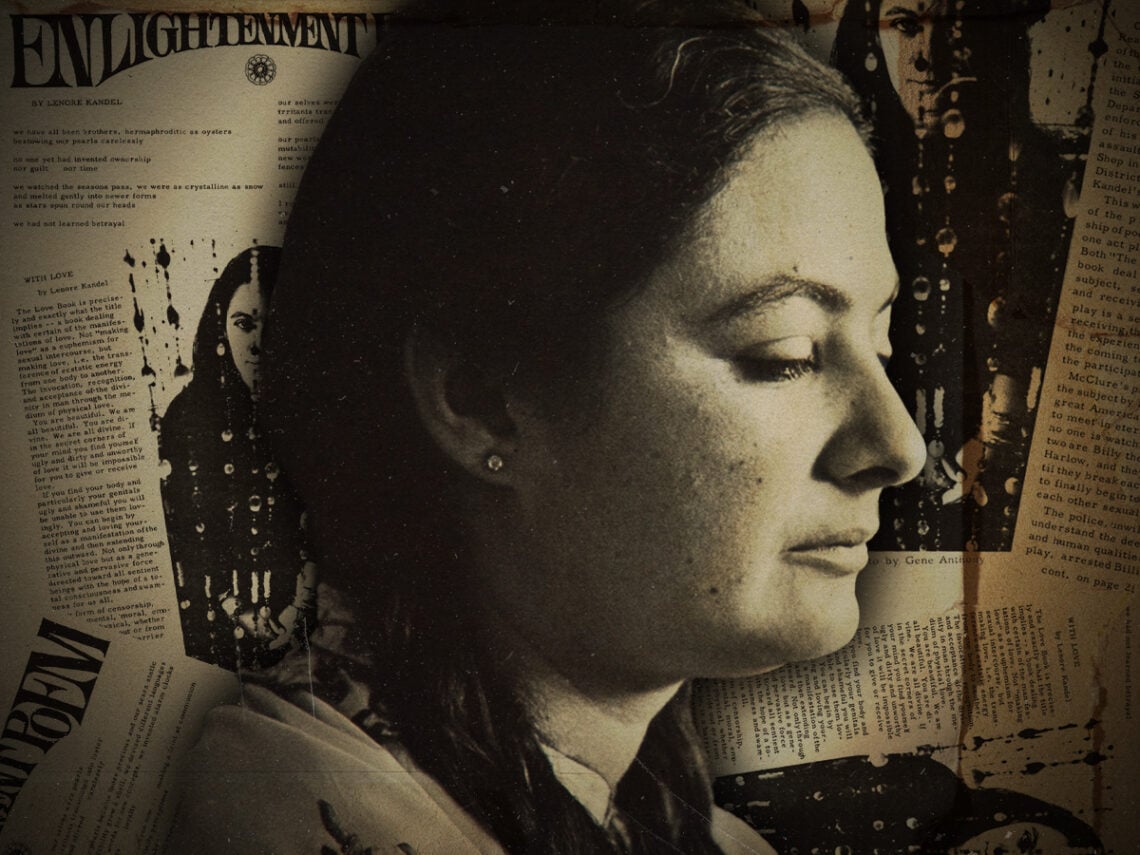
Lenore Kandel: The poet whose work dismantled the counterculture

“Poetry is never a compromise,” Lenore Kandel wrote in the introduction to her second book, Word Alchemy, “It is the manifestation/translation of a vision, an illumination, an experience…”
Amidst the Beat scene in 1960s San Francisco, Kandel was one of the few women who resolved to make her voice not only heard, but respected, and she achieved this among her social circles and the literary world at large. She was met with controversy, however, once her writings of self-described “holy erotica” caught the attention of the California government and subsequently threatened her freedom of speech.
Born in 1932, Kandel had an early affinity for writing and reading, preferring books on Buddhism and Eastern philosophy while writing poems. After growing up in Bucks County, Pennsylvania, she and her family moved to Los Angeles so that her father, Aben, a screenwriter, could pursue his film deal for his novel, City for Conquest. For a moment, Kandel traded the West Coast for East, attending The New School in New York for three and a half years before running out of money and dropping out. Returning home to California, she was drawn to San Francisco in 1960, surely following the optimistic call that her generation all inexplicably felt towards the city.
Kandel found a place to stay in the East-West House co-op, a place for Beats who, like her, took an interest in Eastern studies. There, she met and began a relationship with the poet Lew Welch and befriended the poet Gary Snyder and Jack Kerouac; she would later become the inspiration for Kerouac’s character Romana Swartz in his 1963 novel Big Sur, “a big Rumanian monster beauty”, as he described.
Kandel immediately stood out among the masculine dominance of the Beat scene: she was a woman, for one, and an outspoken feminist, at that. She wore a recognisable uniform of brightly-coloured clothing with her hair typically in two long, Wednesday Addams-esque braids. She also moved through the city with a confidence that warranted no question. She would leave poems on the desk of Lawrence Ferlinghetti at his City Lights Bookstore, and worked as a folk singer, belly dancer and artist’s model, when she wasn’t writing.
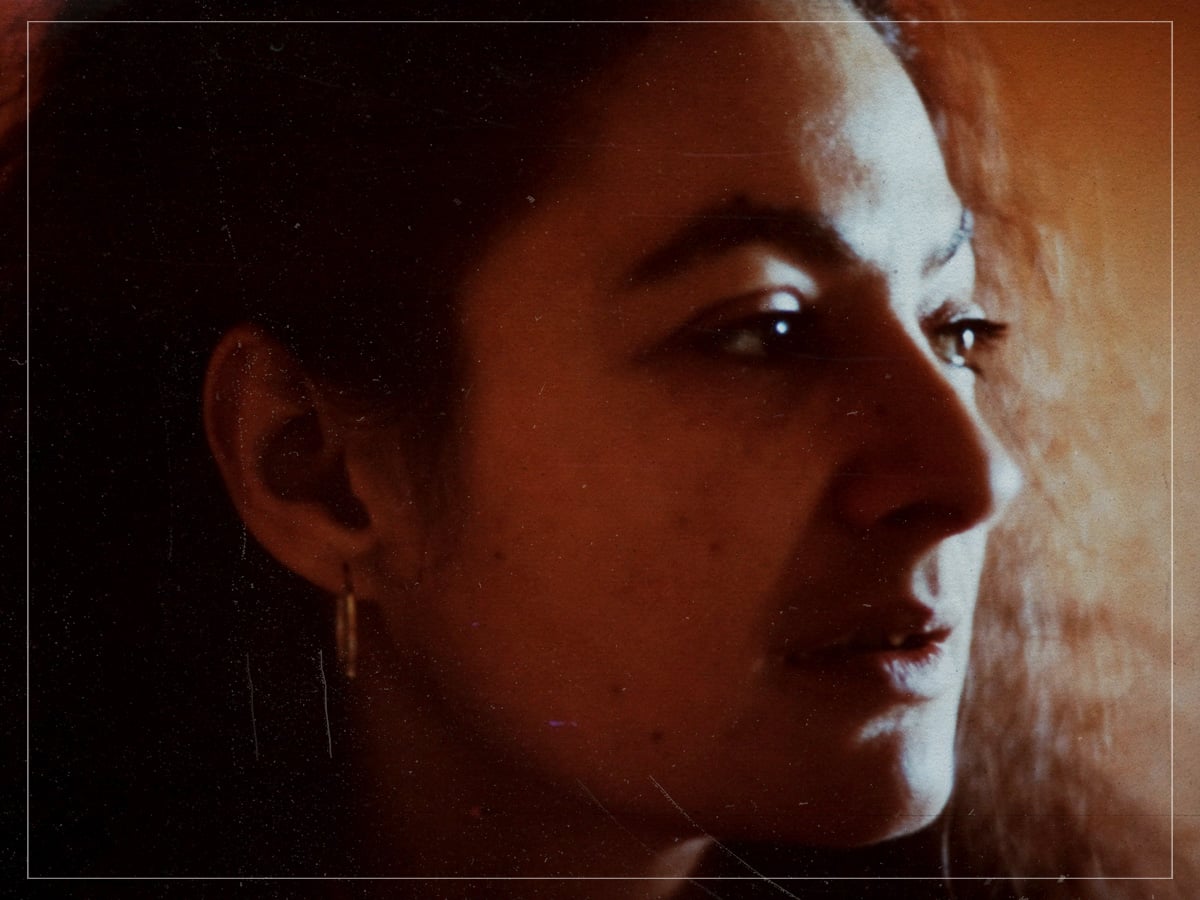
Most imperatively, she was an activist for free speech, including sexual freedom and empowerment. Whether she was speaking at local events or channelling her activism through writing, Kandel stood defiantly, assured in her power as a woman, a sexual being and a poet, against conventions of her gender. From this, she gained a rightful respect among her peers.
Her earliest published poetry dates back to 1959, with three of her own chapbooks: An Exquisite Navel, A Passing Dragon and A Passing Dragon Seen Again. She also had work published in the anthology Beat and Beatific II, with the poem ‘First They Slaughtered the Angels’, heralded as the “feminist ‘Howl’”.
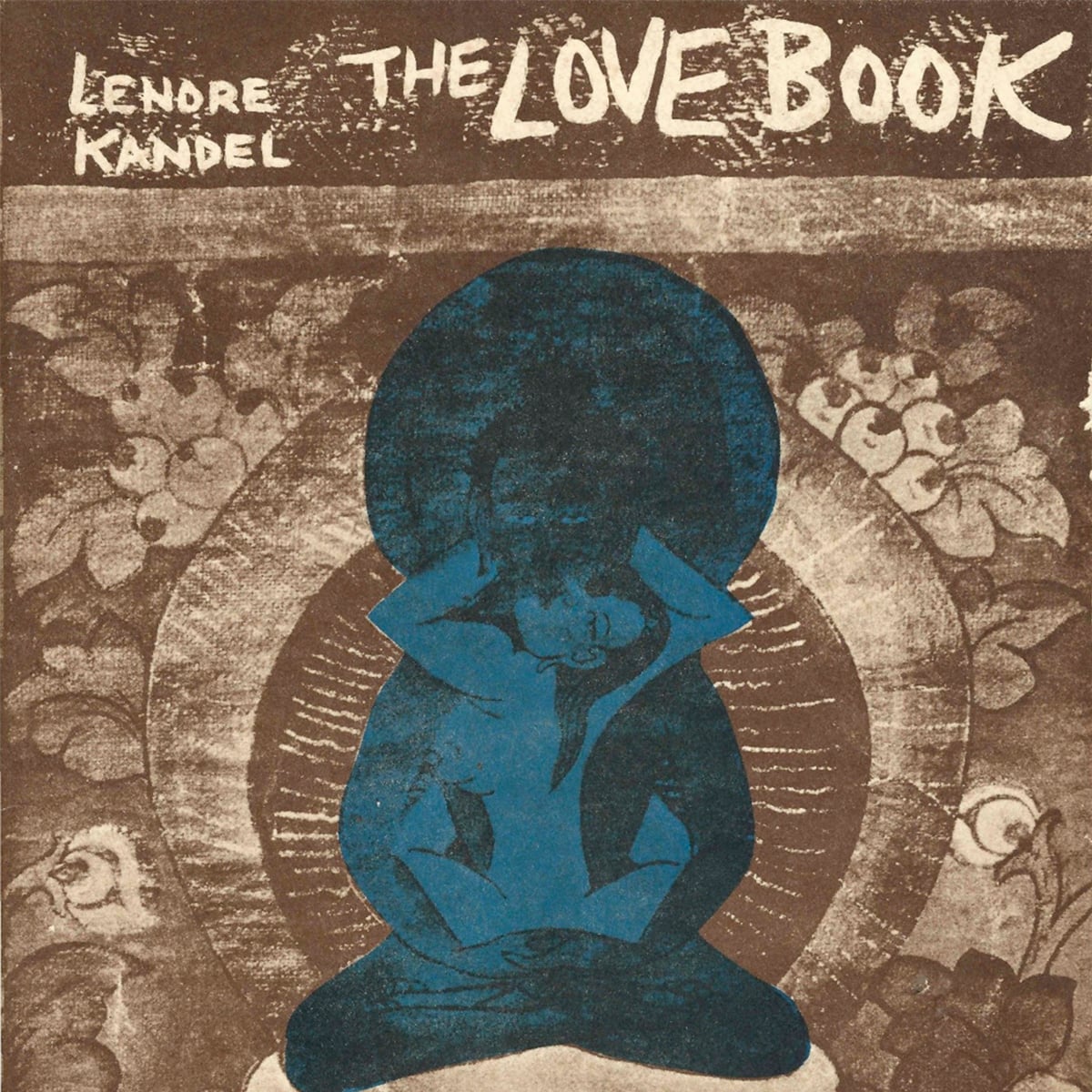
Her most infamous work, however, would be published in November 1966, The Love Book, a small pamphlet of four erotic poems that was sold locally at two shops, City Lights and The Psychedelic Shop. In the latter, five police officers arrived to purchase the book and, after spending $1 on a copy, they arrested the shop clerk, Allen Cohen, for selling obscene material.
They also confiscated all copies of The Love Book that remained, searched and detained customers, and placed a warrant out for the shop’s owners, the Thelin brothers, who were arrested the following day. The police then proceeded to City Lights, and The Love Book was found to be in violation of California’s state obscenity codes.
Whether there was “redeeming social importance” to be found in Kandel’s The Love Book was the question posed to a jury of ten women and two men, assembled for what is now known as San Francisco’s longest and last obscenity trial in history, beginning in April 1967 and continuing for five weeks. Previously, that January, at the first Human Be-In in Golden Gate Park, Kandel was the only woman to speak from the stage, reading from The Love Book in rebellion, on her 35th birthday.
Once the trial commenced, her work was heavily scrutinised during cross-examination. The assistant district attorney, Frank Shaw, took particular offence to her use of the word “fuck”, namely in the book’s three-part poem, ‘To Fuck with Love’. When he asked whether fuck was a noun or a verb, Kandel responded with “both”, and when asked if she intended to shock people, she denied all such claims, explaining, “I would never dream of going up in an airplane and writing them across the sky”.
In defence of her work, Kandel read The Love Book, describing it as “holy erotica”, and “a 23-year search for an appropriate way to worship”, meant to “express her belief that sexual acts between loving persons are religious acts” (quoted in Brenda Knight’s 1996 book Women of the Beat Generation. Shaw was not convinced, arguing, “You are trying to condition us into a new type of morality”.
It seemed that the jury agreed, as they sided with the prosecution and found The Love Book to be obscene and indeed lacking in redemption, on May 28th, 1967. City Lights and The Psychedelic Shop were both fined $222, but from the beginning of the trial, the public’s support of Kandel and her book outweighed any retaliation from the prosecution. Protestors showed up outside of The Psychedelic Shop in her defence, and a reading of her poems was held at San Francisco State College, in tandem with a talk on censorship.
By the end of the trial, sales of The Love Book grew exponentially to nearly 20,000 copies, and Kandel and her publisher, Jeff Berner, offered one per cent of its profits to the Police Retirement Association, as a “thank you” for the publicity and “to illustrate that censorship is not only evil but self-defeating”. By 1971, a US district court overturned the obscenity ruling, stating that the original judge had given the jury faulty instructions.
Kandel’s trial signalled a shift in San Francisco and, eventually, America at large. By the end of 1967, the city mourned ‘the death of the hippie’, and the counterculture became nearly unrecognisable, defiant in spirit but largely changed, as the optimism became fractured. Ronald Reagan’s governing of California marked the ascent of American conservative politics, and the idealism of the counterculture was increasingly under threat. Kandel’s unjust targeting by the government was only the beginning of a dismantling of the culture.
Kandel followed The Love Book with the publication of Word Alchemy, another collection of poems from Grove Press, in 1967. Her name became further synonymous with controversy when, in 1969, a graduate professor at the University of New Mexico used her poems for a class discussion, sparking an uproar. 50,000 dollars was taken from the university’s budget by the New Mexico legislature, and an investigation was launched into whether her work was being used elsewhere in the state’s schools. She was invited to speak at the University, which was met with bomb threats and the threat of arrest. She chose to read her work anyway, to a crowd of 3,000 people.
Word Alchemy would be Kandel’s last book; tragically, a motorcycle crash involving her and her then-husband, William Fritsch, in 1970, resulted in a spine injury that left her disabled. She became reclusive, staying in her apartment on Folsom Street, San Francisco, though continuing to write and remain in her social circles, remembered as a joyful presence until her passing in 2012 from lung cancer.
Intriguingly, although the Beat Generation’s literary canon and, alike, persist in popular culture, Kandel’s name is rarely spoken. Her work, however, remains crucial: as a woman, her autonomy over her work, voice and presence as an activist and poet was as radical an act 60 years ago as it is today. Where literary censorship is concerned, as the dictation of what the public cannot consume seems to only be growing in America, an author like Kandel and her belief in her artistic freedom stands as an example of resistance, a necessary force.
