


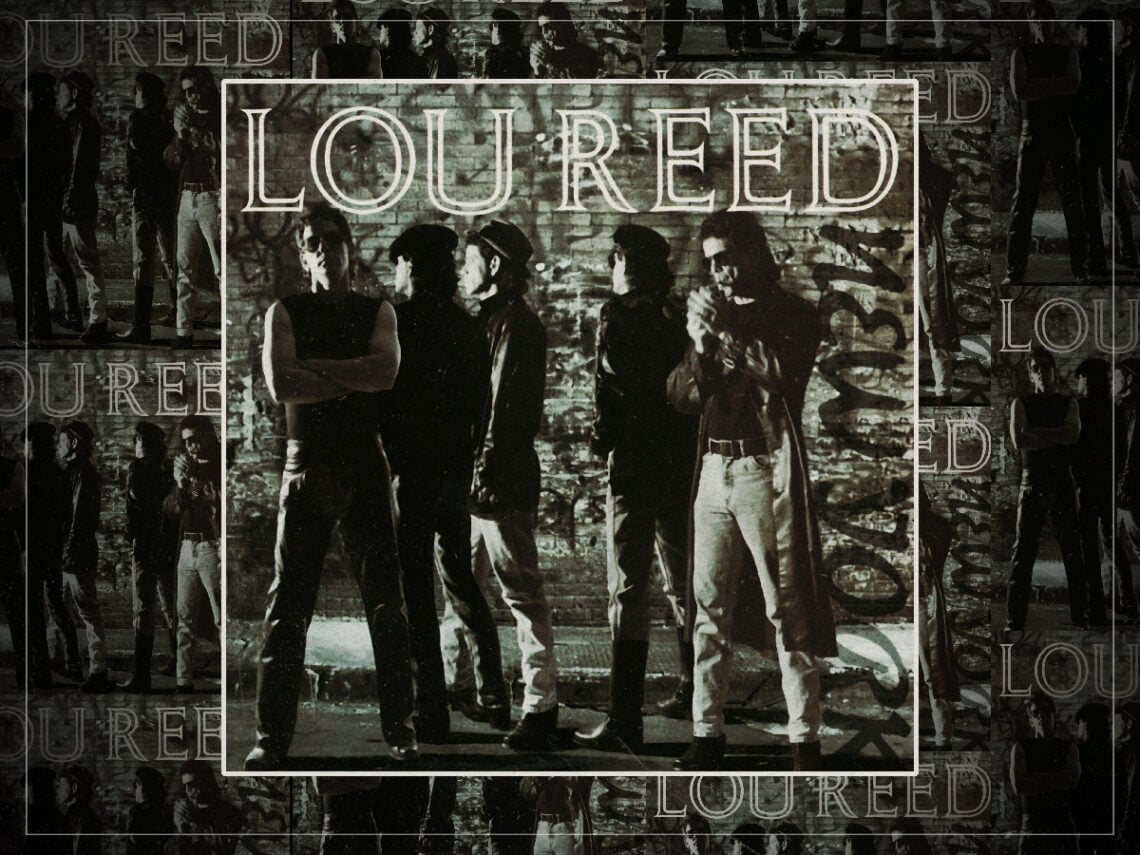
‘New York’: The Lou Reed takedown of Ronald Reagan’s America

Every now and again, somebody engagement-baits on Twitter [known by the bastardised name of X] by asking some variation on the question, ‘Hey, does anyone know roughly when everything started to get irreparably worse?’ and the answer is always, obviously, ‘When Ronald Reagan and Margaret Thatcher were elected to the highest offices of government’.
Neoliberalism is a stain on our collective humanity and has eroded our society, culture, sense of community and commonality and also, most fatally of all, our planet. Since the election of Reagan and Thatcher, it hasn’t mattered whether subsequent governments have been red or blue; they have only been interested in cutting public costs, public services, the social fabric and funnelling money upwards towards themselves at the top with a view towards short-term gains, no matter the long-term costs.
We saw it with New Labour under Tony Blair in the UK at the turn of the century, and again with the devastating waves of austerity under the various Conservative governments, which directly led to 335,000 excess deaths, and we’re seeing it again under this dreadful Keir Starmer stewardship.
Things are arguably even worse in America. The less said about Donald Trump, the better, but under Barack Obama, Joe Biden or George W Bush, the American administration has always been about making more money for the ownership class and turning its back on the workers of the world, less interested in reform, which would benefit the many when there is money to be made by the few.
And none of this is new. Thatcher laid her cards on the table when she said that there is “no such thing as society”, and every politician since, outside of Jeremy Corbyn’s Labour and Zack Polanski’s Greens, seems to have spent the last 40 years turning her depressing statement into a reality. Her good friend Reagan was never so blunt or direct, but that didn’t mean people couldn’t see what was going on.
In 1986, Dead Kennedys released their last album Bedtime for Democracy, with world-weary lyrics which covered common grounds in punk music: the military industrial complex, conforming to the system and the government, specifically, Reagan’s economic policy. The year before Sonic Youth had released Bad Moon Rising, which spoke of the underprivileged underworld that was being created by Reagan’s administration. Funniest of all was the Stiff Records release The Wit and Wisdom of Ronald Reagan. Side one of the record was dedicated to the wit, side two dedicated to the wisdom, and both sides were full of silence.

Then there was Lou Reed, who was certainly making a lot of noise on his aggressive, messy and angry 1989 release New York.
“Faulkner had the South, Joyce had Dublin,” Reed said in a 1989 interview with Rolling Stone, “I’ve got New York and its environs. It’s just a big city”. And at the end of Reagan’s reign on America, New York was in a bad way.
The city had seen a surge in affluence in the finance district, with luxury real estate becoming a booming market, but, as is always the way with neoliberalism, the explosion of fortune for the opportunistic few only meant a deepening divide between the ever-poorer masses. Local government followed the federal direction of cutting as many social programmes as possible, watering down and weakening any sense of community that people had, while rewarding businesses over people.
According to The Museum of the City of New York website, “crime, urban decay, and homelessness were all rampant”.
So this is the New York that Lou Reed was singing about in 1989. His biographer Anthony DeCurtis described the record by saying that “the 14 songs on New York, which runs nearly an hour, are fierce, poetic journalism; a reportage of surreal horror in which the unyielding force of actual circumstances continually threatens to overwhelm the ordering power of art…Reed sees New York as a microcosm of the rest of the country, the hardest hit and therefore most devastated victim of eight years of Ronald Reagan.”
Reed’s guitarist, Mike Rathke, who played on New York, put it a lot more crudely than all that, describing listening to the album, “that’s what eight years of rape does to you”, and maybe Reed agreed. “Eight years of Reagan, who wouldn’t feel like that?” he said in a tense interview with Wayne Robins in 1989.
If he had lived long enough to see his beloved New York experiencing the hope of a Zohran Kwame Mamdani mayorship, who knows what kind of music he might have made in response. It surely would have sounded a lot happier than his album about Reagan-era New York, although, then again, knowing Lou Reed, maybe it wouldn’t have.
