


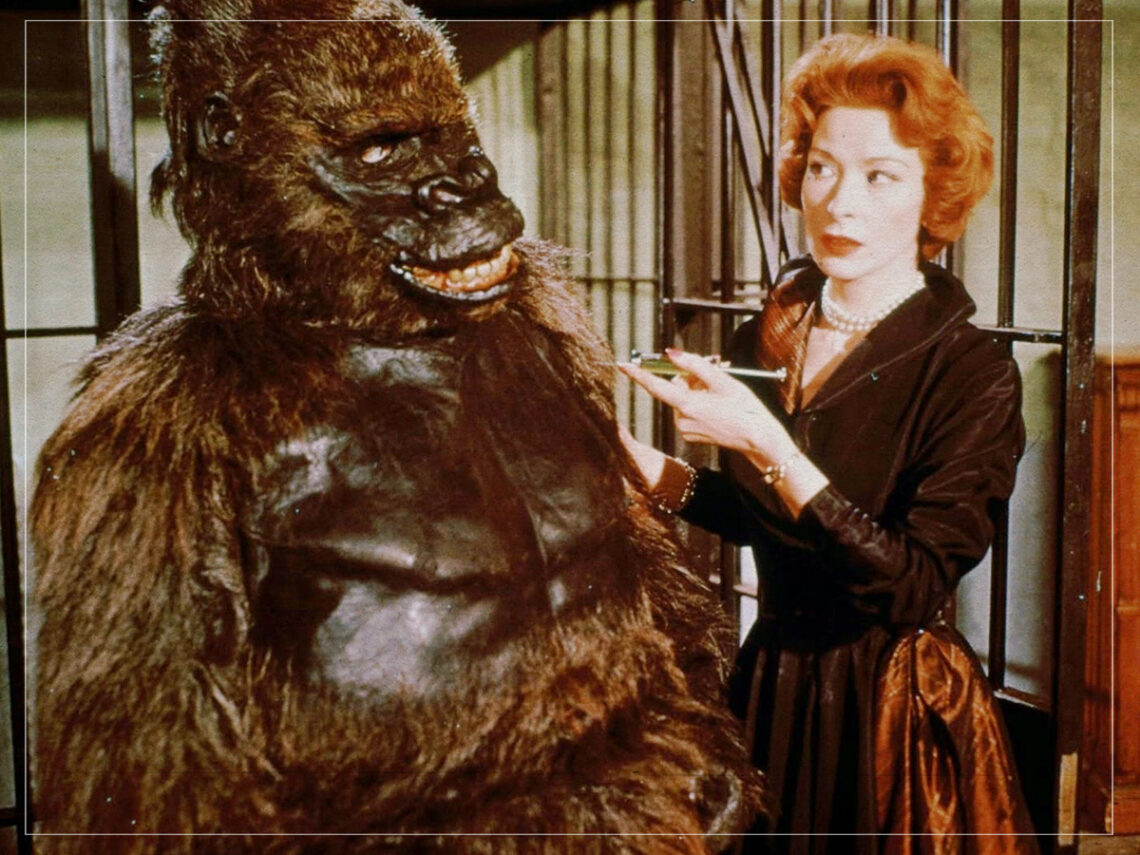
‘Konga’: Britsploitation’s abysmal attempt at creating panic on the streets of Croydon

After the success of I Was A Teenage Werewolf and Horrors of the Black Museum, writer Herman Cohen was in demand for his animalistic and campy horrors, merging people with werewolves, tigers and zombies.
Studios were keen to capitalise on this new genre and so approached Cohen about writing another exploitation film and making the most of popular trends. Cohen accepted and shortly found himself drawn to the idea of remaking the story of King Kong in London. This led to a chaotic production as they tried to recreate the effects and thrill of the original story in Croydon, of all places.
The creation of King Kong in 1933 was utterly radical, with impressive set pieces and visual effects that trumped what was deemed possible at the time. It became the spark for a number of stories about the crazed gorillas and created a general sense of spectacle for the technical prowess on display.
However, Cohen’s 1961 interpretation of Konga did not quite have the same effect. The film follows a botanist who returns from a trip to Africa after discovering a way to enlarge the proportions of plants and animals. He tests this invention on a chimpanzee and decides to send it to London to kill his scientist competitors.
John Lemont was brought in as the director but perhaps wasn’t prepared for the challenges of the shoot. The team insisted on shooting in colour for a modern twist on the monster story.
The majority of the project was filmed at the Merton Park studios and in Croydon. The crew faced obstacles in filming the climactic scenes on the streets of London, which could only be achieved after the producer convinced the local police station to allow the filming on the empty streets at night.
While the special effects took nearly 18 months to complete, they are not entirely convincing or well-crafted, with inflatable plants and clunky costumes that only add to the unseriousness of the venture as a whole. With a small budget, the production team could only afford miniature sets and studio mattes to create a vague London backdrop to the story, which isn’t always the most immersive or believable.
While enjoyable in places and certainly has an endearing handmade charm, it doesn’t come close to the predecessors of the genre and is very clearly made as a money grab. It was met with extremely mixed reviews, with critics highlighting the poor Gorilla costume and performances that diluted the horror of the situation, labelling it as one of the worst giant ape films of all time.
However, despite all of this, it remains one of these films that is enjoyable because of its flaws, becoming a campy and ridiculous story that only excels because of these qualities. It’s a brilliantly awful rip-off of the original movie with absurd plot lines and peak British humour that slightly redeems everything else, remaining as one of the more baffling things to happen on the streets of Croydon.
