


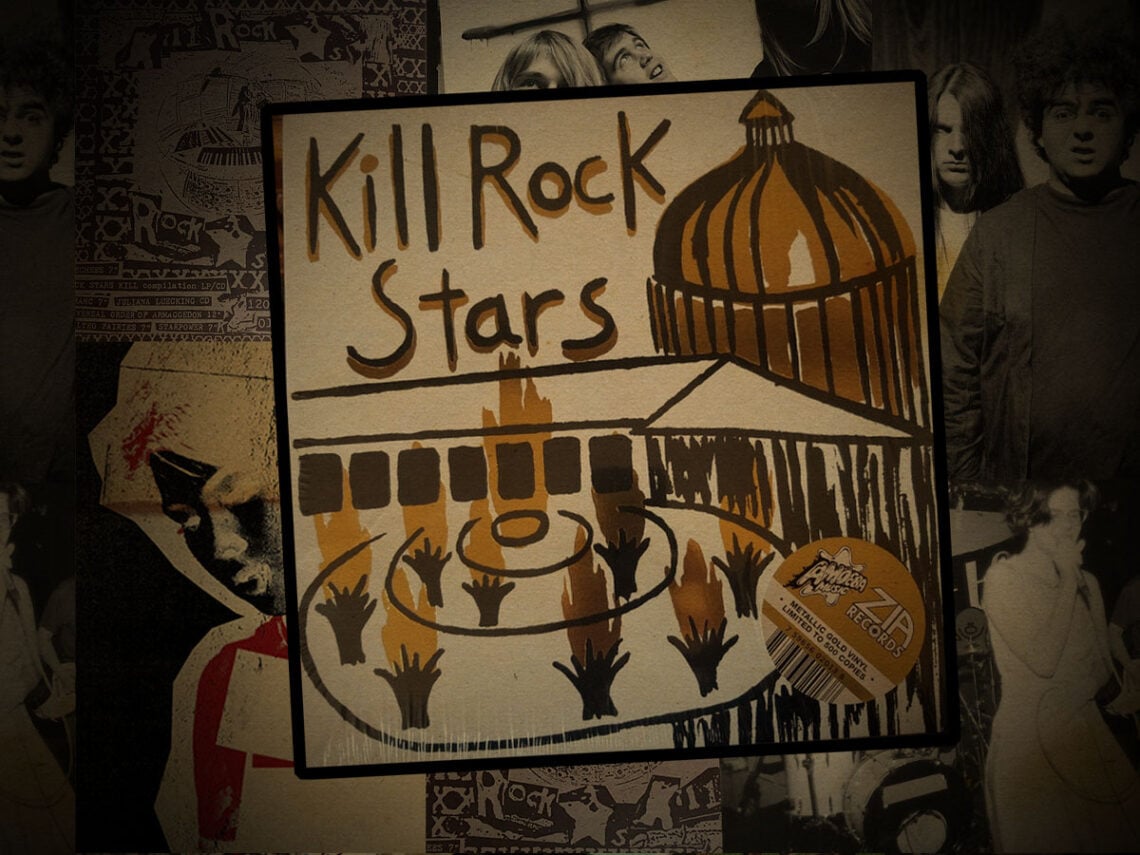
Kill Rock Stars: the beginnings of Olympia’s famed indie label

The record label’s name couldn’t be more blatant: “Kill Rock Stars” was not just a tongue-in-cheek declaration, but a statement of intent.
In a sea of major label imposition on the rock culture that permeated its home of Washington state, Kill Rock Stars’ emergence as an independent label was founded by fans, in order to champion the musicians and poets who created the art that was soon to cause a sensation. Before Elliott Smith would release his self-titled solo debut under the label, with his alternative-meets-folk sound, Kill Rock Stars started from a humble idea and punk rock beginnings.
“I just wanted to put out my friends’ records because nobody was putting out my friends’ records. And to put out spoken word 7-inch records,” Matthew “Slim” Moon summarised to HitQuarters in 2009. He continued, “I wanted to be very invisible. Instead of telling them how to do things, I just wanted to be able to help the artists realise their own vision.”
Going from high school in Seattle to Olympia in 1986, attending Evergreen State College, Moon was drawn to the state capital for two reasons: friends who lived there, and the “South Sound” music scene it offered. “The Seattle crowd in the ‘80s was so serious,” he explained to KEXP, “and the South Sound crowd was just bubbling with joy and dancing around and crashing into each other in this non-violent, fun way instead of slam dancing.”
Moon became a fixture in the music scene that had brought him to Olympia in the first place, putting on rock shows as well as spoken word performances, playing in multiple bands, performing his own spoken word and finally, starting his own label. Alongside his partner, Tinuviel Sampson, Moon established Kill Rock Stars with its first release: ‘Wordcore: Volume 1’, a split 7-inch record of spoken word by Moon and Kathleen Hanna.
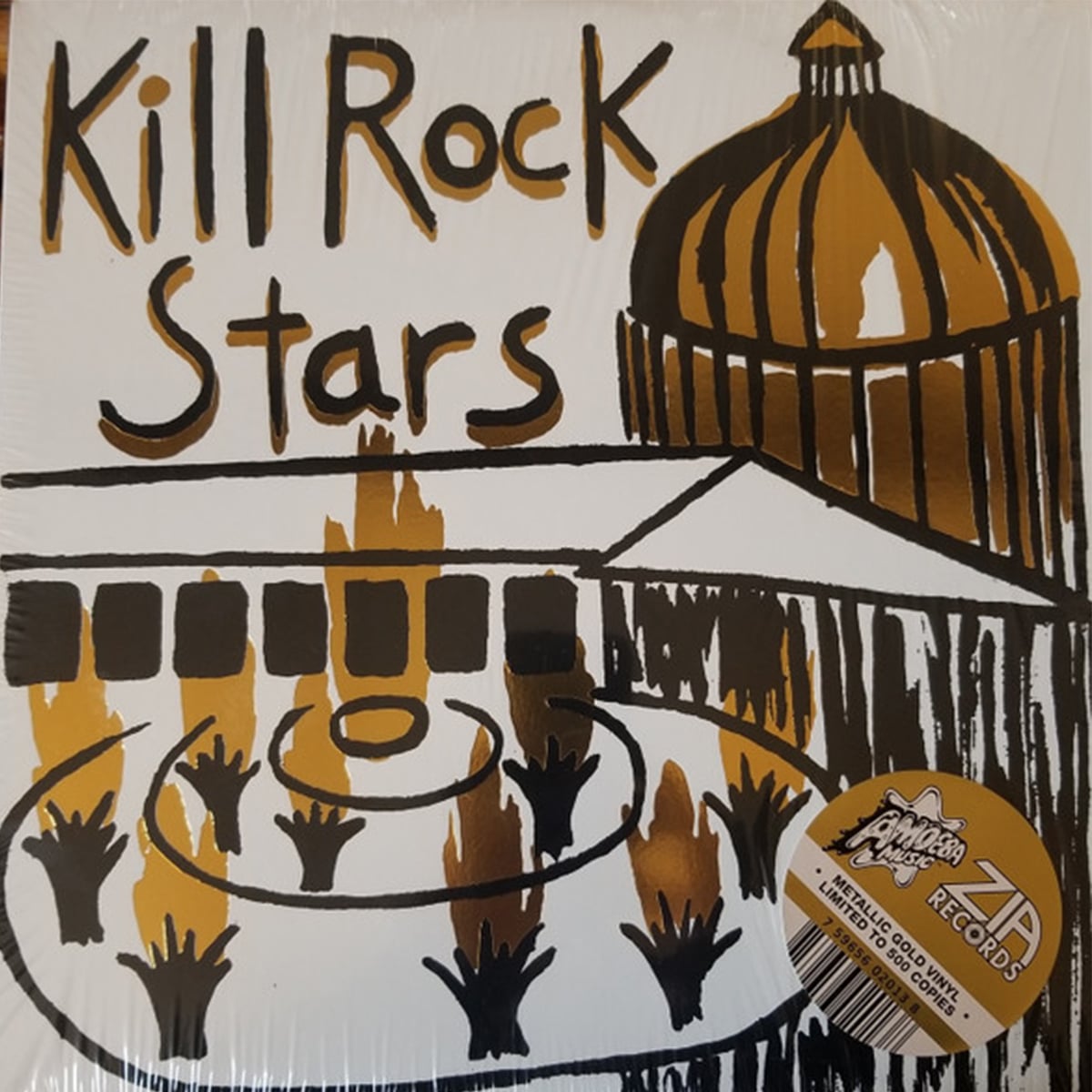
Compelled by seeing some of his favourite local bands live – namely a high school band called Unwound, who didn’t have the resources to catch the attention of a record label – Moon decided to include rock music alongside the spoken word records that KRS would release. This coincided with the label K Records’ hosting of an independent music festival, The International Pop Underground Convention, in April of 1991, organised by the label’s founders, Calvin Johnson and Candice Pedersen. Moon decided to release a compilation album, a capture of the festival’s performers and Olympia’s greatest musicians.
The compilation album featured Unwound, Bikini Kill, Bratmobile, Melvins, Nirvana, Heavens to Betsy and more, with covers handmade by Sampson and sold by the Kill Rock Stars duo themselves. The influence of K Records and the bolstering of their local scene helped birth the full vision of Kill Rock Stars: a DIY approach to getting Olympia’s music scene to as many people as possible.

The foundation of Kill Rock Stars also helped the platform of what would become known as “riot grrrl” punk, founded on feminist politics that placed topics of women’s rights and liberation, and safety and autonomy, at the forefront of their songs, while challenging sexism and violence against women.
A night of the International Pop Underground Convention called Girl Night saw Heavens to Betsy (fronted by Corin Tucker, before she co-founded Sleater-Kinney) play their first show, alongside a number of all-women punk and queercore bands.
The namesake Riot Grrrl fanzine debuted three months later, from the minds of Hanna, Bratmobile’s Molly Neuman and Allison Wolfe, and musician, artist, editor and activist Jen Smith. Many of these bands would begin to release records on Kill Rock Stars, and the label’s reputation as a riot grrrl one only grew. It saw early releases from a number of foundational punk bands: Sleater-Kinney, for instance, released their third album, 1997’s Dig Me Out, on the label, while Bikini Kill debuted with their self-titled EP in 1993.
“It was about putting out bands that were meaningful,” Moon told The Guardian in 2021. “Sometimes that was political, sometimes it was pushing boundaries by being experimental. For me, there were just more women doing interesting and meaningful work in the ’90s than men.”
