


John Lydon’s 12 favourite albums of all time: “It comes back to haunt you”

The enigmatic, phlegm-filled, former lead singer of the Sex Pistols, Johnny Rotten, had an auspicious climb to the top of the musical landscape, one that invariably involved upsetting everyone around him. Since reverting to the John Lydon moniker, it’s hard to say that he’s left much of that behind.
The singer was an antagonistic leader of the band and spent much of his life in the headlines… for his actions and his music alike. But that was all part of the new art form. As Hugh Cornwell recently told Far Out, “That’s what you did in those days, you know, slag people off, because that’s how you got in a headline.”
While Lydon did a little more than slagging off his peers, the principle remains the same. His battle was against banality. He was a martyr for individualism. As he put in conversation with Far Out not that long back, “Record labels are very much a death by committee. They have their little committee meetings or rather BIG committee meetings, and they decide what blah-blah-band should be doing for the next ‘hit’ single, right?”
He continues, “This is a dangerous world to be trying to navigate through. I’ve always been accused of being ‘difficult to work with’. Yes, of course, I am!” he proudly exclaims, almost headbutting the camera on this particular leer. “I will not be dictated to,” Lydon adds. “This is our life’s experience. And we’re not going to have somebody misinterpret that on our behalf without our say. It’s a stupid trap.”
This, in Lydon’s view, is the aim of art: to reflect your life experience. We gleaned from the chat that searing sense of honesty, unbridled creative expression, and groovy guts is what he lusts for in music. So, from our conversations and previous chats that the punk has had with both The Guardian and Pitchfork we have compiled a list of the albums that he reveres the most. These are the masterpieces that helped to shape the vision of one of art’s true mavericks. Perhaps the most meaningful maverick of the 20th century for that matter.

The singer, who found fame with the Sex Pistols, a group that a name for themselves for upsetting mainstream televisions, stealing David Bowie’s instruments, and spitting on one another as a sign of affection, would take his inimitable style on to his next project, Public Image Ltd. It would be in this new guise that Lydon would show the world his talents as a musician far beyond the confines of the three-cord bliss he had conjured up with the Pistols. It all adds up to an interesting character buoyed by legend and mythology and the swell of pounding drums.
Throughout his career, he has saw his music as an “open dialogue”. This is both true in the musical maelstrom if inspired ideas, pairing genres without really blending them, and the context of his lyricism. As he explained to us, “I’ve done this all my life: openly debate in songs.”
He continues, “I mean, just go back to the Sex Pistols song ‘Bodies’, which is openly debating, is abortion good or bad? You can’t really make a decision on that until you’ve studied the consequences of both. That shouldn’t be done flippantly in life; study, study, study, educate yourself.” Defining his stance as thus: “Don’t go with anybody’s manifesto.” …Even your own he might add.
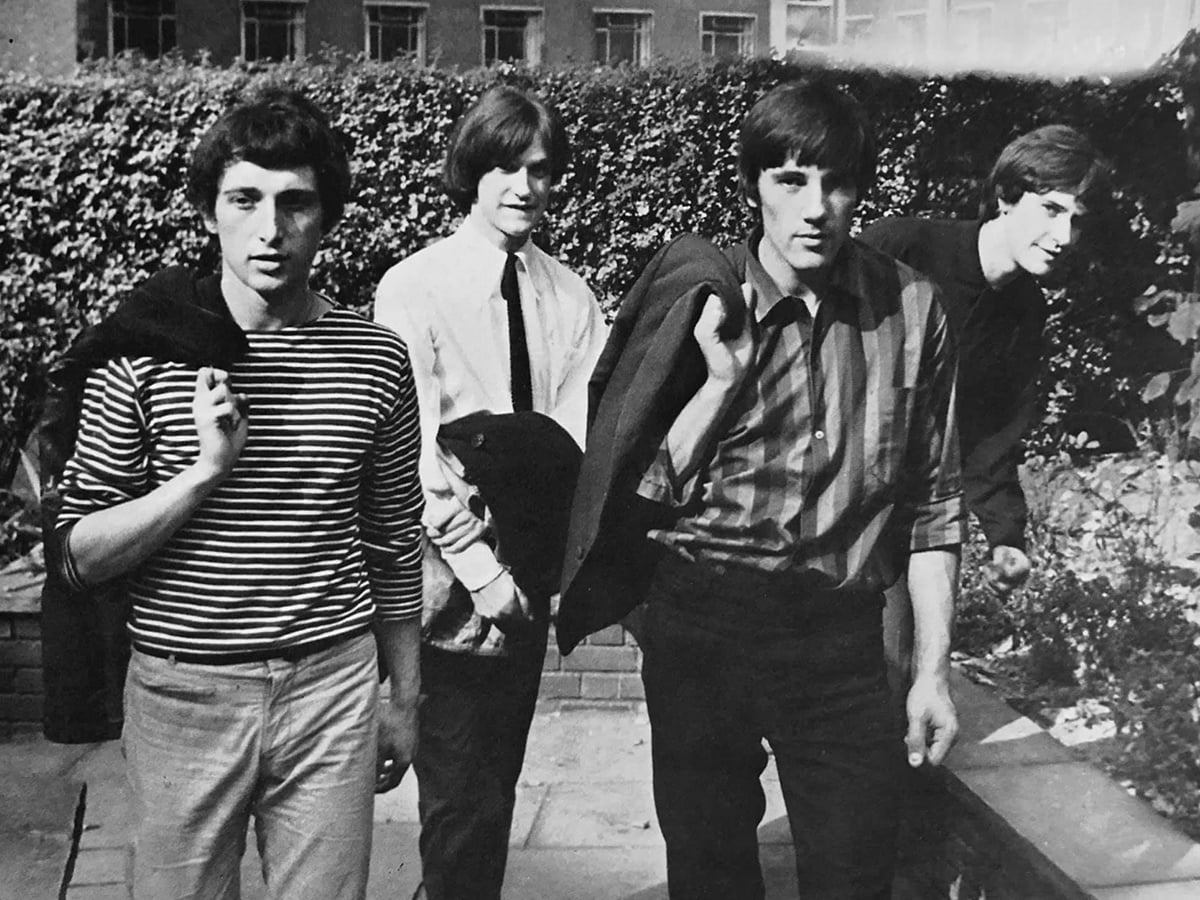
The records he loves share that. Kicking things off on a high note, Rotten started with the self-titled debut album by English rock band The Kinks, originally released in 1964. Speaking about ‘You Really Got Me’ specifically, Rotten said: “Somebody’s elder brother had it, I remember it was on Pye Records, and my God, that insane guitar started it all for me. But I have to be careful about sharing my tastes in music because it comes back to haunt you.”
He added: “I said once that I liked Van der Graaf Generator and before I knew it I was accused of ripping them off. Perhaps it’s safer to state that I like Steeleye Span. Mind you, I shared an Irish coffee with them in Vienna once and left them with the bill, so maybe not.” The Kinks have often been cited as one of Britain’s most influential bands, and it seems as though Rotten is just another fan in the long list of high-profile admirers.
Another influential moment for anyone who heard it in the early 1970s was the advent of Roxy Music. Bryan Ferry and Brian Eno orchestrated one of the most imposing LPs of all time with For Your Pleasure. Lydon spoke about his favourite song on the album ‘In Every Dream Home a Heartache’, stating: “I get what Bryan Ferry is trying to do – experimenting in a bizarre world and then couching what he finds in the style and language of the hunting set. It’s an exotic, intriguing concept, and he’s the only one doing it.”
He continued: “This song [about a love affair with a blow-up doll] reveals a corner of your psyche that not many people would like to admit exists: that the mind wanders into dark places and the body follows. It’s a romantic delusio,n and it’s fascinating material for a song.”
Music has always been an integral part of Rotten’s life, as he added: “I cared deeply about what we were doing with the Pistols and it was hurtful to be put in a ‘punk’ package alongside lesser mortals,” Rotten explained when he selected The Raincoats self-titled LP from 1979, another of his favourite LPs.
“But the Raincoats offered a completely different way of doing things, as did X-Ray Spex and all the books about punk have failed to realise that these women were involved for no other reason than that they were good and original,” he continued.
Detailing his selection of Can’s classic Tago Mago, one of the most inspirational and innovative albums of the 20th century, Rotten said: “I always wanted to get back to what we did with PiL [Publice Image Ltd], but I got caught up in other things. The Sex Pistols were back on the road and no regrets: those people are my mates.”
He added, “Then it was all the TV work, which I loved. I discovered that nature is not something to be scared of, and best of all, that animals seem to like me! They don’t want to put me on the menu”. Rotten reflects on his not-so-punk appearance on the reality TV show I’m A Celebrity, Get Me Out of Here, not to mention the infamous butter adverts.
He unapologetically continued: “But hearing this absolutely brilliant record, in particular ‘Halleluhwah’, which lasts an entire side, reminds me of what we were trying to do with PiL. Can is its own thing and so is PiL. The only way to file these records is alphabetically.”

Perhaps the surprising inclusion, however, was when Rotten detailed his admiration for the great Kate Bush and her inspiring debut album from 1978 when he said: “It’s very hard for me to prepare for something like this because I collect non-stop, discover new things every day, and take music very seriously. I hate the technological rip-offs that pass for music formats these days and go back to vinyl to hear a good record because the sound is always so much fuller.
“I don’t even like listening to music in the car. But it would be ridiculous not to mention Kate Bush as someone who creates a powerful dreamscape and a great mood, but I also love Traffic, the pop textures of Marc Bolan, and all kinds of techno.”
Later in the collection, it appears as though Rotten is true to his word in only championing the agitators of the world as he makes special mention of Captain Beefheart and his LP Trout Mask Replica: “There’s just so much on this: It’s a double album and by the time you finish it – if you can finish it – you can’t remember what you heard at the beginning. I liked that,” he said of Beefheart, even calling him his “favourite American” musician in our chat with him.
“It was anti-music in the most interesting and insane way, like kids learning to play violin — which I was going through at the time. So all the bum notes I was being told off for by the teachers were finally being released by well-known artists. That was my confirmation. From then on, there was room for everything,” he continued.
While the Kate Bush selection was out of the left-field, nobody could have foreseen what came next. Lydon, the uncompromising man of punk, explained his admiration for Cliff Richard: “My parents had a fantastic collection. It wasn’t just Irish folk tunes and accordion diddly-doos, there was early Beatles and lots of Cliff Richard too.”
The secret sentimentalist continued, “The first record I would have ever wanted to buy was ‘Move It!’ by Cliff Richard. It was a really good song at the time and still is.” Richard may be a bit square now, but he influenced tonnes of acts from the 1060s. “Early Cliff was a riotous assembly of sorts, and he had moves that left a good impression on a five-year-old.”
Rotten hasn’t always been stuck to his favourite genre of punk rock. “People who make their own aural tapestries have always intrigued me,” he told The Guardian. “Talvin Singh took his classical training into new places, and that’s no bad thing. But my musical tastes are down to happenstance: I’ll go into the library and discover something I may have had for years and never got round to listening to, which is what happened the other day with Talvin Singh.” Singh is a classically trained performer and his album, OK, stands out among the rest of Rotten’s selections as one of his most cultured.
One record that captured Rotten’s attention came from difficult circumstances: “At seven I contracted meningitis. It affected my brain, and I slipped into a coma. I spent a year in hospital, and during that time music didn’t play much of a major part. It was very, very hard to get to grips with myself, and it took a good four years to recover my memories. Music wasn’t really there,” he added. “By 10, though, I was running a mini-cab service, doing the bookings, which was the best job ever. The money was great so I started buying music.”
It was at this moment that the Johnny Rotten we all know today became a music lover extraordinaire. One record that shone during that time was Alice Cooper’s Pretties for You: “It was a long time before he became popular. Pretties for You is a really good example of bad artwork”. But it was the shocking nature of what lay beyond the shoddy cover that drew Lydon towards music at its most daring/unhinged.
Naturally, there were also spots for The Stooges classic record Raw Power: “I’d never seen the Stooges as early punks or anything – that’s media manipulation of facts; I loved them, but I was always appalled with their long hair.” He proved that point further, claiming that anyone who says punk hails from the States is simply lying. I didn’t even dare to utter the words Patti Smith in his direction.
But he is still an ardent fan of pioneers all the same, with Rotten picking out Kraftwerk’s The Man Machine from 1978, adding: “I met one of the members of Kraftwerk last year and was very surprised – they weren’t at all how I imagined them from looking at the album covers. They were in what I would call Beach Boys shirts. In an odd, twisted way they were saying I had an influence on them. I didn’t believe it for a second but I’ll take it.”
Lydon concluded: “I loved anything by them. Their cold, emotionless way of presenting a pop song was always entertaining to me, so novel and so deadpan and cynical and kind of heartwarming. So ahead of its time.”
Below, find the full list of Johnny Rotten’s favourite albums and the playlist to boot.
John Lydon’s 12 favourite albums:
- The Kinks – The Kinks
- For Your Pleasure – Roxy Music
- The Raincoats – The Raincoats
- Tago Mago – Can
- The Kick Inside – Kate Bush
- Trout Mask Replica – Captain Beefheart
- Move It! – Cliff Richard
- OK – Tavil Singh
- Pretties For You – Alice Cooper
- Raw Power – The Stooges
- The Man-Machine – Kraftwerk
- Killer – Alice Cooper
Stream the playlist, below.
