


Joan Didion’s greatest opening line

When Joan Didion passed away on December 23rd, 2021, at the age of 87, mournful words written in her honour proliferated across social media in never-ending waves.
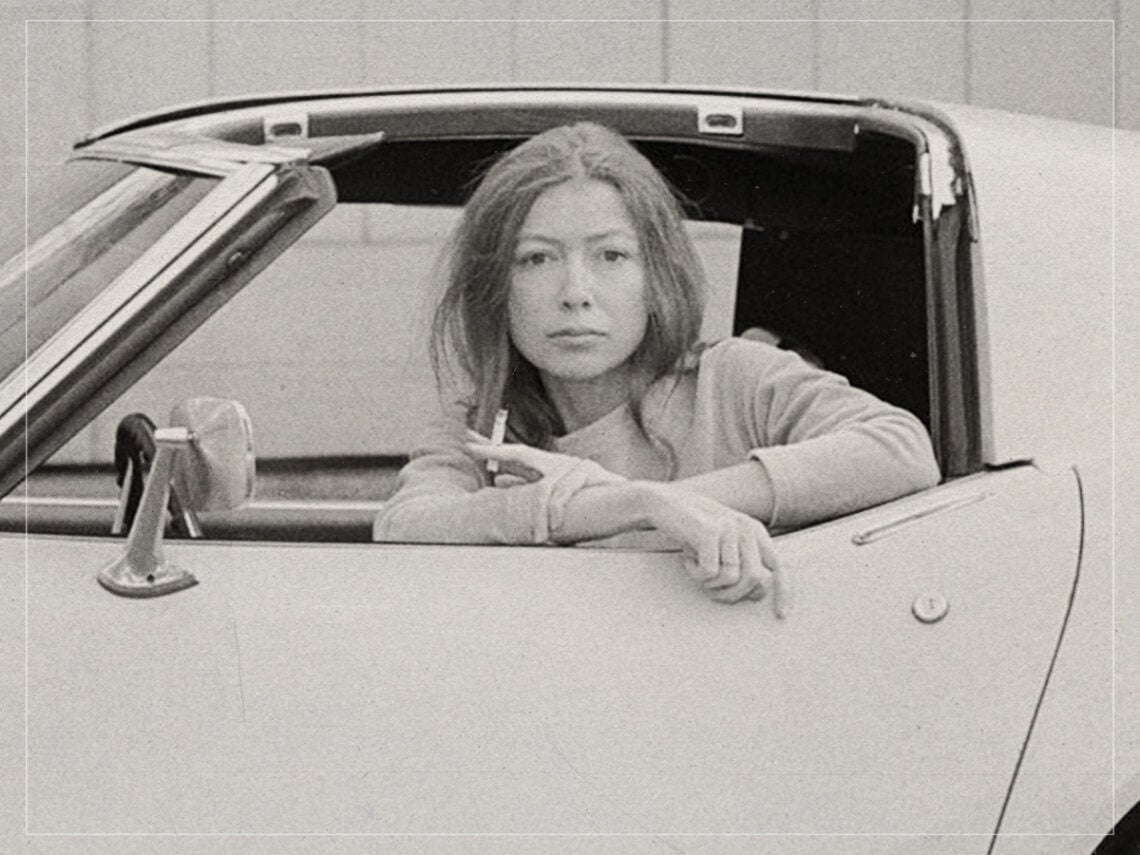
Even today, if you find yourself on the literary side of social media, Didion’s face and words remain a focal point, becoming fixtures of everything from tote bags (of which I am guilty) to photo captions written in tribute to her brilliance. The writer’s cool demeanour, her unflinching gaze, cigarette in hand, often seen in long skirts and dresses and rounded sunglasses, is the blueprint for every writer hoping to assume a semblance of her energy through emulating her look.
As a primary figure in New Journalism, finding herself a peer among the likes of Truman Capote, Hunter S Thompson and Norman Mailer, Didion was not only the only woman but also a leading voice in cultural criticism, going beyond mere reportage to probe at her subjects. Whether they be a rock star, a politician, no one was safe from Didion’s pen, and thankfully so. Through her eyes, readers became familiar with the cultures they inhabited, and they could attempt to understand subjects such as the high-profile murders that rocked America, contrasting political agendas and the unrestrained crime that seemingly increased with every waking moment.
Known for placing herself within her narratives, she pointed to why readers should care about the culture that she routinely fixated on, emphasising that humanity was at once responsible and a product of its suffering. “At the time I started doing these pieces, it was not considered a good thing for writers to put themselves front and centre,” she discussed in a 2011 interview with David Ulin, “but I had this strong feeling you had to place yourself there and tell the reader who that was at the other end of the voice.”
From her many published works, including nonfiction collections and memoirs, novels and essays across periodicals, many lines that Didion once penned have been extracted from her memory, taking on lives of their own with their resonance. The most well-known is the opening line to her titular essay in 1979’s The White Album: “We tell ourselves stories in order to live”, a line that has been circulated like a prayer since her passing over four years ago, reverberating in its simplicity.
As she claims, we (especially writers) do, indeed, feed ourselves fictions that will soothe our morals and offer a reprieve from harsh realities. In the essay, Didion continues to write of her psychological struggles, “attack of vertigo and nausea” that she was subsequently diagnosed with, preceding a collection of vignettes that, in her typical fashion, dissect a portion of culture, with an analysis of the self; it can be said, in turn, that all of her essays attempt to do the same.
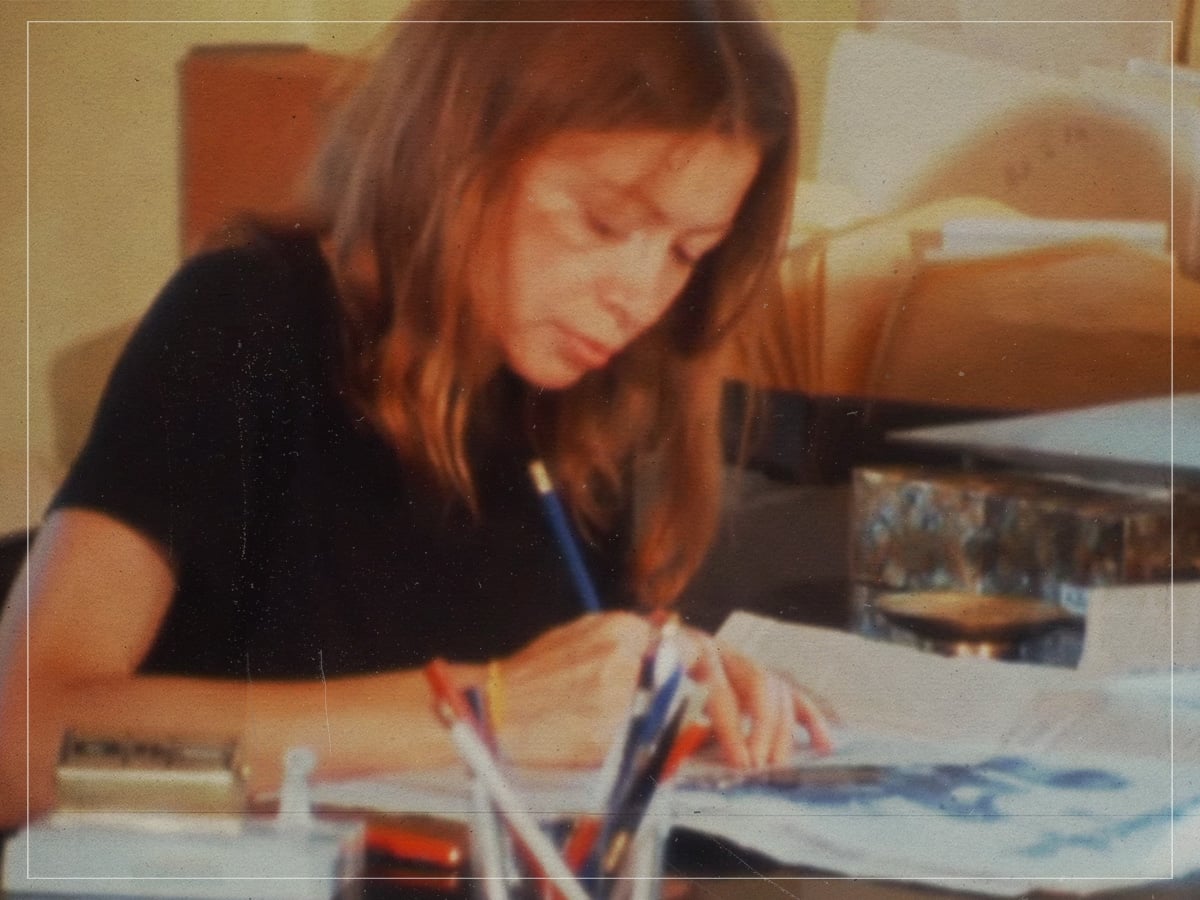
An equally famous opening line comes from her previous collection, again, in the titular essay to 1968’s Slouching Towards Bethlehem: “The centre was not holding”. With the entire book of essays preoccupied largely with the counterculture of the 1960s, the title essay finds Didion at the centre of San Francisco’s Haight-Ashbury neighbourhood, seeking a possible answer as to why young teenagers were flocking to San Francisco, abandoning their families and partaking in rampant drug use.
In the essay, she indicates that the dangerous flux in which America found itself in 1967 was blinded by false promises, calling San Francisco the site of “social haemorrhaging” that she took upon herself to study. At the time, she had not written for months and, in the book’s preface, claimed, “If I was to work again at all, it would be necessary for me to come to terms with disorder”.
With examples such as these, as with the truly countless other lines Didion wrote that stand as eloquent testaments, there is the common thread of the writer reckoning with her sense of self, and this is indicated brilliantly in what I believe to be her greatest opening line: “Once, in a dry season, I wrote in large letters across two pages of a notebook that innocence ends when one is stripped of the delusion that one likes oneself”.
Written initially under the title ‘Self-respect: its source, its power’ for Vogue in 1961, where she spent seven years as a writer and editor, the essay was later republished as ‘On Self-Respect’ in Slouching Towards Bethlehem. There are a number of reasons as to why I hold this line in regard as Didion’s best opener, one being that it harnesses a signature dry humour that made me fall in love with her writing in the first place. It takes a certain level of self-awareness (and indeed, self-respect) to write about oneself so honestly, which is what makes her one of culture’s greatest critics. Then, between the ages of 26 and 27, Didion wrote of her first instance with humility: being rejected from a sorority, Phi Beta Kappa, as a college student at 19 years old.
To reckon with humility, “to be driven back upon oneself”, as Didion claimed, is to gain a level of maturity that is often unprecedented. Looking back to the opening line, to call herself out as having a “delusion” is staggering, proving that despite her current status as something of a literary God, she was once a burgeoning writer, dealing with the imposing sensations of self-doubt and rejection. The visual of her taking out a notebook and hastily writing such words is a glimpse into, as she writes, “a private reconciliation”, a moment of shocking clarity that yields courage, offering a welcome look at who she is, behind the façade that preceded her.
“In brief, people with self-respect exhibit a certain toughness, a kind of moral nerve,” she writes, continuing with the assertion, “Character, the willingness to accept responsibility for one’s own life, is the source from which self-respect springs”.
Didion’s ‘On Self-Respect’ indicates that, much like writing, a growth towards self-respect is a routine practice, requiring discipline and strength that does not seem rare until attempted. “To assign unanswered letters their proper weight, to free us from the expectations of others, to give us back to ourselves,” she wrote, are the imperatives behind self-respect, encouraging the reader to face themself in spite of fear, as she continually did.
