


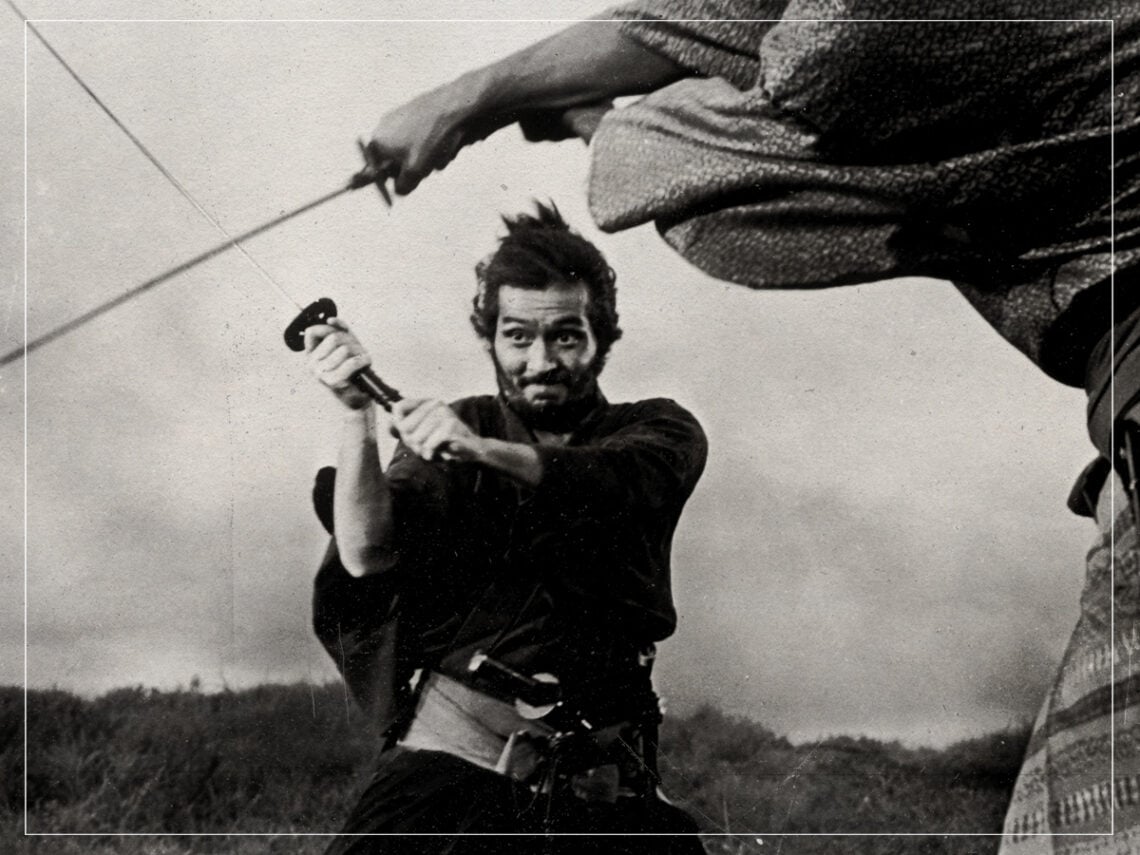
The sheer excellence of Masaki Kobayashi’s jidaigeki film ‘Harakiri’

While the likes of Akira Kurosawa and Yasujirō Ozu often take the limelight when it comes to the greatest movie directors of Japan, there are still countless other filmmakers well worthy of their notoriety, most notably the legendary Masaki Kobayashi, known for his widely celebrated films of the 1960s.
With the epic trilogy The Human Condition, the horror anthology Kwaidan and the jidaigeki film Samurai Rebellion to his name, it’s easy to see why Kobayashi is one of the most championed names in the history of Japanese cinema. Another of the Otaru-born filmmaker’s crowning achievements arrived in 1962 in the shape of the samurai film Harakiri.
Rightfully considered one of the best movies ever made, Harakiri is a stunning work of cinematic brilliance, considering both its technical prowess and its narrative and thematic worth. Starring Tatsuya Nakadai, Shima Iwashita, Tetsuro Tamba and Rentaro Mikuni, Harakiri serves as a fascinating critique of the samurai code and the historical feudal system of Japan.
Narratively, we follow the story of the masterless samurai (ronin), Hanshiro Tsugumo, who asks a local feudal lord if he can commit seppuku/harakiri (ritual suicide) in the courtyard of his estate. Sat before an audience of samurai and lords, Hanshiro recounts the story that has led him to arrive at the need to kill himself with honour.
Kobayashi uses a non-linear narrative to explore the minute details of Hanshiro’s life, doused in sheer tragedy, betrayal and hypocrisy. Visually, Harakiri contains some of the most impressive shots in the history of Japanese cinema, with cinematographer Yoshio Miyajima capturing the backdrop of the Iyi clan estate and the details of Hanshiro’s life in a stunning black-and-white style.
Perhaps what’s most impressive from this aesthetic perspective is the way that Miyajima creates a physical juxtaposition between light and shadow, which not only douses the film with a reflective sense of melancholy but also reinforces the ethical ambiguity of the characters, particularly Hanshiro himself, who twists and turns between fits of rage and periods of quiet sorrow.
Tatsuya Nakadai’s performance as Hanshiro is simply stunning and helps to showcase the kind of internal battle that rages on within the masterless samurai as he approaches what he hopes will be the final days of his life, while reflecting on his previous experiences, the thousand triumphs, the thousand losses.
However, what really makes Harakiri the masterpiece that it is its critique of the samurai code that Hanshiro has followed with a sheer sense of dedication. By blindly adhering to a set of moral and social rules, Hanshiro regrets the kind of cruelty that he has inevitably inflicted on others, although Kobayashi inherently frees him from our personal vindications.
What occurs instead is a condemnation of the exploitative and delimiting qualities that social norms and values often unwittingly exhibit. Hanshiro hopes to be granted an honourable death by committing seppuku, but the truth is that even if he were to kill himself in a ritualistic manner, the kind of suffering and injustice that he has faced up to that point would likely continue in his worldly absence.
Harakiri is a genuine landmark moment in Japanese cinema and is yet another signifier of artistic brilliance in the filmography of Masaki Kobayashi. By comparing the difficulty of appeasing both societal expectations and a personal code of integrity, Kobayashi delivered a stunning examination of the human condition, one that has influenced countless generations of filmmakers in the years that have followed.
