


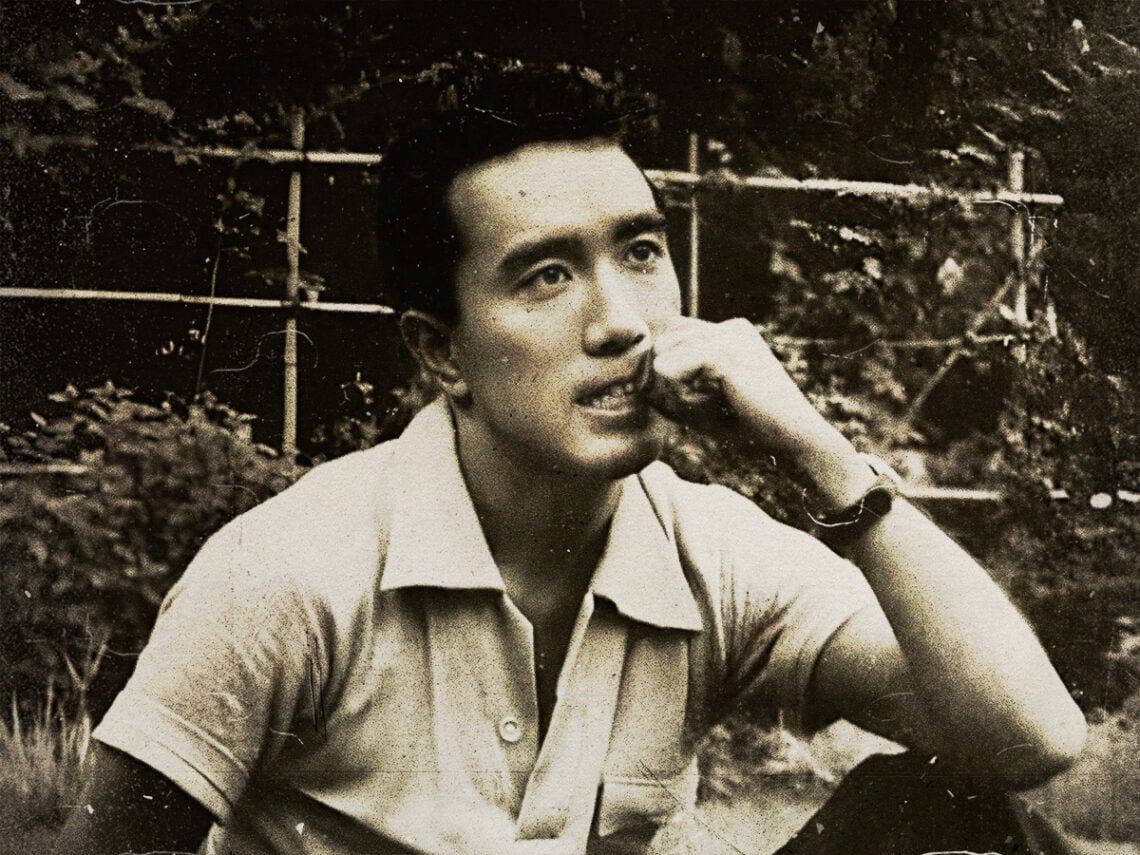
‘Patriotism’: Yukio Mishima’s anticipation of suicide

Within the extensive history of world literature, one of the most fascinating figures is the pioneering Japanese author Yukio Mishima. Known for his unique explorations of universal themes like beauty and human mortality, Mishima’s works garnered the attention of the entire world because of his ability to generate complex conversations about the importance of Japanese traditions and the relentless onslaught of Western modernity.
In addition to his artistic sensibilities, Mishima became a controversial figure in the country because of his militant political views. Due to his conservative view of Japanese history and his disdain for democracy and globalisation, Mishima grew increasingly disillusioned during the postwar period when Japan underwent radical changes. In November of 1970, he tried to convince the Japanese military to rise up and overthrow the constitution. When he failed, Mishima committed seppuku (ritual disembowelment) in the hopes that it would inspire a revolution.
According to the final manifesto, Mishima saw suicide as an incredibly powerful political act: “We waited four years. The last year we waited with particular passion. We can wait no longer. We cannot wait for those who would desecrate themselves. But another thirty minutes; let us wait the final thirty minutes. We rose up together, and together we will die for righteousness. To return Japan to Japan’s true form, that is why we die. Is it enough to insist on the sanctity of life, even when the soul is dead? What sort of military holds nothing above the value of life?”
Continuing, “Gentlemen, we are now going to show you a value even greater than the sanctity of life. That is not freedom, nor democracy. It is Japan. The country of history and tradition that we love, Japan. Is there no one here who will throw their bodies against this degenerate constitution and die? If there is, stand with us and die with us now. We have undertaken this action in the fervent hope that you, gentlemen, who have the purest of souls, may be reborn as individual men and as warriors.”
Ritual suicide was a recurring theme in many of Mishima’s writings, but it was also featured in his 1966 film Patriotism, which he directed with Domoto Masaki. It is set in a particularly volatile political landscape, namely Tokyo, in February of 1936, when a group of young officers orchestrated a coup d’état to eliminate any resistance against their ideology from positions of power within the government and the military.
Incorporated with Mishima’s specific style of violence, Patriotism is a haunting work in which Mishima insists that the suicides committed by officers in 1936 was a viable option for the complex postwar situation in Japan. After the author’s highly publicised death which was powerfully foreshadowed in Patriotism, his family wanted all the copies of the work to be destroyed. Fortunately, this historically significant film was restored after the original negatives were discovered in 2005.
Watch the film below.
