


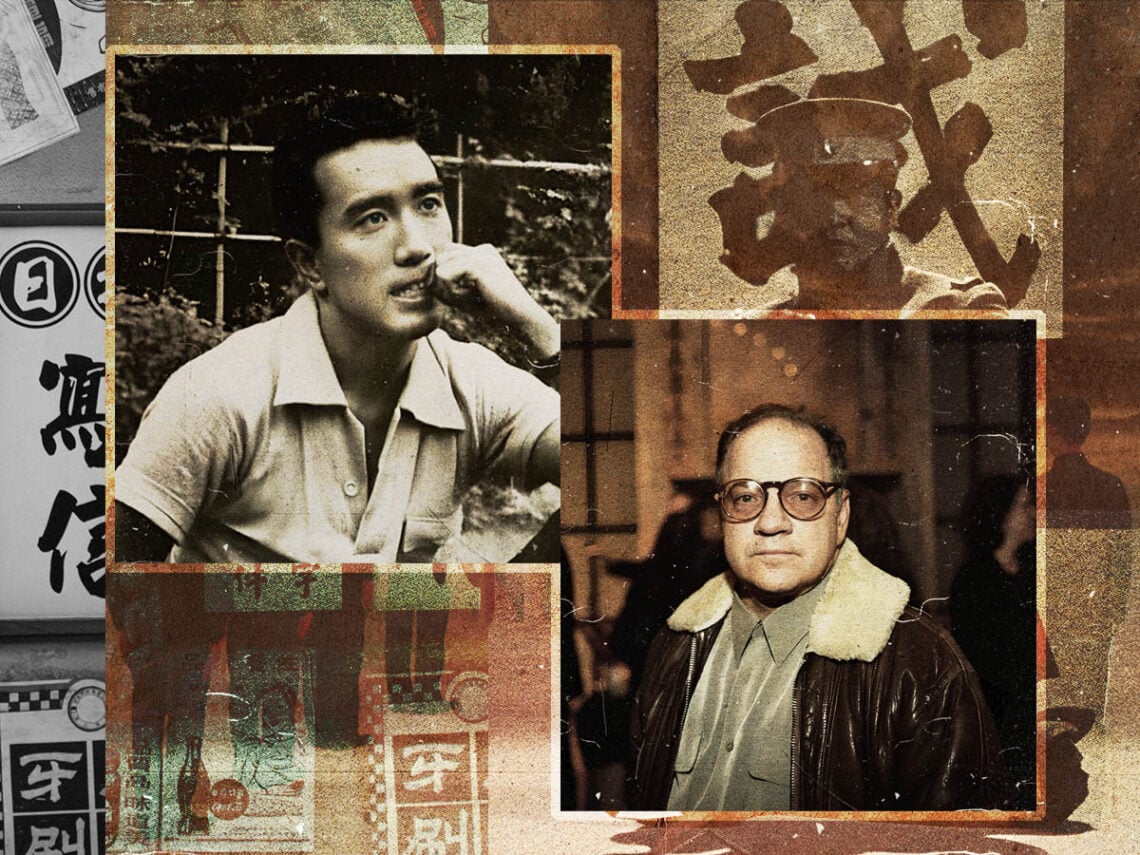
Step inside Yukio Mishima’s writing room with Paul Schrader

Screenwriter and director Paul Schrader has played a part in some of the greatest films ever displayed on screen. He wrote the screenplay for the legendary Taxi Driver, directed by Martin Scorsese and starring Robert De Niro, which marked the beginning of a close creative partnership with the director, following up with writing credits on Raging Bull, The Last Temptation of Christ and Bringing Out The Dead.
Schrader is also known for his directing work and has worked tirelessly at the helm of 24 films, including Blue Collar, American Gigolo, Mishima: A Life in Four Chapters and Affliction. With 2017’s First Reformed, starring Ethan Hawke and Amanda Seyfried, Schrader earned his long-awaited, much-deserved first Academy Award nomination.
In an interview with Oscar Isaac for Interview Magazine, Schrader opened up on how different writers use their writing time in different ways to move forward with a project. Well, there’s certain things you need,” he said. “I’ve just moved back to Manhattan, and I like my space here. It takes a number of days to lock into a place. Usually, you spend a day just acclimating to a space before you can really start writing there.”
Schrader continued, “Different writers have different, what they call ‘the regimen of the room’, all these rules. Don’t ever go into the writing room, unless you are planning to write. Don’t go in there and do anything else. For some writers, it’s 500 words a day, no matter what.”
He then went on to admit that he had the fortune of visiting a number of the most significant authors’ writing rooms, such as John Steinbeck, William Faulkner and Yukio Mishima. Schrader had, of course, written a film, 1985’s Mishima: A Life in Four Chapters, based on the life of the Japanese literary icon Mishima and several of his best works. He described Mishima’s writing room and how it was designed to get the most focus out of his daily efforts.
Mishima had an upstairs room, and he had a locked door,” he said. “You unlock that door, and you go down another hallway, which was all dark, to another locked door. So he would lock both doors, and then he would be inside his room. The only thing he could do there was write.”
The very way that Mishima’s room was set up was so that no one else could get in and that the only purpose for visiting there was to actually write distraction-free. Schrader then noted an amusing anecdote that surrounded Mishima’s commitment to writing.
“His nickname in gay circles was Cinderella,” he said, “because no matter what he was doing or what kind of sexual episode was going on, he’d check his watch, and he had to be home at midnight to write.” That’s true dedication, despite the derision of Mishima’s peers.
