


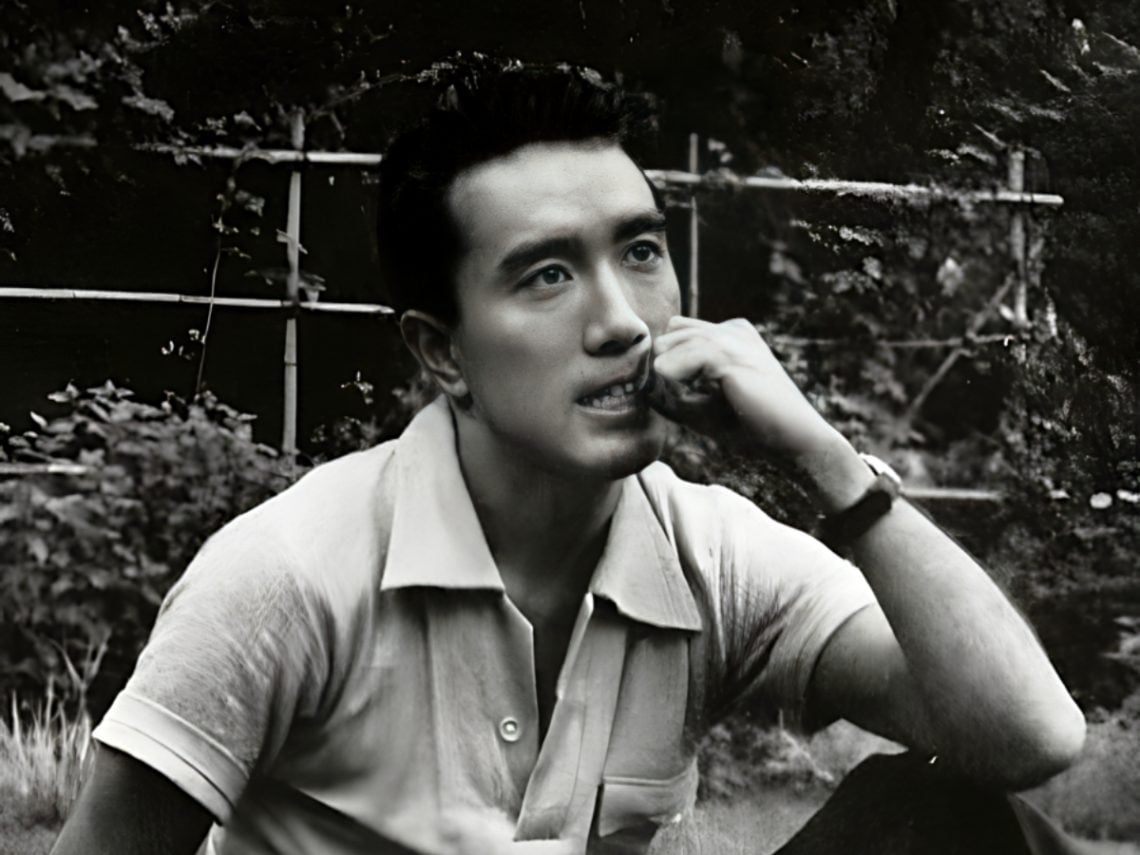
Exploring the works of Yukio Mishima through Paul Schrader’s 1985 film

Yukio Mishima is regarded as one of the most significant writers in the history of Japanese literature, having been considered for Nobel Prize in Literature in 1968. Mishima’s works explore the themes of beauty, art, death and the erotic.
While Mishima is widely known for his excellent writing, he is also notorious for his right-wing Japanese nationalistic ideals, having come from a samurai lineage. Mishima opposed the onslaught of Western culture in Japan and wanted to reinforce the more traditional values of the country.
Things came to a head in 1970 when Mishima and three members of his Shield Society militia (formed to restore power to the Emperor of Japan) took the commander of a military base hostage and led a failed military coup. Mishima gave a rousing speech to the Japanese soldiers at the base, suggesting that they join him in his Emperor-empowering efforts. However, the soldiers mocked Mishima’s address, and he committed ritual suicide just moments later.
Mishima’s life and works were the subjects of a 1985 film by Paul Schrader entitled Mishima: A Life in Four Chapters, accompanied by a beautiful score by Philip Glass. The film comes in four segments (‘Beauty’, ‘Art’, ‘Action’ and ‘Harmony of Pen and Sword’), each exploring one of Mishima’s significant novels and how they relate to his biography.
‘Beauty’ tells of Mishima’s 1959 novel The Temple of the Golden Pavilion, which was loosely based on the real-life story of a young Buddhist acolyte burning down the titular Golden Pavilion of the Rokuon-ji temple in Kyoto. Mishima’s character is a traumatised stammerer overwhelmed by the temple’s beauty.
Kyoko’s House, another of Mishima’s 1959 novels, is dramatised in the ‘Art’ chapter. The novel tells of four young men who represent the narrator’s complete character – a painter, a boxer, an actor and a businessman. In many ways, Mishima had explored each of these facets within his own life as an artist obsessed with the power of the human body – expressed in his 1968 essay Sun and Steel.
‘Action’ sees the rise of Mishima’s right-wing nationalistic ideals. The novel selected for representative dramatisation is his 1969 work Runaway Horses, the second part of his Sea of Fertility tetralogy. It tells of a young right-wing soldier versed in the code of the Samurai by his father, who leads a plan to take down the businessmen who have corrupted the old Japanese ways of life.
In many ways, Runaway Horses predicted Mishima’s attempts to topple a regime focused on materialism rather than honour that would come into fruition just a year later, as the novel’s protagonist also commits seppuku at its conclusion. The final chapter of Shrader’s film ‘Harmony of Pen and Sword’ details the failed military coup.
Mishima: A Life in Four Chapters is a glorious work that dramatises some of the iconic Japanese writer’s best literary endeavours in a beautifully unique style whilst simultaneously elucidating why he sought to create art in the first place and what led to the events of November 25th, 1970.
Check out the film’s trailer below.
