


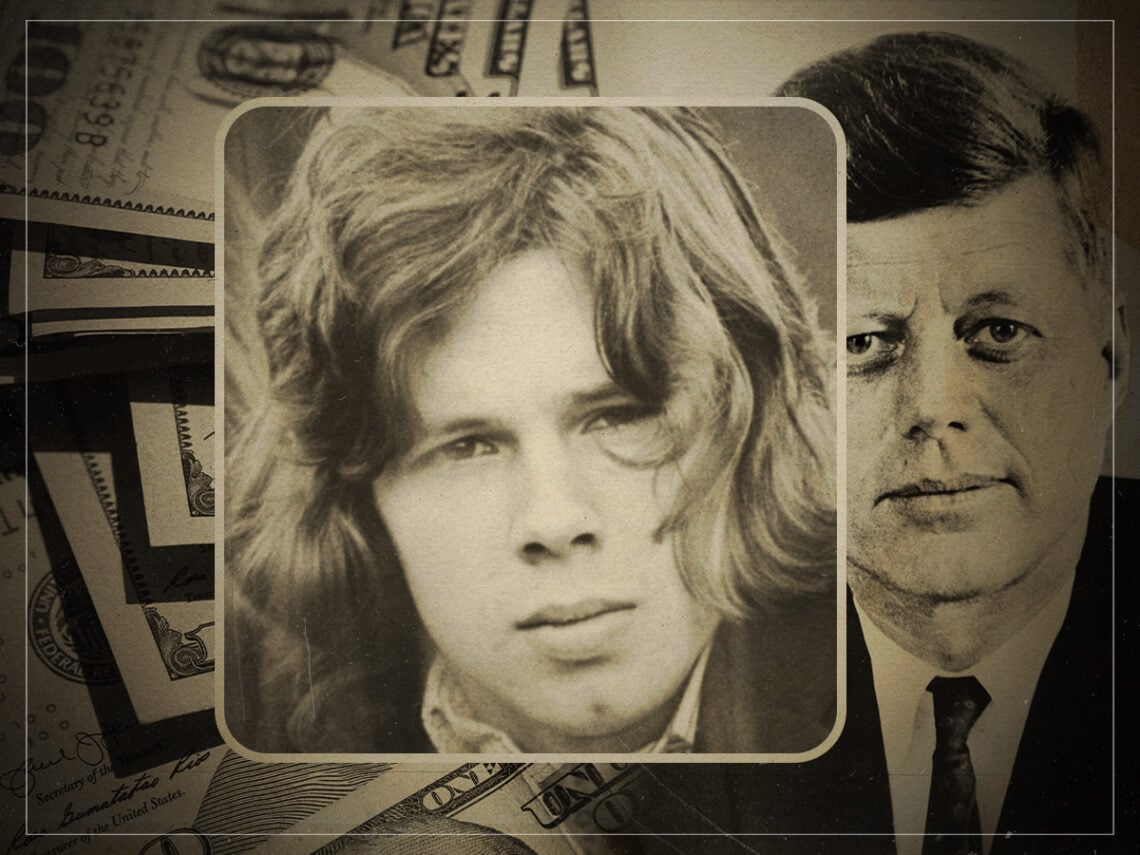
JFK, 100 quid, and the 1985 top ten song written on Nick Drake’s guitar

Do you believe in magic? I’m not talking about witches and spells, or magicians on stage making glamorous women disappear. I’m talking about something special that seemed to be hosted in rare and special people, in great talents and great minds, in Paul McCartney’s songwriting, in Elvis Presley’s hips, in Nick Drake’s fingertips on a guitar.
Sometimes it feels like surely there is no other way to describe these things. When it comes to art and music, creation feels too mythical to be human. Scientists have never been able to explain or understand inspiration, where it comes from or how it hits. It still feels like a strange thing that falls from the sky, landing in people’s laps like a gift from somewhere else. When it comes to the making of the best art, music and films in the world, that initial inspiration is a gift too huge to chalk up to just chance.
So what is it? God? Magic? Luck? Should we be treating supremely talented beings as if they’re supernatural, sit at their feet and pray that perhaps a little bit of their power might be transmuted to us? Perhaps it would work, because The Dream Academy feels like evidence of that.
By 1982, singer and songwriter Nick Laird-Clowes was on the brink of giving in. His job on the music TV show The Tube had collapsed, so he’d found himself kicked off the set in Newcastle and now back in London, “It was so depressing,” he said, which feels like an understatement.
No job, no real focus, no plan, the one thing he did have was a really nice guitar. In fact, his guitar was so nice that Nick Drake was its prior owner. “My guitar was the one Nick Drake is holding on the cover of Bryter Layter,” Laird-Clowes said of the Guild M-20 acoustic guitar, a small-bodied, all-mahogany guitar. Yet despite the history, he’d managed to pick it up relatively cheap, saying that it was “bought for £100 and still had his tuning”.
The latter is the key here. When he got his hands on this guitar, it seemed to come along with a gift. Like a gun already locked and loaded, Laird-Clowes suddenly seemed eager to shoot. “I’d been in a band called the Act with Gilbert Gabriel, our keyboards player; one day, we sat strumming guitars in his bedsit and decided to come up with ‘a big, African-style chant chorus’.”
But while the chorus might be a big chant-along, the guitar playing and the verses were coming out tender and soft. They were coming out like Nick Drake in a way, using the tuning he’d left for them and riffing on it. The lyrics started to pour out too like poetry, as the writer recalled, “I was so depressed about what had happened in Newcastle, I started writing about the empty shipyards I’d seen there. Lines like ‘In winter 1963 / It felt like the world would freeze / With John F Kennedy and The Beatles’ came out as a stream of consciousness.”

JFK represented more than just a cultural reference, though, as he stated, “I think The Beatles and JFK represented optimism,” which is why they find a place alongside this song about bleak life in a rundown town. It simply needed a hook. Playing on Nick Drake’s guitar, it was like the man himself offered that up as Laird-Clowes told The Guardian, “I felt like I was in his harmonic space and just went, “A hey, ah ma ma ma … ”
But a song can’t be called that. Anyone the writer played the tune to told him that, including David Gilmour and even Paul Simon. Instead, it needed a new song title and a new band around it, something like ‘Life In A Northern Town’ and a band like The Dream Academy, an act who would launch with this track, imbued with the magic of Nick Drake.
