


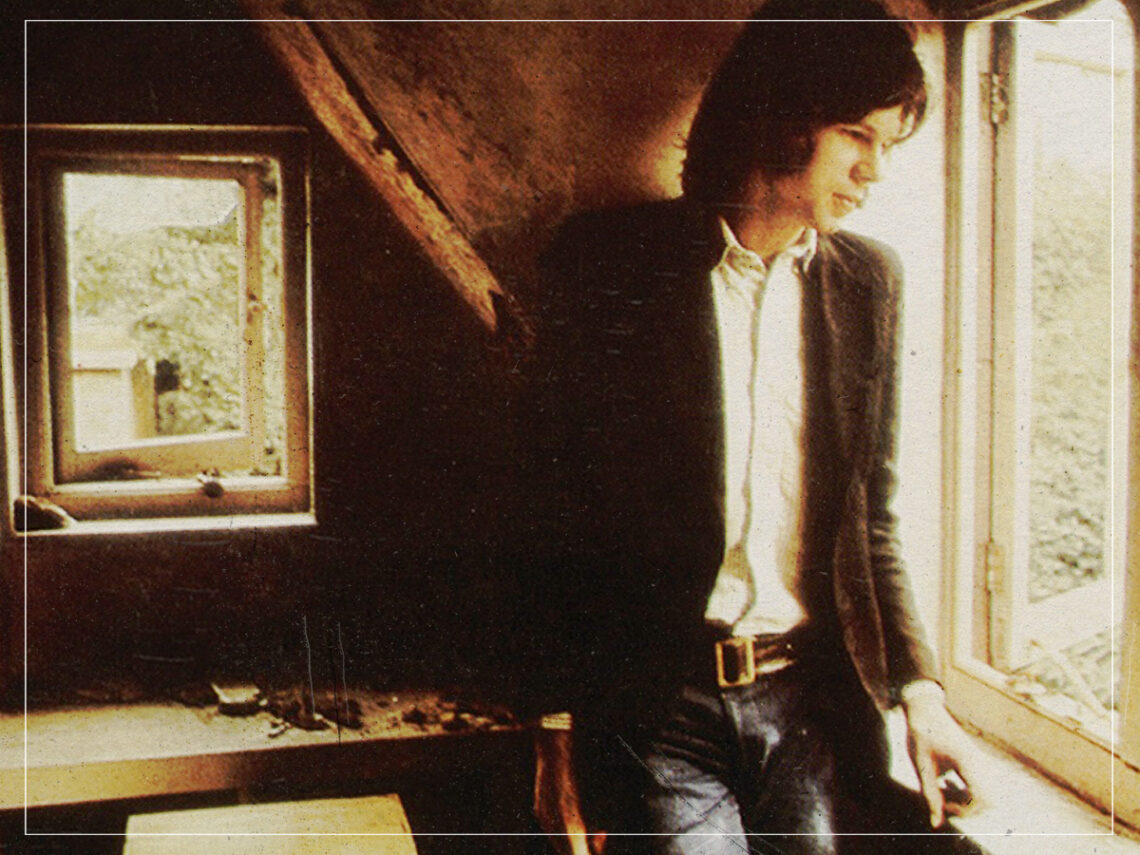
The guitarist who shaped Nick Drake’s music: “There’s a sophistication”

Whenever a small window in the world of Nick Drake opens up, we music fans desperately peer through it as a way of further understanding this mysterious folk icon.
Drake is perhaps the most enigmatic musician in history, eluding the trappings of the digital age and offering the world virtually no evidence of his existence outside of his music. Devoid of salacious archival interviews or gossipy folklore, Drake’s legacy exists only in the catalogue of songs he’s left behind.
Whatever profundity we seek from Drake can be found in his music, which, as universally relatable as it may have been, was deeply intimate. All of the trials and tribulations of his life were confided within his trusty guitar, which he loved deeper than any human being on the planet, spending countless hours with it to hone his craft and become one of the most beloved songwriters in history.
Subsequently, his name has been heralded as the influence of a generation of musicians who existed after him. Musicians who have marvelled at the delicacy of his songwriting, while similarly growing frustrated at the lack of tangible knowledge upon which they can build their inspiration. Like the rest of us fans, they simply have to rely on the music only to speculate what may have guided Drake into songwriting immortality.
Joe Boyd, the producer of Drake’s first two albums, Five Leaves Left and Bryter Layter, acts as music’s last remaining beacon of Drake information, and has since remarked that Drake’s success is steeped in more than just his allure. Despite all of the mythology that surrounded him, it was his technical mastery that thrust him into a position of musical immortality.
He once boldly claimed that “None could match Nick’s mastery of the instrument. After finishing one song, he would re-tune the guitar and proceed to play something equally complex in a totally different chord shape.”
But in a later interview, he delved deeper into the world of Drake and provided fans with a much-desired insight into his influences. He recalled that Drake “listened to Django [Reinhardt], he listened to Miles Davis, you know, of course, he listened to Burt Janssen, Donovan and Dylan. But I think there’s a sophistication and a kind of internationalist, and very English, but also very in touch with very sophisticated ideas about how to be English.”
He continued to explain what that artistic Englishness meant. Remembering his track ‘River Man’, Boyd explained that Drake “Wanted to sound like Frederick Delius. Nick loved Delius, you know who again was sort of an English composer who had been transformed by living in Florida, and listening to all this Black music and Latin American music… he went to Cuba and stuff like that. I don’t know how much Nick listened to Brazilian music, but I hear it sometimes in the music.”
Drake’s greatness was as elusive as his personality. Despite the myriad names that crop up as references, there was no distinct influence that Drake’s music took direct cues from. Instead, it was an entity all of its own, thriving under the unique stewardship of Drake’s unmatched guitar playing ability, which just so happened to be married with a unique songwriting ability that ultimately made him one of the best to ever do it.
