


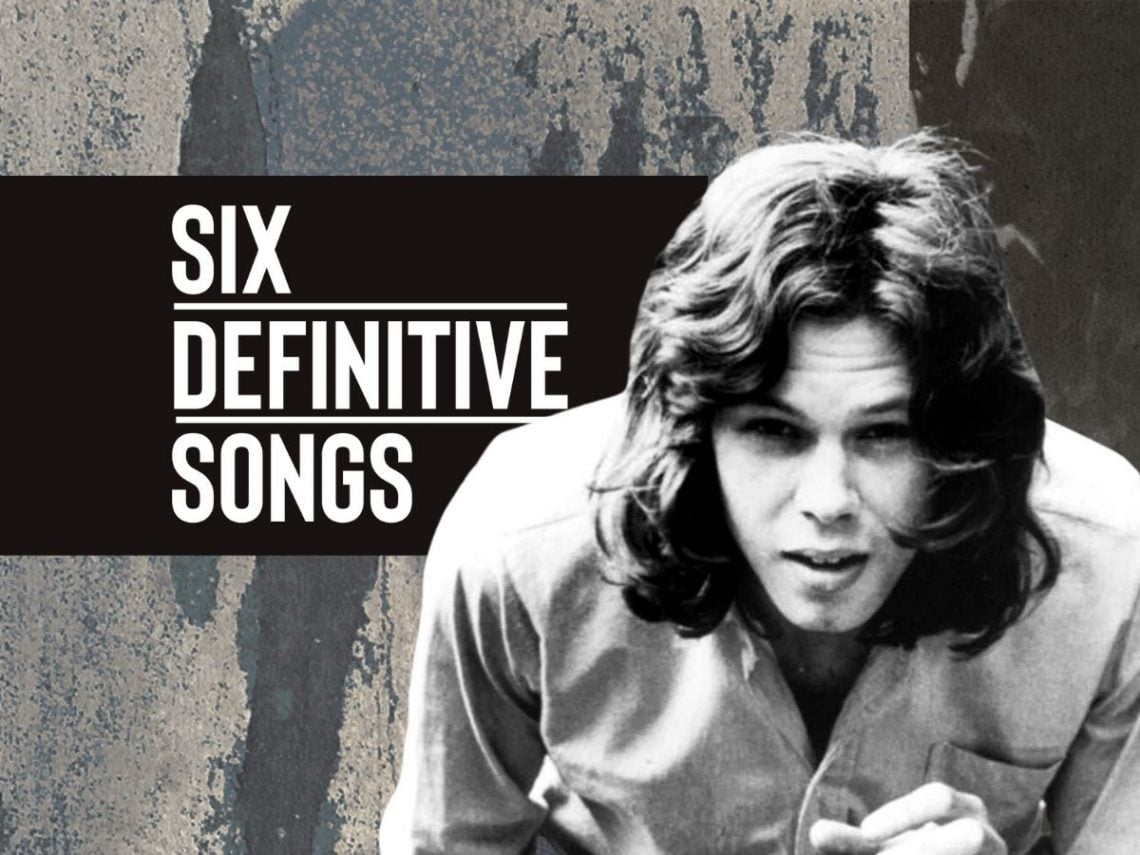
Six Definitive Songs: The ultimate beginner’s guide to Nick Drake

Nick Drake is undoubtedly one of the great English folk talents. His adeptness at playing the acoustic guitar separated him from many of his contemporaries, as did his soothing deep vocals. However, despite Drake now being considered one of the best of his kind, it had not necessarily always been that way, and he did not enjoy widespread success during his lifetime.
When he was just 20 years old, Drake signed with Island Records when he was still a student at the University of Cambridge, reading English literature. However, during this time, Drake suffered from a deep depression, and he explored his mental ailment through his writing and music.
After completing his third album Pink Moon, Drake’s depression had become too much to bear, and he stopped his live performances and returned to his family’s home in Warwickshire. Two years after the release of Pink Moon, Drake died from an overdose of a prescribed anti-depressant at the age of just 26.
Today, Nick Drake is held in the highest esteem for his effortless talent in composition and songwriting. He recorded three excellent albums, so let’s take a quick look at six of his best-ever songs.
Nick Drake’s six definitive songs:
‘Time Has Told Me’ – Five Leaves Left (1969)
Drake’s debut album Five Leaves Left was released in 1969, having been recorded the year prior. The title is fittingly attributed to the rolling paper brand Rizla and the fact that towards the end of each packet, a ‘warning’ paper indicated that there were ‘only five leaves left’. The album’s opener is simply one of Drake’s best tunes.
The track is entitled ‘Time Has Told Me’, which indicates Drake’s wistful knowledge despite his young years. A classic Drake acoustic guitar section rings out throughout the song, and he lists the things that he has learned over the years. Amongst them are not asking for too much, the importance of abandoning the things that hold us back, and the binding nature of believing in the power of the self.
‘Saturday Sun’ – Five Leaves Left (1969)
Five Leaves Left closes with a piano ballad entitled ‘Saturday Sun’, a stunning track. The carefully constructed chord progression is met with a gorgeous jazzy drum pattern that elevates the song’s beauty. Lyrically the piece examines how the various happier moments in our lives can penetrate through our darkness when we least expect them.
However, there is a turn of sorts towards the end of the track, where “Saturday’s sun has turned to Sunday’s rain”, reinforcing Drake’s plea to not rest on our laurels and not to believe that our best days are indeed behind us. We can imagine Drake at the piano in the studio, simply captivating the other musicians surrounding him with his profundity.
‘Chime of a City Clock’ – Bryter Layter (1971)
Drake followed up on Five Leaves Left with his sophomore effort Bryter Layter, released two years later in 1971. Drake enlisted several high-profile musicians to play on the record, including members of Fairport Convention, John Cale of the Velvet Underground, and Beach Boys’ session musicians Mike Kowalski and Ed Carter. Drake had intended for Bryter Layter to evoke the sonic textures of the Beach Boys’ Pet Sounds.
One of the most beautiful tracks on the album is ‘Chime of a City Clock’, a somewhat initially sombre-sounding tune that examines the desolate and delimiting nature of living in a city where people “pray for warmth and green paper”. The chorus promises better days in its timbre and features a delicious string section. A beautiful saxophone solo midway is the song’s crowning moment.
‘One Of These Things First’ – Bryter Layter (1971)
‘Chime of a City Clock’ is followed immediately by another truly poignant Drake track, ‘One Of These Things First’. The more upbeat number is defined by its precise, rapidly picked acoustic guitar and an ever-moving piano accompaniment. Thematically Drake explains the meaninglessness of human existence when he could have just as easily been any other given object in the world.
The session musicians on Bryter Layter really come to the fore on ‘One Of These Things First’, and they are entirely accurate with their playing, despite the song’s fast pace and complex arrangement. However, Bryter Layter would be the last time that Drake would employ session musicians to perform his works.
‘Pink Moon’ – Pink Moon (1972)
Drakes’ third and final album, Pink Moon, was released in 1972 and was the only album released in North America while he was still alive. Pink Moon also marks a departure from the recording process of his previous records, as Drake impressively played without a backing band, composing the album entirely of acoustic guitar, vocals and very occasional use of piano.
That piano piece came in the album’s title track, arguably Drake’s defining moment (and indeed his best-known track). Perhaps ‘Pink Moon’ also represents Drake’s lyrical movement from direct profundity into something a little more obscure. It’s not entirely certain exactly what the Pink Moon is, nor what it represents. But the track is wonderful in its simplicity.
‘Which Will’ – Pink Moon (1972)
Slightly further down the tracklist of Pink Moon is ‘Which Will’, another song that encapsulates the very spirit of Drake’s writing. The track features some of the best open-tuning fingerpicking you will likely hear throughout the 20th Century. Again, the fact that Drake eschewed the use of session musicians on his final album really helps us to focus on Drake and Drake alone.
Throughout the song, Drake ponders that our lives will be shaped and decided by our choices. Who we decide to love, what we choose to believe in, what gives us joy, what makes us succeed, and whether or not we dedicate our lives to those things. It’s a beautiful song that clearly demonstrates the extraordinary mind of one of the best folk songwriters to ever live.
