


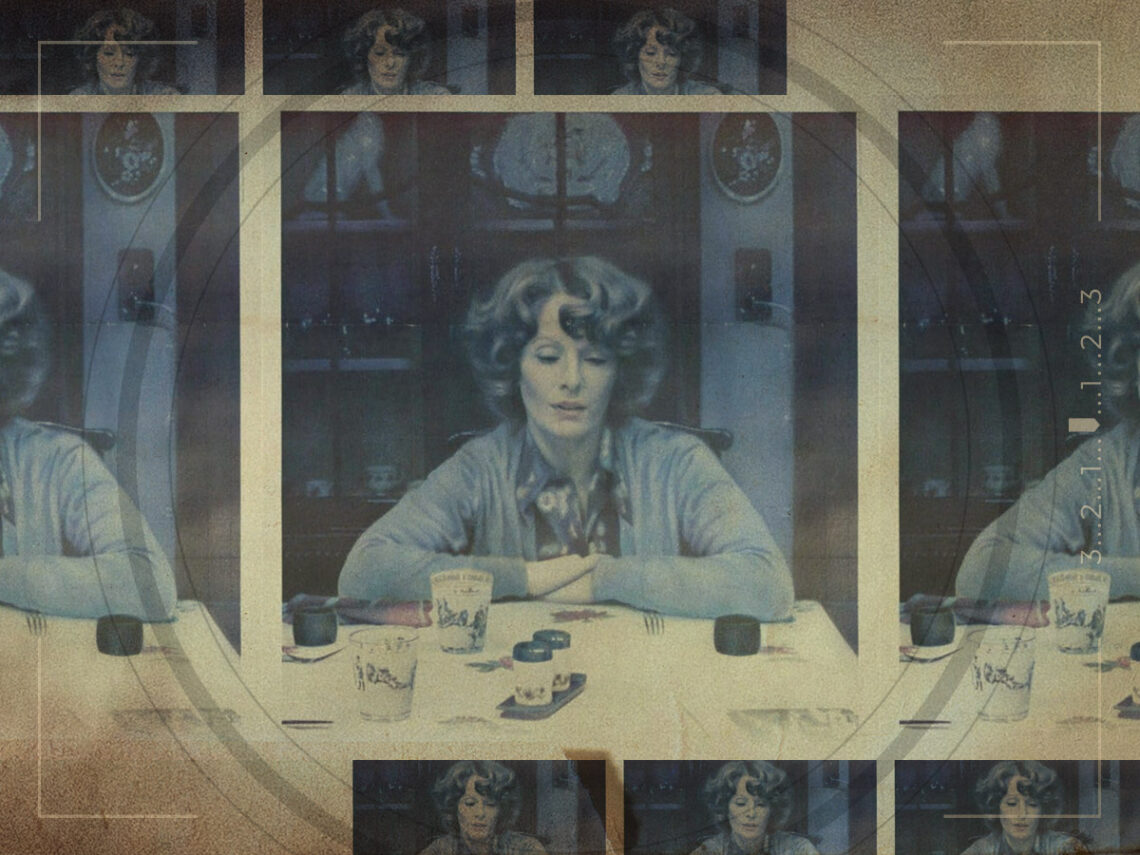
‘Jeanne Dielman’: If she can’t escape, neither can we

Chantal Akerman was a creative anarchist, blowing apart the conventions of the medium by deconstructing our ideas about structure and the types of stories that were deserving of being shared on the big screen, forcing our gaze towards moments that weren’t deemed worthy of being seen. Often centring around the inner world of women, Akerman redefined the cinematic hierarchy by shifting our attention towards everyday routines and experiences that have typically been ignored, not only demanding that we pay attention to them but prolonging the length of time that we spend with them.
Akerman almost wanted to punish her audiences by watching her films, with long and pointed takes in which very little action occurs, lingering over details that anyone else would consider insignificant or, perhaps, boring. But with her monolith film Jeanne Dielman, 23, quai du Commerce, 1080 Bruxelles boring is exactly the point that the director is trying to make. She wants you to suffer the same plight as her main character, leaving you trapped in the oppressiveness of her routine and the tasks that define her life. She doesn’t just want you to understand the loneliness or boredom of this character, she wants you to feel it.
Jeanne Dielman follows a lonely housewife’s daily chores and rituals, which take place over three days as she cares for her son, cleans the house, and prepares dinner. Each day is nearly exactly the same, with the audience observing the minutiae of her existence and the tediousness of her tasks, living a life that revolves around serving others. She wakes up and immediately begins cleaning her son’s shoes and preparing his breakfast. After he has left to go to school, she cleans and then begins cooking dinner, fleshing out the moments in between with mindless work that has little purpose besides filling time. If she can stomach it, she tries to enjoy a cup of coffee.
Each scene is long, laborious and lifeless, with the first day of her life running for nearly an hour on screen. At the end of the first day, it slowly dawns on us that there is no glamour or freedom within her life, and as the second day begins, we realise that it will repeat the exact same rhythms as the previous day.
I recently decided to rewatch Jeanne Dielman and was taken aback by a few moments that had washed over me during the first viewing. On the first day that we spent with Jeanne, she told the local shopkeeper that she didn’t know what she would do without her son. As the day went on, I realised that this is quite literally true – her entire existence centres around the labour that she performs for her son, with every single act dedicated to making his life as comfortable as possible, something that goes unnoticed by him and without ever uttering a word of thanks. He barely lifts his head in acknowledgement of her existence, instead making crude comments about how he cannot understand women who have sex with men they don’t love. “You cannot understand, you are not a woman,” she replies.

63.1% of Britain’s GDP is made up of unpaid domestic labour within households. Jeanne is the human face of this statistic, existing as a ghost of herself, a reflection of a person whose work keeps the world ticking over despite never being recognised or valued for this. Her personhood is a shadow of her regimented daily drill, with no way to assert her identity outside this all-encompassing routine. She serves her son out of duty, not out of love, with the pair having stiff interactions that don’t imply closeness or genuine friendship between them. She loves him, but their relationship is one of necessity, not bringing her fulfilment in any shape or form.
Jeanne does not have a life or sense of self outside of the home, something that struck me during her moments of stillness in which she doesn’t have a task to complete. On the first day, Jeanne receives a letter from her sister in Canada. She lays a fresh sheet of paper in front of her, pen poised above, ready to respond. But after a little while, she folds the paper away without writing a word. She quietly tells her son that she can’t think of anything to write. Her life is so dehumanising and mind-numbingly dull that she cannot muster a single thought to share with her own sister, all because her life doesn’t allow her to think or place any value in the thoughts she has.
However, this is something that particularly unravels on the third day, the moment after completing her chores. In one infamous and torturously bleak scene, we watch Jeanne ruthlessly knead mince for dinner, blankly staring into space as she does so. It’s almost excruciating to watch, witnessing a person who operates like a robot without any semblance of joy or meaning in what she does. After completing this task, she celebrates by pouring herself a cup of coffee. This is one of the few activities within her routine that you could say is purely for herself – a ritualised moment of relaxation that couldn’t be less relaxing. As I said before, Jeanne’s entire life revolves around domestic labour, and when she tries to do something for herself, she responds as though she is having an allergic reaction.
After taking one sip of the coffee, it is almost as if the mere act of sitting and spending time with her thoughts is completely intolerable, and she throws the majority of the cup into the sink. It is a startling act and one of the most violent moments of the entire film. Jeanne has been conditioned into believing that time spent for herself is futile and pointless, whole-heartedly believing that she exists to serve other people, leading her to sabotage any fleeting moment of pleasure that she might have. The simple act of enjoying a cup of coffee is almost too selfish and indulgent, so she pours it away and returns to work.
However, this is perhaps most obvious in the final scene of the film. In order to pay the bills and keep the household running, Jeanne has a number of clients that she has sex with on a daily basis. On days one and two, we do not see the sexual encounters themselves, only the aftermath as Jeanne washes herself and removes the towel from her bed. But on day three, we finally enter the bedroom as this is happening, and to our complete and utter surprise, something actually happens.
There is a man lying on top of Jeanne, and the pair are having sex. She suddenly looks agitated, rolling around and trying to free her wrists from his grasp. But as the audience begins to worry that she is uncomfortable and trying to escape, we notice that she is actually having an orgasm. In Jeanne’s world, sexual pleasure is the pinnacle of self-indulgence, and if she feels guilty about enjoying a cup of coffee, then you can imagine how she responds to having an orgasm – she stabs the man to death in the neck.
Our economy does not exist without the unpaid and invisible domestic labour that is performed by women, and through Jeanne Dielman, Akerman comments on the insidious form of slavery that is happening inside homes all over the world, exploring the mundanity and pointlessness of her existence by letting it play out in what feels like real-time. Each day consists of a build-up of inconsequential moments: using a sponge and putting it back in its exact place, riding up and down the elevator in her building and never breaking away for a second, even when we desperately want to look away.
We yearn for her to find meaning or fulfilment in her routine, praying that she will read a book, watch television or talk to a friend. But Akerman does not offer us any respite from her existence because Jeanne does not have the power to do so. This is her life, and if she cannot escape from it, neither can we.
