


A surreal slice-of-life: the discombobulating realism of Chantal Akerman’s ‘Je Tu Il Elle’

There’s a frank and almost overwhelming level of honesty in Chantal Akerman‘s work, often dissecting deeply personal feelings and experiences through her unconventionally long takes and achingly authentic performances. She is most recognised for Jeanne Dielman, 23 quai du Commerce, 1080 Bruxelles, a formative and colossal feat of filmmaking that charts the everyday routine of a housewife in the 1970s, with Akerman redefining the hierarchy of cinematic moments that are deemed important by focusing on and making an entire film out of mundane details, such as the washing of a spoon or peeling of a potato.
Through this film, she became inseparable from the slow cinema movement, elevating the meaning of this to new heights by creating an exercise in boredom and restraint, discussing the idea of wanting to punish audiences by being unable to escape from the confines of Dielman’s experiences, highlighting the mind-numbing nature of oppression and the thankless life she lives. However, while the story of Jeanne Dielman has acquired critical acclaim and global recognition, she was only able to make this film after the success of her 1974 film Je Tu Il Elle, which acts as a stark and slightly more disturbing springboard into her iconic style.
Je Tu Il Elle follows a woman who has a mild psychological breakdown in the wake of a breakup, attempting to find order and structure in her life. The film is essentially comprised of three long scenes: one as the character lies in her apartment, rearranging furniture and eating sugar, the next a sexual encounter with a truck driver who talks at her about his perspective on sex, and the last a fateful meeting with her ex-girlfriend.
The slowness of Je Tu Il Elle perhaps feels more pronounced than in Jeanne Dielman, with a collection of moments that have a more abstract and evasive meaning. The character sits on her bed and scoops sugar into her mouth while writing letters to an unknown person, although we presume it is the person who broke her heart. She meets her male lover in a way that isn’t entirely clear, with the pair spending an uncertain amount of time together before it abruptly cuts to the next scene. As a viewer, you aren’t sure if the film is set over the course of three days or twenty, leaving you in an ambiguous state of limbo that reflects the precarious headspace of the character.
There is an animalistic and feral feeling to the opening scene, with the measured narration conflicting with the actions of the character. She will explain how she moved her furniture to the other side of the room while the images on the screen show that it hasn’t moved at all. She rolls around in her apartment that only has a bare mattress on the floor, often removing her clothes as she continues to spoon heaps of sugar into her mouth. Perhaps she is attempting to numb her pain with something sweet, becoming almost comical as she keeps going with no sign of stopping before becoming disturbing again as we realise that she won’t.
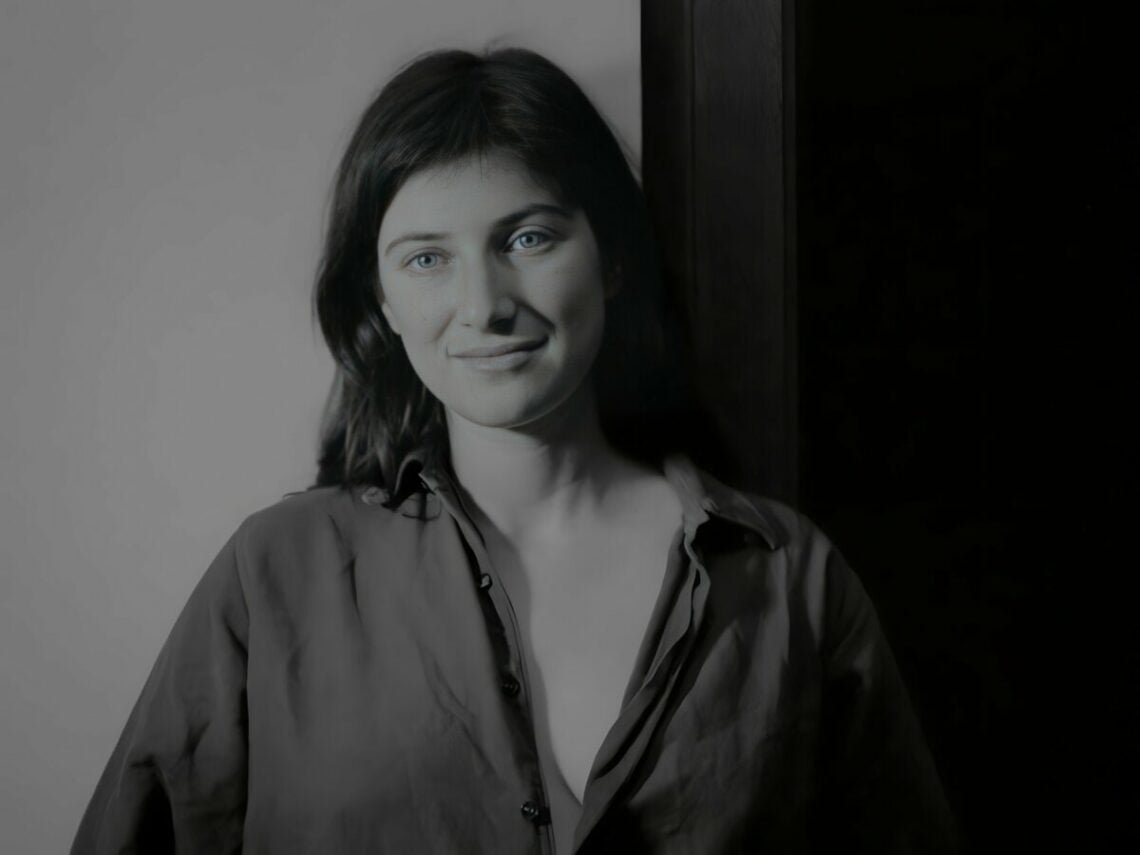
Perhaps the most bold choice made in the film was Akerman’s decision to cast herself in the lead role, exposing herself both emotionally and physically as she re-enacts the damage and chaos of someone in the grips of grief. After lounging around in her apartment for the first third of the film, which feels as though days and days have passed, the character then ventures into the outside world. It feels sudden and extreme, like the feeling of stepping out of the house on a bright day and being blinded by the sun. She quickly finds herself in a conversation with a trucker, spending some silent moments together in a bar as they drink and smoke before returning to his van.
She performs oral sex on him, with the camera lingering on his face as he instructs her and guides her. Afterwards, his character has a long and uninterrupted monologue about his marriage and philosophy towards sex. While everything about the first scene in the film feels completely unnatural and odd, hearing an ‘average’ man’s perspective on monogamy and family is perhaps the most jarring and unnatural aspect of the entire film. He rationalises his constant cheating and sexual attraction towards his eleven-year-old daughter, explaining how he rushed into his marriage and now sees his desire for intimacy with an anonymous woman as the price she has to pay for becoming pregnant so quickly into their relationship.
Naturally, after experiencing a type of intimacy that is so detached and impersonal, she retreats back to the comfort of her former partner. Despite grieving this relationship in her own way and attempting to move on, we almost feel a sense of relief that she is back with someone who actually sees her and reflects the type of connection she yearns for. After an abrupt cut, we see the couple having sex in a climactic and completely feral way. It almost looks as if they are fighting, tussling and nestling into each other as they quickly toss and turn from opposing sides of the bed.
There’s an overwhelming sense of urgency to this interaction, as though they both been consumed by the thought of being together and it can’t happen quick enough, leading them to become entangled in a knot of each other’s limbs. It’s both comical, moving and unsettling, unsure whether they are happy or furious about their reunion.
Je Tu Il Elle forces us to re-examine our expectations of form and structure in cinema, immersing us in a world that feels familiar yet detached from our own. Akerman creates a surreal slice-of-life story that captures the emotional discombobulation and sense of internal fracturing that comes from heartbreak, leading the main character to fight against her own impulses and feelings as she attempts to carve out meaning from her new way of life.
