


Chantal Akerman: the heartbreaking poetry of ‘News From Home’

Chantal Akerman is one of the most revolutionary feminist filmmakers of the 21st century, defining a new style that hinges on the principle of boredom and extreme patience. The director often described how she wanted to create a visceral quality in her films that completely enwraps the audience, wanting them to sit with uncomfortable experiences for as long as possible and almost make them suffer as a result.
Through the medium of slow cinema, Akerman challenges the male perception of womanhood that had so frequently been depicted on screen, choosing to make films that are both about the inner worlds of women but also punish her viewers by relishing in moments that people had never seen, inducing discomfort in the intimacy of seeing an aspect to femininity that hadn’t been put to screen before. The director famously said, “What I want is to make people feel the passing of time… with me, you see the time pass. And feel it pass. I took two hours of someone’s life”.
Akerman’s films are extremely slow and meditative, feeling the cumulative effect of the images washing over you only at the very end, finally being hit with a wave of emotion that is entirely unique to her work. In her most famous film, Jeanne Dielman, 23, quai du commerce, 1080n Brussels, she uses slow cinema to its most extreme to shine a light on the often-invisible lives of women who were never allowed to share their stories, highlighting the prison of patriarchy and the everyday labour that goes entirely unnoticed. It is mind-numbingly boring and devastating in the best possible way, creating a bleak portrait of three days in this character’s life and the routines that define her existence.
However, Akerman used these techniques in a new way in her 1976 film News From Home, in which the filmmaker is also the subject of the film. The film is a collection of images and footage of her early life in New York city, accompanied by a voiceover of the letters that Akerman’s own mother wrote to her after moving away from home. As she integrates and adapts to life in the city, her mother’s words slowly fade into the background, with her letters becoming more pleading as she loses touch with her daughter and desperately tries to grow closer to her, despite the vast distance between them.
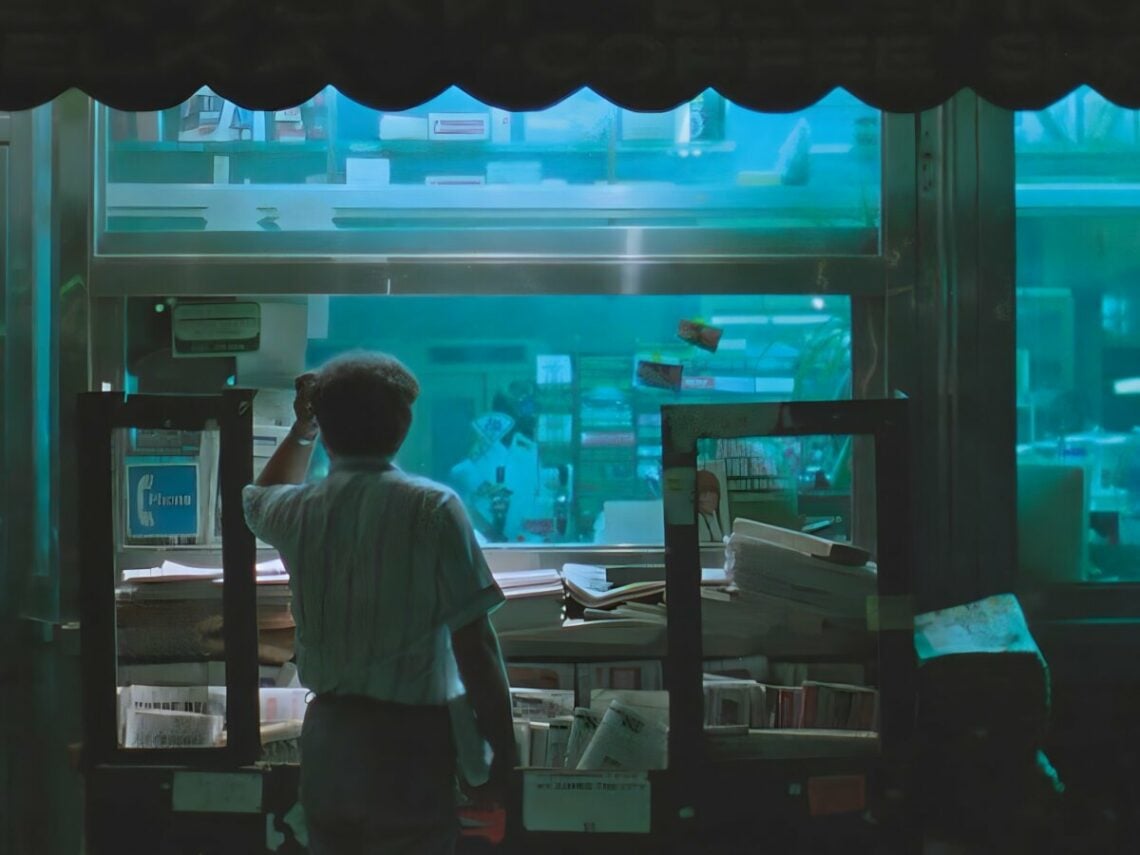
The film feels both brutal and delicate at the same time, with gentle footage of empty streets, people walking towards the subway and deserted convenience stores, and Akerman herself never being present in the footage. She is more of an omnipotent presence in the film, with the viewer being aware of the inner workings of her life through vague snippets in her mother’s letter as she asks about a friend of hers or job she recently started.
It captures how it feels to grow and find yourself away from your family, often not returning the same love or care that was shown to us as we start a new life. When hearing Akerman’s response to the letters, it sounds as though she has been skimming over her mother’s words and hastily responding to her, forgetting to reply to specific questions. Meanwhile, it is clear that back home, her family have been savouring every word written by her and re-reading the letters for new details and clues about what her life is like, desperate to feel closer to her and understand this new person she is becoming.
While Akerman uses boredom and patience to show how damaging and oppressive the patriarchy is in Jeanne Dielman, the filmmaker uses this in a new way to criticise herself, leading to a heartbreaking and melancholic portrait of lost relationships that disappear once we are in unfamiliar spaces, showing how the city can be both empowering and alienating as she discovers herself as an artist but loses touch with her roots.
The final shot of the film shows a view from a boat that slowly moves away from the city, with the skyline becoming foggy and distant as the city takes over entirely, lost in a new way of life that feels so desperately far from home.
