


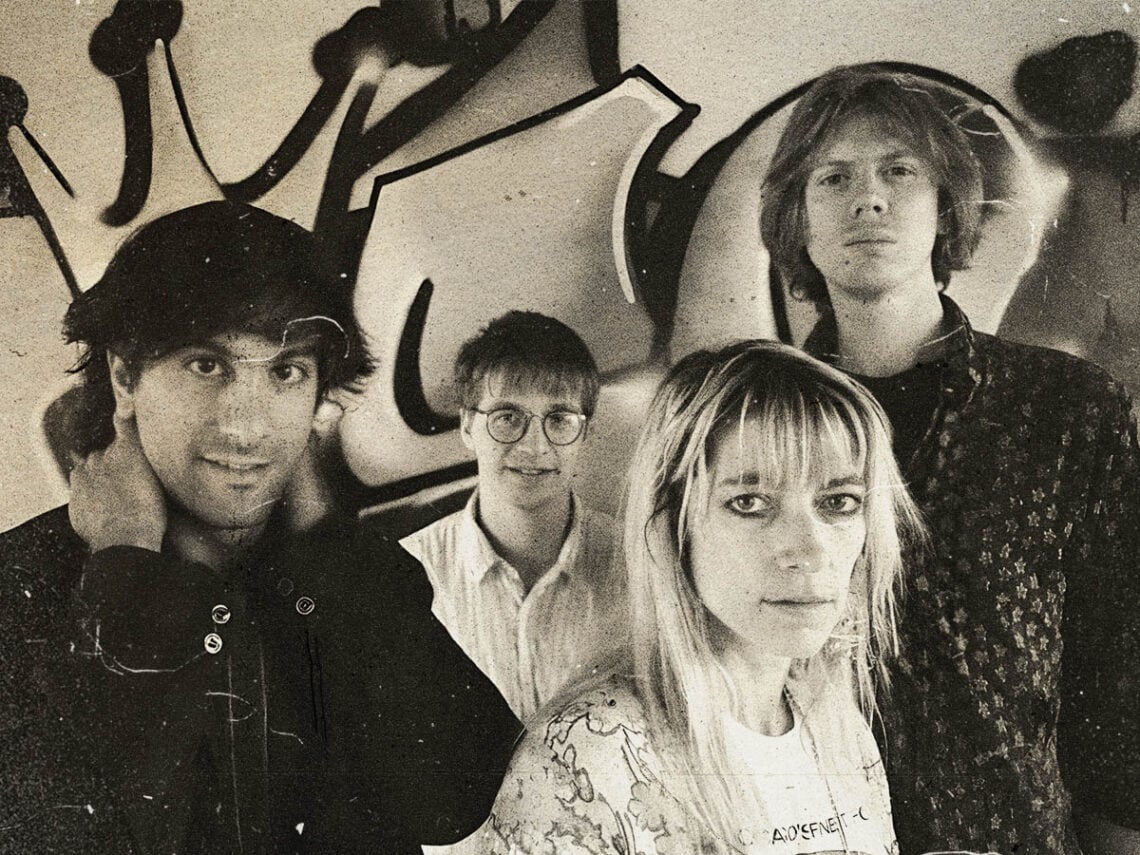
J Mascis for President: The story of Sonic Youth’s defining 1988 classic

Now, more than ever, we all dream of an alternate reality where we don’t have a former reality TV star and sexual predator as the president of the United States, and in 1988, despite the president being considerably less orange at the time, Sonic Youth had the same idea.
‘Teen Age Riot’ is the first single from the American rock band’s 1988 album, Daydream Nation. As the album’s title suggests, at the time the group explored the idea of escapism through the act of imagining alternate pathways, much like Sylvia Plath’s idea of a wiltering fig tree, with less malaise, more guitars, and an all-round grander scale.
In the opening segment of the track, the now-solo artist Kim Gordon recites stream-of-consciousness matter over a hypnotic guitar melody, saying, “You’re it, no you’re it / Say it, don’t spray it / Miss me, don’t dismiss me / Spirit desire / We will fall”. The last line is a nod to The Stooges’ song of the same name from their debut album.
However, the Stooges weren’t the main focus of the thumping track. Instead, the lyrics atop the frenetic sonic soundscape recount a different reality, one where the guitarist for Dinosaur Jr, J Mascis, is president. In the liner notes accompanying the deluxe edition of Daydream Nation, Byron Coley quoted guitarist and songwriter Thurston Moore, who deemed Mascis “our de facto alternative dream president”.
The song, which debuted at number 28 on the Alternative Airplay chart, slowly peaked at number 20, and overall spent nine consecutive, comfortable weeks on the official chart. The track’s pop sensibility and wistful, trippy nature meant it was widely adored by fans and sceptics further afield, who would otherwise leave Sonic Youth’s otherwise jagged clutter-clank on the shelf.
Escapism flourishes in a dystopian climate, and fittingly, Sonic Youth were writing at a time when the war on drugs was proving that most, if not all, politicians were corrupt, while the Reagan era’s trickle-down economics meant the rich were rewarded and the poor were left to a drip, thanks to disproportionate favouritism of the upper tier. At the very least, punk-rock rebellion was needed more than ever.
Sonic Youth parcelled it in, for them, one of their most mainstream structures, a traditional verse-chorus-verse, inspired in part by their work with hip hop producer Nick Sansan at New York City’s Greene St Recording Studio.

Despite this, the track also became a forefather of the grunge revolution that would soon sweep the metropolis and beyond throughout the 1990s, speaking to its multi-dimensional technicolour.
Despite the political provocations, the group remain humble on the track, as Moore sings, “Got a foghorn, and a drum, and a hammer that’s rockin’, and a cord and a pedal and a lock, that’ll do me for now,” standing as the poster-boy for the disaffected and alienated, thrusting his fist in the air the only way he knew how during an election year, a sentiment that has only grown in importance over the years.

Never Miss A Beat
The Far Out Punk Newsletter
All the latest Punk content from the independent voice of culture.
Straight to your inbox.