


Why Irish rock was vital to ABBA winning Eurovision

Of all the major world events that happened in 1974 – the Watergate scandal, the oil crisis, and Turkey invading Cyprus – none were perhaps more important than ABBA winning Eurovision.
It was a defining moment on so many levels: for Sweden, for Europop, and for middle-aged mothers everywhere who would go into meltdown as soon as a sip of wine passed their lips and they heard ‘Dancing Queen’ come on. Who would have thought that a song about the end of the Napoleonic wars would go on to launch a global phenomenon – but then again, it was maybe sending a subliminal message about how much people hated conflict.
You could, of course, get into a whole discussion from here about the nuances of the intersections between European pop and politics, and how ABBA unironically helped to shape that. There’s no denying that the band are absolutely the Eurovision Song Contest’s biggest ever export, but did they ever intend to create such a cultural behemoth?
It is worth stating quite quickly off the bat that ABBA have always eschewed the political limelight, at least in the most direct sense of the word. It was a subject they well and truly steered clear of during their 1970s peak, and have never often touched upon since – apart from banning their music from being played at a Danish far-right rally in 2010, and as part of Donald Trump’s campaigns.
Yet there was no escaping the fact that their fame and music came around at a time when Europe was at a bigger geopolitical crossroads than ever, not so dissimilarly to now. Their bursting onto the scene was indisputably a shimmering pop antidote to the horrors of the world, proving that there isn’t any issue that can’t be resolved through some vocal harmonies and a blindingly shiny catsuit.
However, beneath the surface, there is definitely more to ABBA than meets the eye. They were not political in the ‘70s in the most overt sense, nor were Thin Lizzy. But nevertheless, this unlikely pair shared a tiny connection that symbolised more about the state of the world than any bold statements could ever achieve.
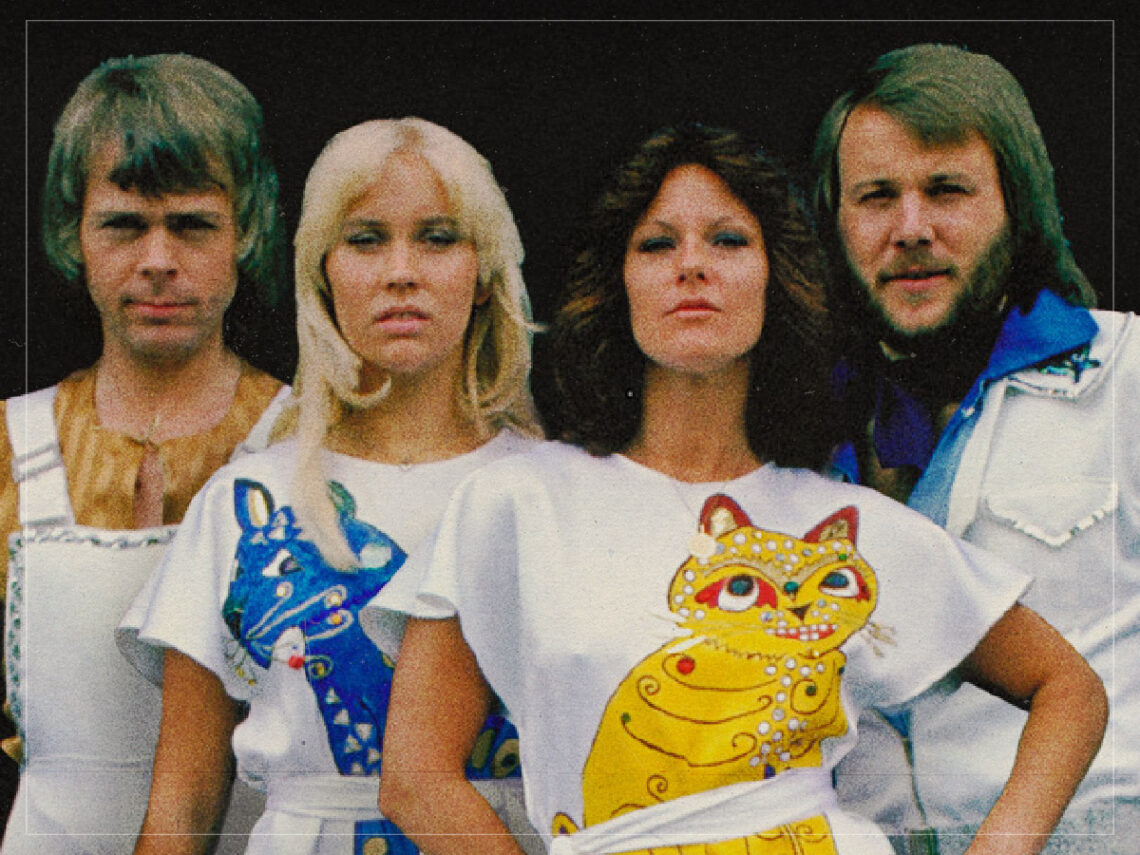
On the historic night of April 6th, 1974, when ABBA took home the Eurovision crown, there was one minute detail you could only find if you were looking as close as possible. The band’s Agnetha Fältskog was wearing a pretty standard outfit on the face of it, but hidden in plain sight on the lapel of her jacket was a Thin Lizzy pin.

Of course, it goes without saying that there is every possibility Fältskog was just a mere fan of the Irish rock band, who at that point had already had a hit with ‘Whiskey in the Jar’ and were slowly gaining status across the continent, especially with the release of their album Nightlife.
Superficially, Thin Lizzy’s hard rock overtures were a world away from the sunshine and rainbows sound that ABBA ever put out, but when you take a more concentrated look at it, there was a defining cause to be championed underneath in terms of what both these bands represented, and the reckoning they were bringing to the world.
It shouldn’t be forgotten that although eras like the ‘70s tend to be painted in glorious technicolour in terms of their musical impact, society as a whole was far less forgiving and inclusive than it perhaps pretended to be. Bigotry and discrimination were still entrenched ways of life, so an interracial Irish rock band, with multicultural members from both sides of the Catholic and Protestant divide?
That was truly revolutionary. Simply by being themselves, Thin Lizzy shone a light towards a culture that was slowly changing towards brighter days ahead. Then, when you consider the fact that things like the Eurovision Song Contest were gaining global attention with a band from Sweden storming the charts, the status quo was truly shaken.
So, yes: on one hand, it was just a woman wearing a pin badge for a rock band she liked, but the symbolism of what these two bands went on to achieve throughout the ‘70s was a signal of the world finally turning away from its norms of British and American centrism. A wider, more European sonic sound was on the up.
Did the Thin Lizzy pin help ABBA win Eurovision? Who’s to say, but it certainly seemed like the luck of the Irish was in supply.
