


The intoxicating world of Korean action cinema

Explosive action movies have been a key cog in the Hollywood machine for decades. However, in terms of quantity matching quality, Stateside cinema has arguably never replicated its Golden Age of the 1980s and 1990s. As a result, it can no longer be regarded as the ultimate hotbed for modern greatness, with Korean films swooping in to state a compelling case.
That’s not to say that Hollywood has gone entirely off the boil, but action flicks that will stand the test of time and be regarded as genuine classics are few and far between, even if they’re far from drying up entirely. Meanwhile, countries such as Korea, Malaysia, Thailand, and Indonesia have been experiencing boom periods of their own, giving rise to a slew of hard-hitting and blood-soaked masterpieces.
What makes it all the more impressive is the sheer number of bases that Korea’s 21st-century action output has managed to cover. In many cases, the local titles have proven to be vastly superior to their more expensive counterparts emerging from major studios on the other side of the world, even when touching on many of the same premises.
There are three titles that stick out more than most, and the way in which they sing from a well-known songbook but put an entirely bespoke spin on the fundamentals encapsulates the glorious madness of Korean action cinema in a nutshell. On paper, the three subgenres surely don’t have anything new left to say, but all it takes is some unbridled creativity and imagination to paint an old canvas in new colours.
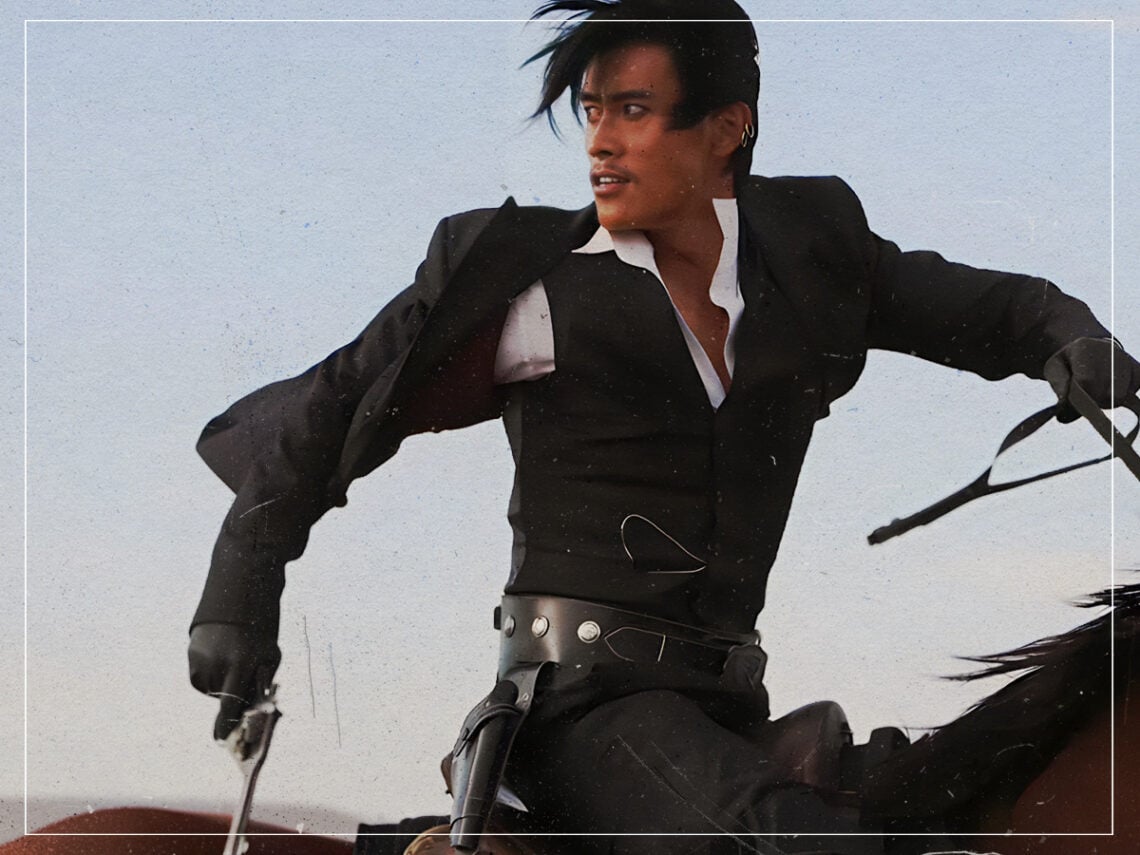
The western in its many forms – whether that’s classical, spaghetti, or revisionist, to name but three – used to reign supreme as arguably cinema’s most popular form of storytelling, but memorable 21st-century additions have been few and far between. When Kim Jee-woon’s The Good, the Bad, the Weird landed in 2008, though, it was a breath of fresh air.
As the title makes patently clear, the film is inspired by and indebted to Sergio Leone, Clint Eastwood, and the icons of the western that came before. However, it’s a distinctly Korean film on every level, although it offers a light-hearted counterpoint to the medium’s most seminal entries by planting its tongue firmly in cheek to plunge a trio of madcap central characters into a hunt for treasure.
Jung Woo-sung’s Park Do-won is a bounty hunter who covers ‘The Good’, Lee Byung-hun’s Park Chang-yi is a charismatically remorseless assassin who ticks off ‘The Bad’, while Song Kang-ho’s Yoon Tae-goo is a thief who lives up to his billing of being ‘The Weird’. A love letter to the glory days of the Western, the film remains inarguably and unequivocally Korean right down to its very core, a deliriously entertaining example of how the current boom period has mastered the art of taking universal stories and imprinting them with a local flavour to make them every bit as entertaining as they are unique.
As far as straightforward action goes, Korea has been in rude health for a while, as evidenced by Netflix making a concerted attempt to play John Wick at his own game – and come mighty close to usurping him altogether – with Kill Boksoon and Ballerina, both of which thrive on the kinetic staging and impactful execution of their action sequences.
However, in terms of the most visceral, expertly-orchestrated carnage that recent times have to offer, it’s hard to look beyond Jung Byung-gil’s viscerally violent revenge story The Villainess, which made such a mark on cinema as a whole that its impact was felt as far afield as the Marvel Cinematic Universe.
A character spending their life being trained as an assassin only to seek revenge on the people who made them that way is ground that’s been well-trodden by an innumerable amount of genre bedfellows dating back decades, but by the end of the first barnstorming action sequence, it’s as clear as day that Byung-gil has no interest in doing anything that’s been done before.
There’s a motorcycle chase that doubles as a weapon-assisted brawl, one that uses camera trickery to suggest lengthy unbroken shots seamlessly stitched together, pinballs between first and third-person perspective, and combines to concoct a mesmerising sense of intimacy and spectacle at once. That’s only one of many remarkable set pieces that leave the viewer with their jaw on the floor, wondering how exactly the orchestrator of such balletic on-screen carnage managed to make it look so damned beautiful.
Last but by no means least, the superhero genre’s dominance has raised the ire of many esteemed filmmakers, but none of them would begrudge the success experienced by Train to Busan director Yeon Sang-ho’s Psychokinesis, which was billed as Korea’s first-ever major superhero blockbuster, and blew its counterparts at Marvel and DC out of the water and into the stratosphere.
The origin story has been done to death relative to the comic book adaptation, but by taking the bare bones audiences know so well and making it a local story rooted in genuine socio-economic issues, Sang-ho weaves real-world commentary and winning comedy beats into a fantastical tale that never loses sight of its thematic undercurrent.
Ryu Seung-ryong’s Shin Seok-heon is a security guard at a bank who gains superpowers after drinking water from a spring that was imbued with an otherworldly aura by a meteor. Typical origin story stuff, but does he instantly set out to save the world and fend off one of those giant blue sky beams superhero cinema is so fond of? No, he opts to use his newfound abilities to stave off the threat a nefarious construction company poses to his neighbourhood.
As the filmmaker told Yonhap News, his inspiration was simple: “For a long time, I’ve loved comics that deal with supernatural powers and have pondered on whether I can make a comic action movie of them”. That’s something he certainly did, and to a level above the majority of Hollywood’s identikit costume-clad capers, on a fraction of the budget, and without sacrificing a shred of its street-level societal insight in the name of effects-driven escapades.
Those are just three examples, too, and it wouldn’t be a stretch to suggest Korean action cinema is in such rude health that no matter the parameters applied to the story, the sheer variety on display and the relentless invention and ingenuity contained therein has conspired to make the nation perhaps the 21st century’s single greatest purveyor of action-packed spectaculars.
