


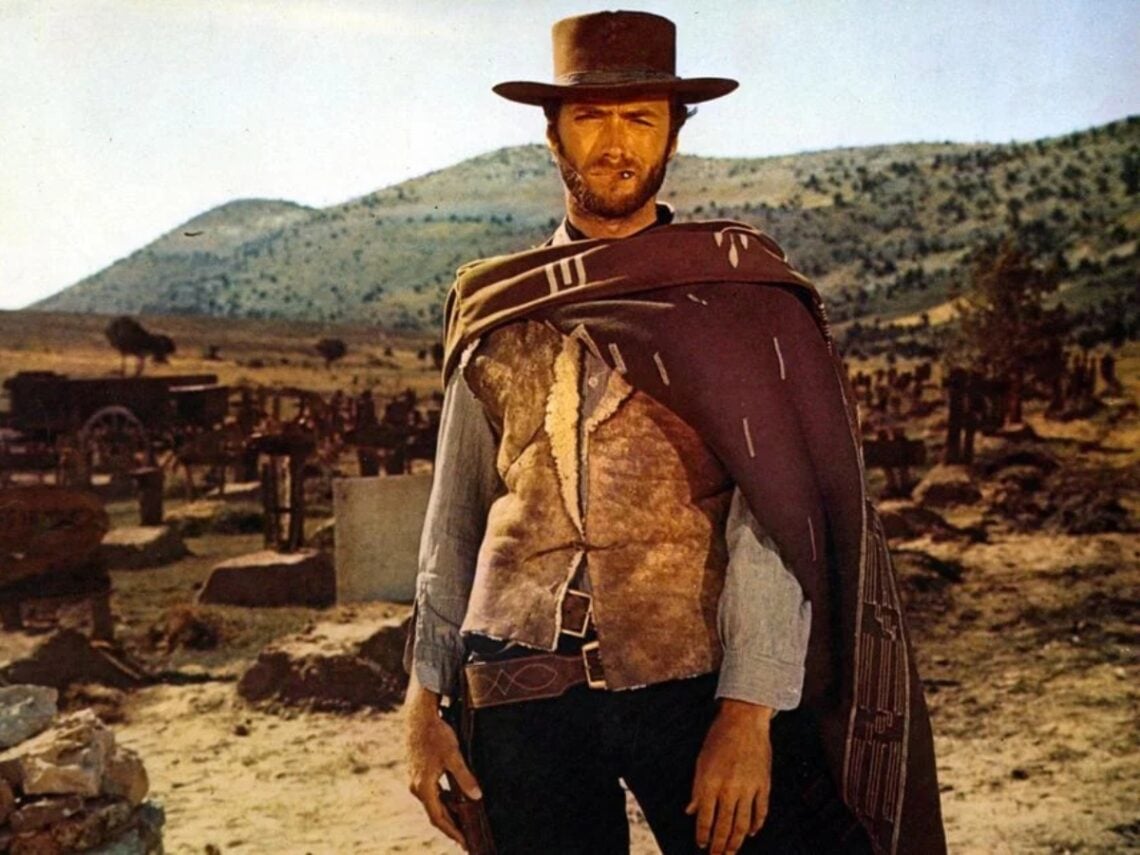
The complex relationship between Sergio Leone and Clint Eastwood

Sergio Leone’s professional relationship with Clint Eastwood is well documented. Eastwood, of course, starred in Leone’s Dollars Trilogy, beginning in 1964 with A Fistful of Dollars, an unofficial remake of Akira Kurosawa’s Yojimbo, and was completed by For a Few Dollars More in 1965 and The Good, the Bad and the Ugly a year later. Discussing the three films that he made with Leone, Eastwood later said: “I think [they] changed the style, the approach to westerns [in Hollywood]. They made the violence and the shooting aspect a little larger than life, and they had great music and new types of scores. They were stories that hadn’t been used in other Westerns. They just had a look and a style that was a little different at the time.”
Indeed, the Dollars Trilogy spawned the spaghetti western genre and brought about a swathe of subsequent imitations. Interestingly, though, screenwriter Luciano Vincenzoni – a frequent collaborator of Leone’s – once suggested that Eastwood nearly dismissed the role in A Fistful of Dollars. “It was a little problem with Clint Eastwood,” Vincenzoni said. “Sergio Leone offered the role first to Clint Eastwood, but Eastwood didn’t like the screenplay. When he read the screenplay, his first reaction was negative. When Sergio Leone told me this, I was very upset and said, ‘How come Clint didn’t accept the role?'”
Vincenzoni continued: “He said, ‘Don’t worry, I have Charles Bronson in my mind, and I don’t want to have Clint Eastwood again.’ After two days, Clint Eastwood called and accepted the role. That I remember clearly, Sergio had his mind an actor like Charles Bronson or Steve McQueen.”
From there, the screenwriter explained that Leone had to settle for Eastwood because, compared to Bronson and McQueen, Eastwood did not command such a hefty appearance fee. Vincenzoni explained: “Because he had a little money, and Clint at that time was a little TV actor and didn’t cost so much”.
While it was Eastwood that provided Leone with a future icon to feature in his spaghetti westerns, and Leone helped Eastwood get his leg up into his career, Leone once suggested that he does not consider Eastwood a proper actor in the same vein as the likes of Robert De Niro. “Robert De Niro throws himself into this or that role, putting on a personality the way someone else might put on his coat, naturally and with elegance, while Clint Eastwood throws himself into a suit of armour and lowers the visor with a rusty clang,” Leone told American Film. “It’s exactly that lowered visor which composes his character.”
He added: “And that creaky clang it makes as it snaps down, dry as a martini in Harry’s Bar in Venice, is also his character. Look at him carefully. Eastwood moves like a sleepwalker between explosions and hails of bullets, and he is always the same — a block of marble. Bobby, first of all, is an actor. Clint, first of all, is a star. Bobby suffers, and Clint yawns.”

Never Miss A Tale
The Far Out Clint Eastwood Newsletter
All the latest stories about Clint Eastwood from the independent voice of culture.
Straight to your inbox.