


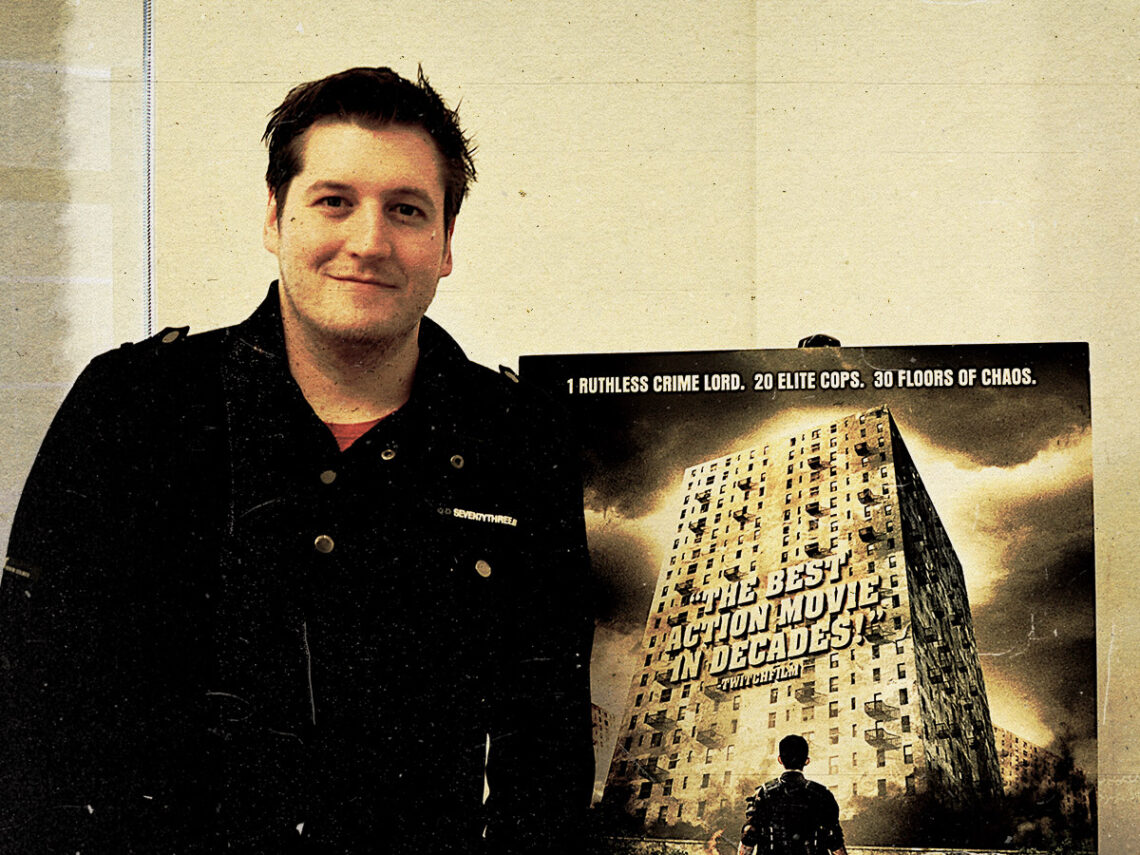
How a Welshman turned Indonesia into a hotbed for action cinema

Indonesian action movies had enjoyed boom periods before, most notably in the 1980s, through the likes of Jaka Sembung, Ferocious Female Freedom Fighters, and Jaka Gledek. However, it was a Welshman who helped open the doors to the medium’s latest boom period. Making his directorial debut with the 2006 thriller Footsteps, Gareth Evans became fascinated by the martial art of pencak silat after moving to Indonesia before his encounter with a delivery driver named Iko Uwais saw them partner up when the filmmaker cast the actor in his first-ever film role in 2009’s Merentau.
Desperate to collaborate again, the pair initially envisioned a sprawling crime story before the concept was ultimately whittled down into what became The Raid. Lean, mean, and expertly choreographed by Evans, Uwais, and the stunt team, the buzz following its premiere at the Toronto International Film Festival snowballed to see it become an international sensation, one that was fully deserving of the hype, calling it an instant action classic.
The sequel had Evans and Uwais return to something more in line with their initial concept by expanding the scope and scale to paint The Raid 2 as an epic and operatic sequel. It had more in common with The Godfather and Heat than it did its own predecessor, albeit with the requisite bone-crunching set pieces that showcased the director’s evolution as a filmmaker who could comfortably combine story with spectacle.
As well as Uwais’ career taking off, leading him to the bright lights of Hollywood and roles in Star Wars: The Force Awakens, Mile 22, and Expend4bles, co-stars Joe Taslim and Yayan Ruhian would also capture the attention of Stateside casting directors. This led to the pair’s appearance in such projects as Fast & Furious 6, Star Trek Beyond, Warrior, John Wick: Chapter 3, and Boy Kills World, among others.
The Raid had already made a huge impact on the trajectory of its on-camera talents. Beyond that, action aficionados, major studios, and even streaming services had their eyes opened to Indonesia’s burgeoning market for hard-hitting, intricately executed and explosive line of small-scale features that compensated what they lacked in budget with sheer ingenuity and kinetic thrills.
The Mo Brothers – known individually as Timo Tjahjanto and Kimo Stamboel – were directing long before Evans and The Raid arrived on the scene. Still, it can’t be a coincidence they didn’t move into the action arena until afterwards, with the results proving to be equally as impressive.
2016’s Headshot was a spiritual successor for many more reasons than simply starring Uwais in the lead role. While Stamboel eventually returned almost exclusively to horror, Tjahjanto continued down the path carved out by Evans by helming distinctly Indonesian actioners who found themselves being devoured by a global audience.
Netflix’s The Night Comes for Us reunited Uwais and Taslim to rave reviews, while The Big 4 received similarly enthusiastic responses and marked its debut on-demand by becoming one of the top ten most-watched movies in 53 countries around the world on the streaming service. In addition to the upcoming The Shadow Strays marking his third Netflix original, Tjahjanto became attached to remake both Train to Busan and Under Siege for Warner Bros. as his profile continued to rise.
Emil Heradi’s Night Bus, Randy Korompis’ Foxtrot Six, Angga Dwimas Sasongko’s Ben & Jody and 13 Bombs, Joko Anwar’s Gundala, and Mike Wiluan’s Buffalo Boys are just a handful of titles to emerge during the wake of The Raid to further establish Indonesia as a hotbed for action. The latter two even display its range and versatility by adopting the tropes of the superhero and western genres, but still retaining a distinctly local flavour.
The credit for the resurgence and subsequent increase in global awareness, visibility, and popularity can’t be laid entirely and exclusively at Evans’ door. However, The Raid nonetheless ignited interest in Indonesia’s action-packed output to a level it hadn’t enjoyed for a long time, giving rise to a phenomenal period for the country’s contributions to the genre.
