


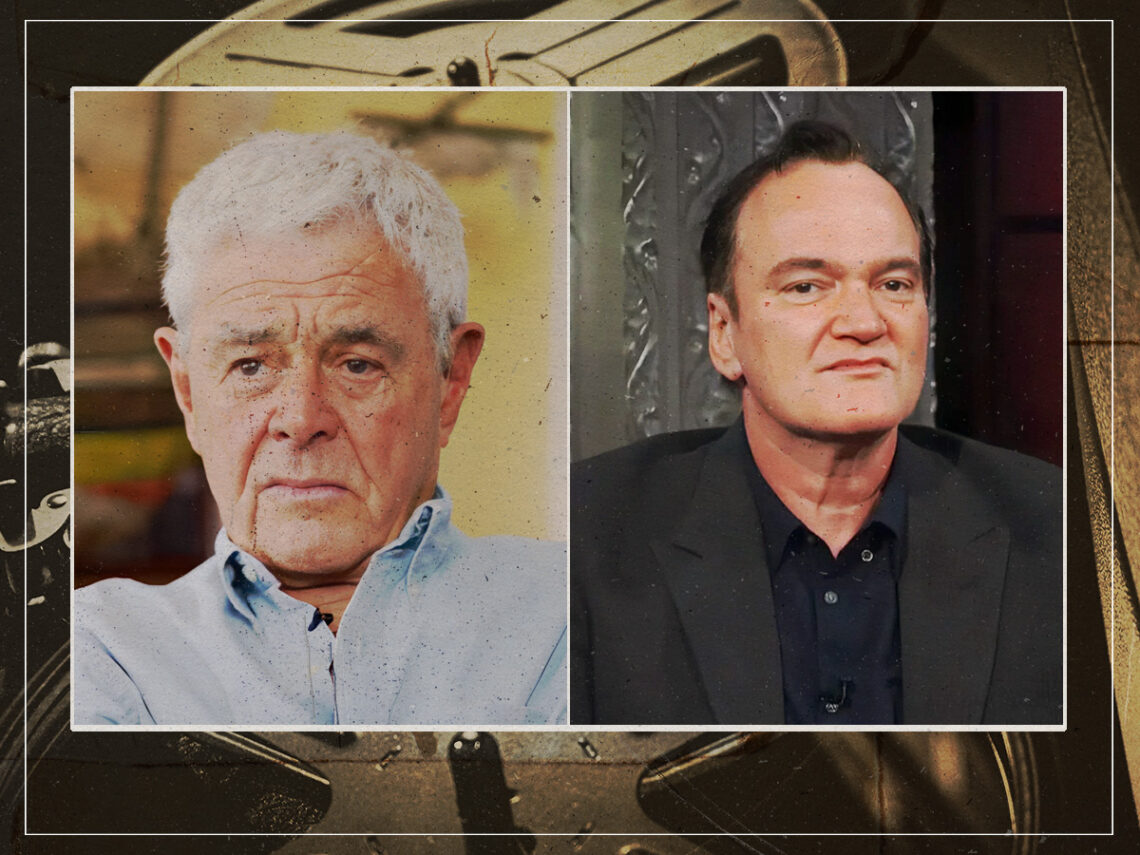
“Nobody wants to turn into Richard Donner”: inside Quentin Tarantino’s issues with a legend

It’s no secret that Quentin Tarantino has become obsessed with his own legacy, to the point he’s placed himself in what might well turn out to be an unwinnable position.
The filmmaker has been adamant for years that once his tenth feature hits cinemas, he’s done. As a result, the pressure on that movie to deliver is already through the roof, and nobody even knows what it is after he abruptly decided The Movie Critic wasn’t the note he wanted to end on.
Retirement isn’t a term that means as much in Hollywood as it does in other walks of life, but Tarantino has become so consumed by trying to ensure the history books will remember him in a certain way that it’s unlikely he’d renege on his promise to abandon ship unless that tenth film is terrible.
In fairness, many are going to view it as a disappointment if it’s not only his best work but one of the greatest films ever made. He’s got nobody to blame but himself for having to shoulder such a burden, but invoking the name of Richard Donner as an example of what happens when populism takes precedence over creativity feels like a low blow.
Tarantino has never been shy about confessing his fears of evolving into an old-man filmmaker who doesn’t know what to let go. Even though Donner was admittedly 76 years old when 16 Blocks was released and hadn’t made anything truly great for a long time beforehand, using him as the harrowing face of crass commercialism completely overlooks what was an eclectic, esteemed, and influential filmography.
He may have started out as an independent filmmaker, but Tarantino was a studio darling from the second Pulp Fiction was unleashed upon an unsuspecting world. He’s been able to write his own ticket since then, placing him in the rare position of being handed a blockbuster-sized budget to make auteur-driven pictures where he holds complete and uninhibited creative control.
Donner was never that guy, nor did he want to be. He took the reins on 22 movies – 23 for anyone who wants to include Superman II: The Richard Donner Cut among that number – and he didn’t take a writing credit on any of them. He was a director-for-hire, sure, but he was also one of the very best in the business at answering a studio’s call.
Reflecting on his aversion to going too mainstream, Tarantino told Alexandre Rockwell that “you don’t want to walk the complete Hollywood road where you turn into a hack, into Richard Donner. Nobody wants to be Richard Donner.” That’s his opinion, and he’s entitled to it, but it does overlook the fact that there are an awful lot of aspiring and established directors alike who’d love nothing more than to be Richard Donner.
After all, he’s responsible for The Omen, the Academy Award-winning classic that became one of the most popular and iconic horror flicks of its era. He made audiences believe a man can fly with Superman, the influential comic book adaptation that continues to cast a shadow over the genre to this day.
Donner refined the blueprint the buddy cop action thriller has been copying for decades when Lethal Weapon emerged as arguably the pinnacle of the bickering partners subgenre, launching a lucrative franchise in the process. The Goonies is a beloved and timeless adventure that continues to win over new converts with each passing generation, and Scrooged was ahead of the curve in weaponising the more cynical side of the festive spirit for comedic effect.
On one hand, it’s easy to see what Tarantino is getting at. He couldn’t sanction the idea of being chewed up and spat out by the Hollywood machine, emerging on the other side robbed of his integrity, artistry, and originality. On the other, while there are definitely plenty of hacks in the business, Donner made several classics that remain as popular today as they ever have, and he racked up billions in ticket sales in the process.
Tarantino is allowed to decry the perils of being subsumed by the lure of big budgets, glossy productions, and rampant escapism because those are waters he’s been tempted to wade into many times before. That being said, there’s no shame in being Donner. He was one of the best at what he did, and there aren’t many directors who’ve made a comparative number of crowd-pleasers that so comfortably stand the test of time.

Never Miss A Take
The Far Out Quentin Tarantino Newsletter
All the latest Quentin Tarantino content from the independent voice of culture.
Straight to your inbox.