


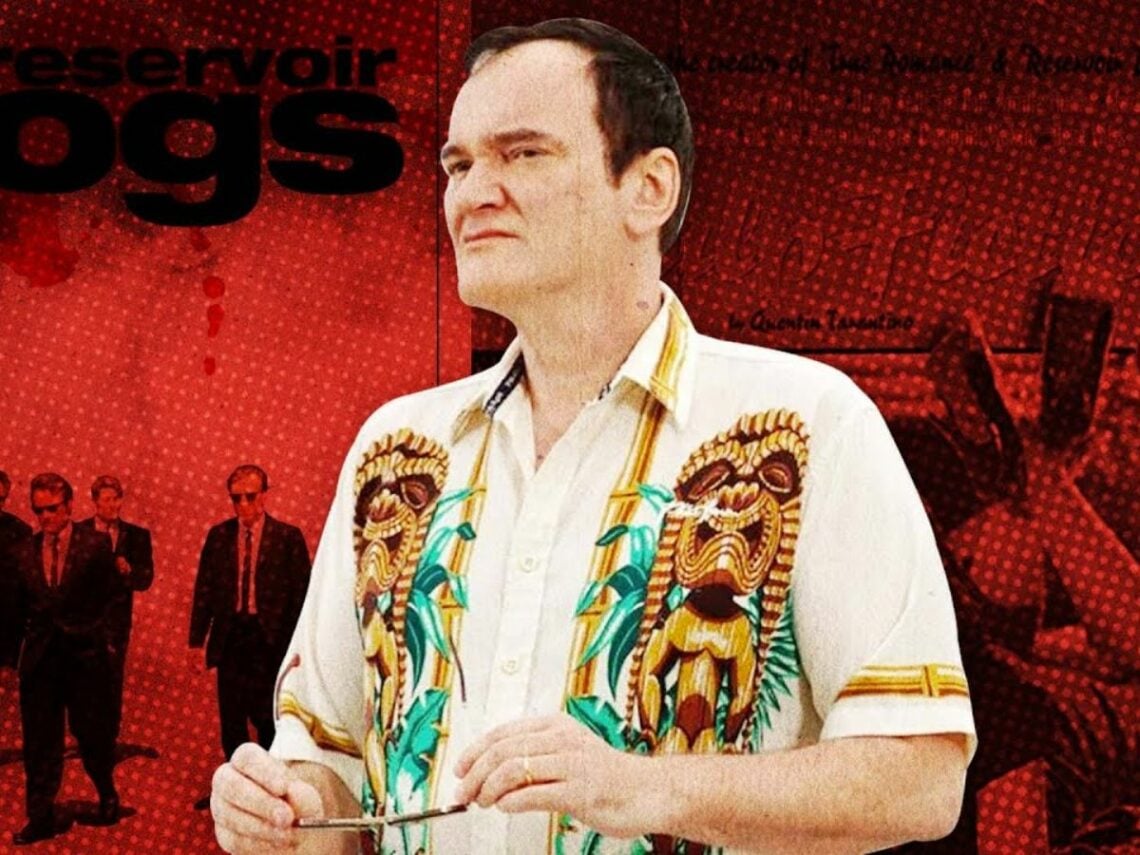
“I don’t want to be an old-man filmmaker”: Quentin Tarantino’s impending retirement and the perils of self-mythologising

Retirement doesn’t mean as much in Hollywood as in other walks of life. That’s precisely why it’ll be very interesting to see if Quentin Tarantino really does stick with his plans to bow out of feature directing following his upcoming tenth and allegedly final film, The Movie Critic.
Tarantino has such a fertile imagination and a cavalcade of story ideas, pitches, and concepts. Even outside his filmography, he has had projects that have been so heavily touted in public only to amount to nothing. Therefore, he hardly gives off the impression of somebody who’ll be quite happy to gracefully exit the movie business and spend the remainder of their days without ever experiencing the itch to return.
Tarantino has been adamant that he doesn’t want to be “an old-man filmmaker, making old-man movies, and I don’t want to be the one not to know when to leave the party”. While that’s fair enough, and he’s entitled to his own opinion, there’s an air of self-preservation and self-mythologising about his determination to call it quits. Securing his own lasting legacy appears to be more important to him than continuing to make movies.
Of course, his argument can be handily blown apart when looking at several past and present all-time greats. A huge number of them continued churning out classics, hits, and masterpieces while remaining completely unaffected by the inescapable sands of time.
Martin Scorsese and Ridley Scott are into their 80s, Steven Spielberg isn’t too far behind them, and the three of them continue working to a supremely high level. Digging a little deeper into the past, Akira Kurosawa was 83 when his 30th and final feature, Madadayo, was released. John Ford was in his early 70s, Alfred Hitchcock was in his late 70s, as was David Lean, and on and on it goes.
With two Academy Award wins from eight nominations under his belt, a singular and inimitable style that changed the face of independent cinema in the 1990s and inspired a generation of filmmakers, and a fervent imagination that’s continuously cooking up new ideas, there’s no reason why Tarantino couldn’t carry on in the rich vein of form he’s been in for more than 30 years. The evidence is there that he’s yet to lose so much as a single step in three decades, but drawing a line under his filmography at ten feels too neat, too cute, and far too precious.
There have already been potential signs that he’s planning for what comes next, whether it’s the companion novel to Once Upon a Time in Hollywood, his book Cinema Speculation, or his flirtations with comic books, which would provide a creative outlet post-retirement. Technically, he could even turn his hand to television without reneging on his word, and it’s a guarantee that every major network and streaming service on the planet would be falling over themselves to be a part of it.
Ever since he first became a staple of mainstream cinema, Tarantino has always projected a confidence and self-assuredness that borders on the arrogant, and deciding to actively step away from the dream job he’d always dreamed of doing feeds into that notion. He’s becoming gradually more obsessed with how history will remember him at the expense of what he’s capable of contributing in the here and now. The explanation he’s given for his retirement underlines that increasing desire for what he’s going to be remembered as in the years and decades to come, not where he stands in the present.
For talking’s sake, though, what happens if The Movie Critic is awful? Hypothetically speaking, no matter how remote the chances may be, there remains the slightest possibility that after putting so much stock into his mythical tenth and final film and definitively marketing it as the culmination of his exit strategy, it makes Madame Web look like The Godfather. Were that to happen, then his legacy would be that of somebody who spent years talking up their swansong only to botch the landing and be widely mocked for it as a result, which is the inherent danger of such self-aggrandisation in microcosm.

Never Miss A Take
The Far Out Quentin Tarantino Newsletter
All the latest Quentin Tarantino content from the independent voice of culture.
Straight to your inbox.