


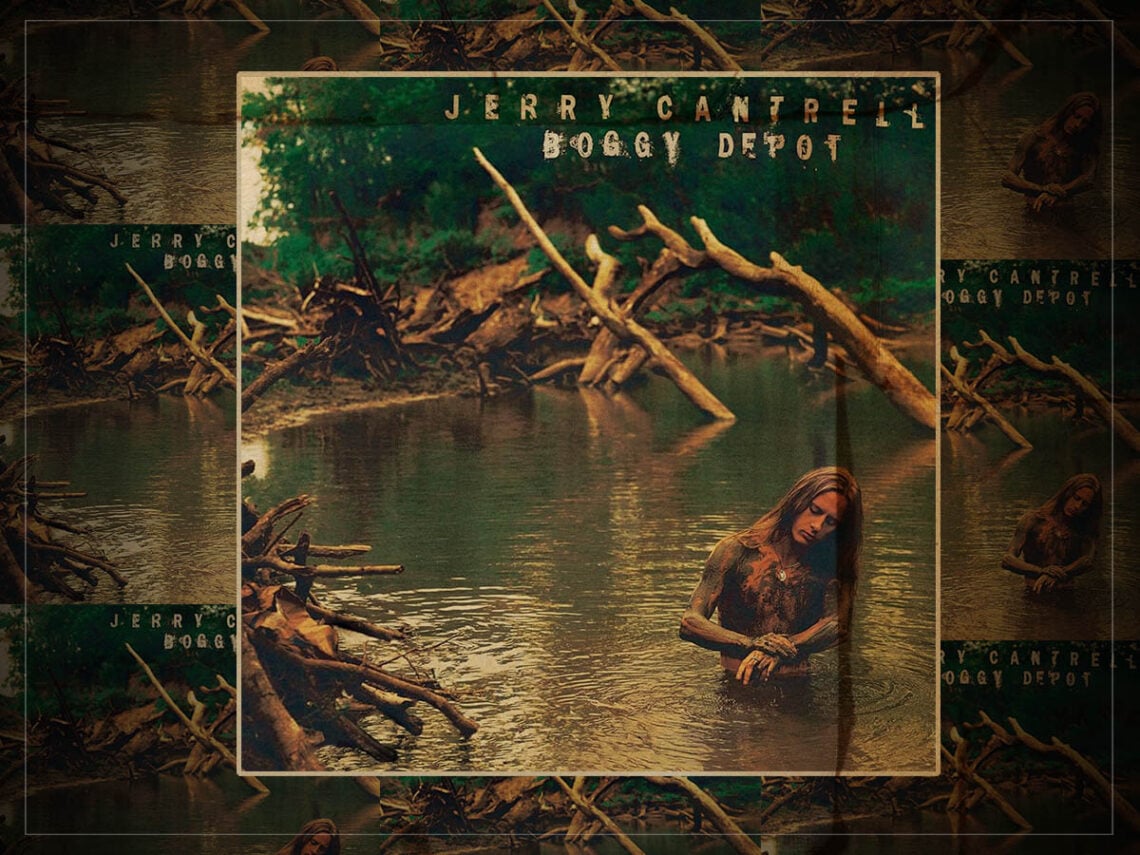
The Cover Uncovered: The ‘Apocalypse Now’ influence on Jerry Cantrell’s ‘Boggy Depot’

The alternative rock explosion that erupted from Washington’s working-class logging city is typically bookended by Nirvana frontman Kurt Cobain’s violent end in April 1994, offering their MTV Unplugged in New York acoustic live album as grunge’s haunting coda. However, the Seattle scene had one final classic record around the corner. Dropped in October 1995, Alice in Chains‘ eponymous third LP would stand as the scene’s true farewell record. The cover’s glum-looking three-legged dog was the symbol of grunge’s close after Nevermind‘s swimming baby became the face of its dizzying peak.
However, Alice in Chains was burnished by turmoil. Singer Layne Staley had been battling a gnawing heroin habit that required the album sessions’ round-the-clock, perpetual schedule to accommodate the frontman’s haphazard availability. Smack would continue to plague his life, flashing a haunting presence during Alice in Chains’ own Unplugged performance, taking its toll during their opening slots for Kiss’ Alive/Worldwide Tour. This would be Staley’s last live performance in July 1996 in Kansas City, who would die of a speedball overdose in 2002.
Apart from addiction troubles, Alice in Chains’ uncertainty was accelerated by guitarist Jerry Cantrell’s reluctant steps toward his first solo record. Having sung ‘Would?’s verses and all of ‘Heaven Beside You’, Cantrell had already set a precedent for frontman duties—albeit lacking Staley’s tortured howl. Following his contribution to the Cable Guy soundtrack with ‘Leave Me Alone’, Cantrell scooped some of the demos that didn’t make Alice in Chains and began work on an album that would draw him to his musical foundations and familial heritage.
Cantrell’s father had served as a creative muse before. Inspired by Jerry Cantrell Sr’s experience in the Vietnam War, Alice in Chains’ ‘Rooster’ tackled the scarred effect the messy conflict had on the US Army’s deployed soldiers, and the war that still waged internally upon their return home. Reaching deeper into Sr’s roots, Cantrell decided to title his 1998 solo debut after the Oklahoma ghost town his father grew up near. Remembering the area’s Clear Boggy Creek, Cantrell sought to capture the record’s country-soaked hard rock with a suitable backwaters artwork.
“I would drive my truck down to the edge of the river where we shot the cover of the album,” Cantrell told The Seattle Post-Intelligencer. “I wrote quite a few of the lyrics there. And I just had this [vision] of me with mud all over myself. It was kind of like an Apocalypse Now/Martin Sheen type of thing. It just fit the vibe of the stuff I was writing.”
Gracing 1998’s Boggy Depot waist-deep in the river and smearing mud on himself, this image of Cantrell served as a succinct clue to the record’s rootsy character. Tapping into the country he grew up on, Cantrell incorporated piano and organ for some of the album’s softer moments, as well as beat-up vintage mics and hardware to evoke an authentically rustic sound. Family played a further role in Boggy Depot‘s liner notes, featuring photos of rural Oklahoma and a shot of Cantrell sitting on a porch with his great-uncle Victor Lane.
While 2002’s Degradation Trip would fare better with critics and fans alike—and afforded extra poignancy with Staley’s death two months before its release—Boggy Depot marks an essential moment in Cantrell’s career, where creative paths had yet to be realised, and Clear Boggy Creek’s cleansing power brought a strange catharsis to an artist in need of washing away band trauma and the trappings of fame.
