


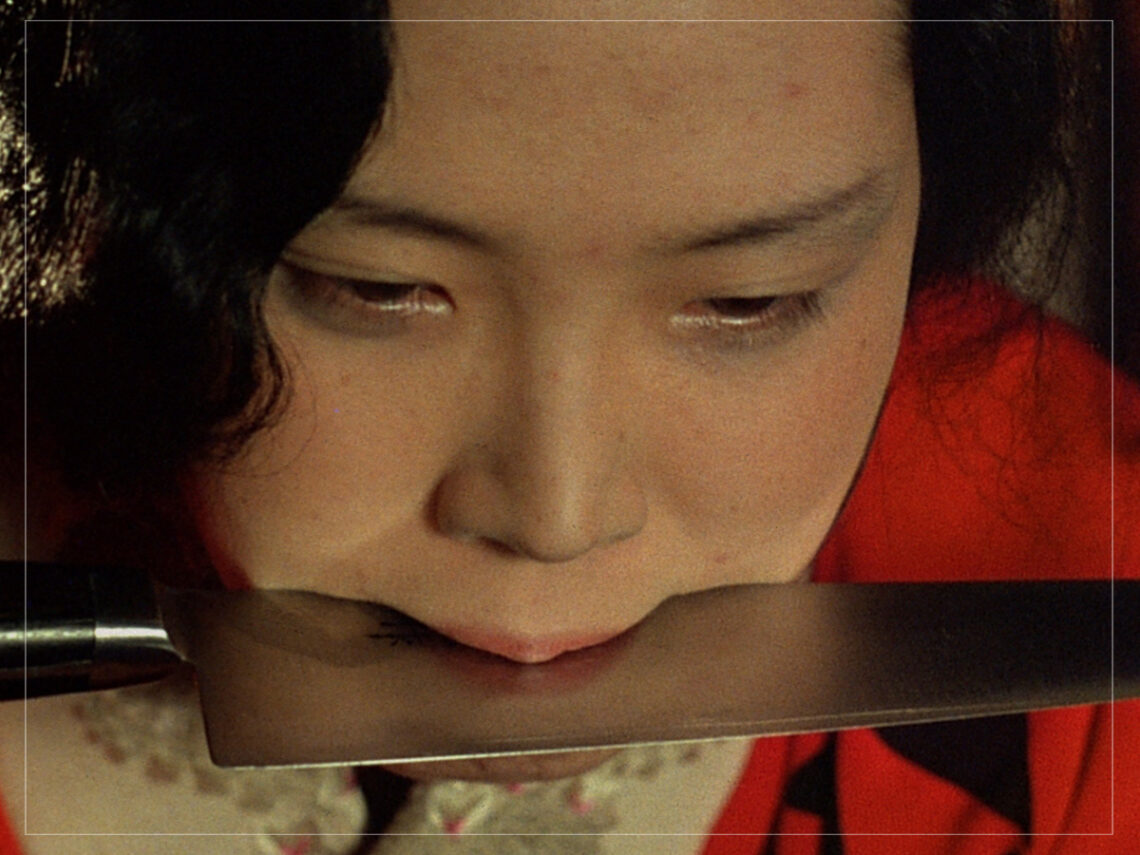
‘In the Realm of the Senses’: Erotic cinema that makes you squirm

About four years ago, I invited a new friend of mine to a DIY screening of the Japanese art film In the Realm of the Senses. I admittedly knew little about the movie besides the fact it was erotic and rather controversial, but I didn’t think it would be anything we wouldn’t be able to handle.
What transpired was a night that led my new friend to question if I was some sort of pervert with a desire to chop off men’s penises, only for him to be relieved when I turned around and said, “Well, that was boring”.
The thing is, I do really like the kinds of movies that make you squirm in your seat, the ones that force you to wince as nauseating images appear on screen. I even like Saló. But In the Realm of the Senses just didn’t hit the mark for me, with its egg-in-vagina-into-mouth scene and copious amounts of unsimulated sex that quickly became tedious, somehow.
I think about my reaction to that film rather frequently, because it surprises me that I didn’t like it. I’ve watched worms get inserted into public hairs in A Real Young Girl and chickens squashed to death during a Pink Flamingos sex scene, but In the Realm of the Senses simply left me both bored and disgusted. What then, is the difference between a good movie that makes you squirm, and a bad movie that makes you squirm? Is the boundary actually that clear?
There are certain things we need to take into consideration here: everyone has different boundaries for what they consider ‘too far’; there’s a difference between movies using transgressive imagery for the purpose of shock versus to truly communicate a wider theme; and some movies – regardless of their use of boundary-pushing imagery – are just plain terrible.
As a rather open-minded person, I like to think I can understand why certain artistic decisions are made that many might deem too much. Sure, no one wants to see the graphic violence of Saló, but I truly believe that Pier Paolo Pasolini’s goal to attack totalitarianism, capitalism, and the violence of bourgeois culture was absolutely groundbreaking. Is it fun to watch? Not at all. But it’s a movie with a clear mission statement that it practically smacks you in the face with, leaving you unable to forget.

Meanwhile, a question that often arises when discussing certain transgressive films is the classic ‘isn’t this just porn?’
Films like Nymphomaniac and Romance might be loaded with explicit sex scenes and nudity, but this is precisely what the movies are about. The difference between an erotic arthouse film and a well-shot video you could find on the copious number of porn sites catering to every need online is the intention.
Of course, we know Porn is designed to titillate, but in movies like Nymphomaniac, we’re forced to reckon with themes like female sexuality, the power of memory, desire vis-à-vis sexual shame, and male violence. It’s intense and in-your-face, but it really gets the message across.
With In The Realm of The Senses, I’m aware that there is plenty of political context that makes the constant shagging more understandable, but God, does it get relentless.
The couple at the centre of the film see their sexual relationship as a political act of defiance, as emphasised by the marching soldiers, but the intensely graphic and close-up shots of their lovemaking simply feels sterile and cold. Director Nagisa Ōshima set out to make a radical film that took pornographic imagery and transplanted it into a new setting—one of political provocation and erotic transgression—but what becomes of the film is endless repetition that doesn’t make a strong enough statement.
There’s even a scene in which two very young children are naked, only for Sada, played by Eiko Matsuda, to grab the little boy’s penis and tug at it until he cries out in pain. This is child abuse, plain and simple, and especially not needed within the context of the film. There’s no defending it.

So, for me, In the Realm of the Senses is a movie I have no desire to revisit. It made me uncomfortable in all the wrong ways, as did it make my friend raise his eyebrows, while another friend was trying to hold down his dinner. Yet, many people think the movie is a masterpiece, finding a place in the coveted Criterion Collection, with the verdict generally being that it’s a truly transgressive and daring piece of erotic cinema that, if you don’t like, you’re just not open-minded enough.
But some films just don’t do transgression right, and I’d argue that In the Realm of the Senses is too pretentious for its own good. Pretension can really let down an extreme film, in fact, and that’s why John Waters’ self-aware approach works so well. Films that try to be transgressive but fail, like Saltburn, miss the mark on account of their clear intention to shock without substance.
Emerald Fennell’s film is poorly written and lacks any clear statement about class (as much as it tries to), so when we see Barry Keoghan humping the mound of dirt on top of a grave half-naked or slurping up cum-infused bath water, it doesn’t have the same effect as the movies the director was clearly taking inspiration from.
Transgressive cinema is never going to please everyone, as sometimes it’s not enough, sometimes it’s too much, and this can make it hard to distinguish between a genuinely good film and one that takes boundary-pushing to new and uncomfortable heights. However, I think that we need to be smart enough to acknowledge that when a movie is doing something intensely provocative, it doesn’t mean it’s automatically ‘just porn’ or ‘too offensive’. We’re all entitled to our own opinions, and there are many instances where a movie enters the realm of the indefensible (showing child abuse, for example), but a movie like Nymphomaniac, with its explicit look at female sexuality, shouldn’t necessarily offend you.
At the end of the day, transgression will always occupy a complex place in the cinematic world, and it’s these endless debates over what is morally correct and what is ‘too far’ that makes them so important. I might dislike In the Realm of the Senses, but I can find value in discussing the merits of its incessant and stomach-turning scenes. The only way to consume cinema is to go in with an open mind, even when it feels like everything you know about movies—and even life—is being challenged.
