


Revisiting the stomach-turning horrors of Pasolini’s ‘Salò, or the 120 Days of Sodom’

Italian director Pier Paolo Pasolini never got to witness the reception to his highly controversial film Salò, or the 120 Days of Sodom. Sometimes labelled as the “sickest film of all time,” Salò paved the way for the subgenre of extreme cinema.
To put it simply, Salò is an incredibly hard watch and definitely not one for the faint-hearted. The film revolves around a group of aristocrats that capture a group of teenagers and force them to perform a series of unthinkable acts over the course of four months. Inspired by Dante’s Divine Comedy, the film is divided into four parts: Anteinferno, Circle of Manias, Circle of Shit, and Circle of Blood; these subtitles give a good insight into the horrors contained within Salò.
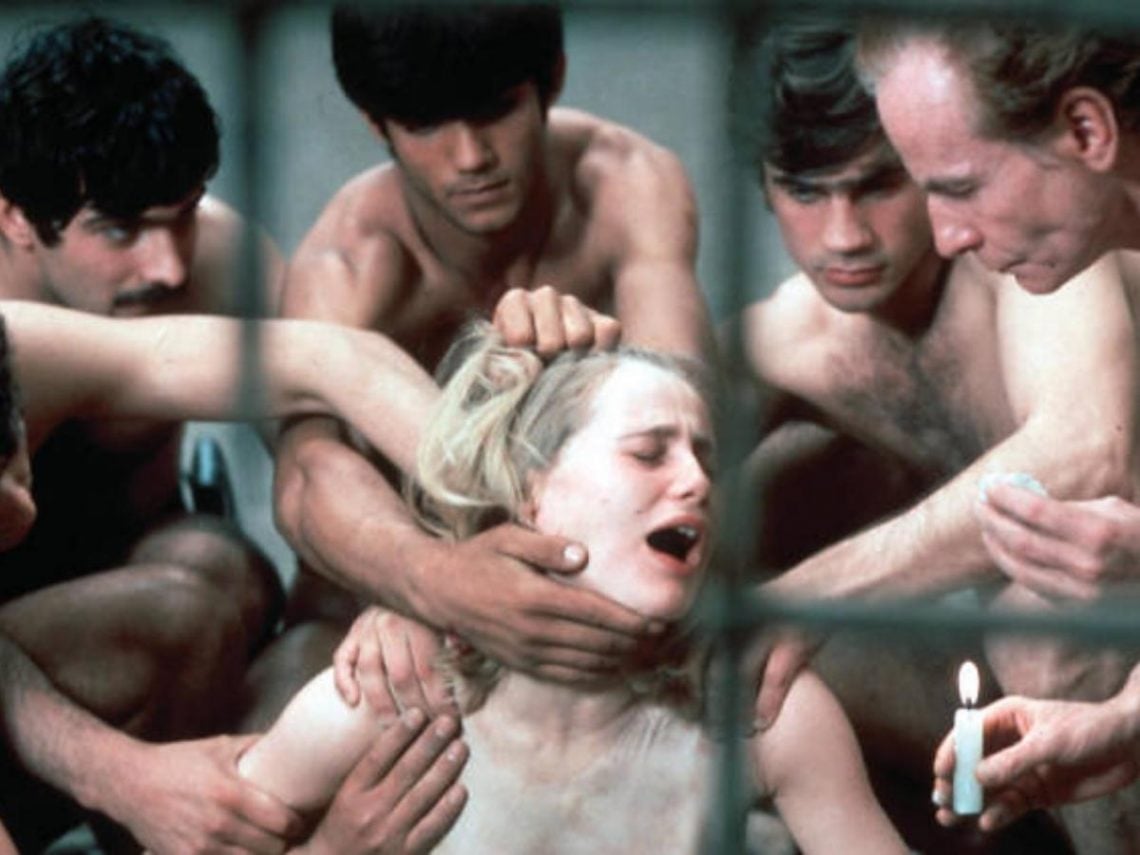
Once the teenagers assemble in the grandiose building, it doesn’t take long for their torture to begin. The girls are forced to serve food completely naked, which leads to one of them being violently raped on the floor as the men watch on in amusement. This section of the film also features the murder of a girl who tries to escape, demonstrating to the others that they have no choice but to endure 120 days of pure pain, humiliation and degradation.
Most memorable is the Circle of Shit, which sees storyteller Signora Maggi explain her coprophilia whilst relating it back to her childhood, as well as recalling how she committed matricide. When one of the teenagers begins to cry and plead to God for death, the masters force her to eat her own faeces. This horrific scene is followed by stomach-turning images of a shit-eating banquet – the masters tucking in with no hesitation, smearing it around their mouths. The images are enough to make you want to vomit, lingering in the imagination for a long time after viewing (which can make eating chocolate cake rather difficult).
In the third act, the remaining victims are tortured in the worst imaginable ways. Rape is followed by extreme images of violence, such as hanging, branding and burning before particularly unlucky victims have eyes gouged out, tounges sliced off, and nipples removed.
But what does it all mean? For some viewers, the film is nothing more than violent, abhorrent torture porn. Salò was banned or censored in multiple countries upon its release. Even after Australia overturned its ban on the film, the country quickly banned it again in 1998 for “offensive cruelty with high impact, sexual violence and depictions of offensive and revolting fetishes.”
Pasolini’s shocking feature might be too disturbing for some, but its horrific content has endured over the past 45 years, speaking as much to the current political climate as it did in the mid-1970s. Salò demonstrates just how much is allowed under fascism. Those in power can get away with the worst possible atrocities, as indicated by events such as The Holocaust. Whilst the film is set in mid-1940s Italy, when fascism was the dominant political force over the country, Pasolini uses Salò to critique fascism, capitalism, consumerism, totalitarianism, and corruption across all borders.
Salò is not pornography, despite some critics labelling it as such. Pornography is designed to arouse – Salò is designed to disgust. The audience become passive viewers of the torture of innocent victims, which alludes to how fascism breeds conformity and complacency through shock and fear. The shit-eating scene is Pasolini’s commentary on both mass consumerism of widely-produced goods and processed foods, but also the way that under fascism, people can be forced to do absolutely anything, and they might even ask for more helpings, literally ‘eating up’ fascist ideology. Similarly, in the Circle of Blood, Pasolini demonstrates how quickly the teenagers will turn on each other, reflecting the paranoia and lack of community felt under fascist regimes.
Although watching Salò might be one of the most challenging viewing experiences in cinema history, it is definitely worth the time and discomfort. Salò is a beautiful and powerful film that represents true artistry. Pasolini was so wholly dedicated to his film that it is rumoured to be the reason for his murder. There is still speculation surrounding Pasolini’s death. Yet, evidence from 2005 suggests that he might have been killed by a group of men the director had gone to meet after discovering that multiple rolls of film from Salò had been stolen.
Salò might be hard to stomach, but that is entirely the point. After decades, its criticisms ring just as true today, which makes it all the more harrowing.
