


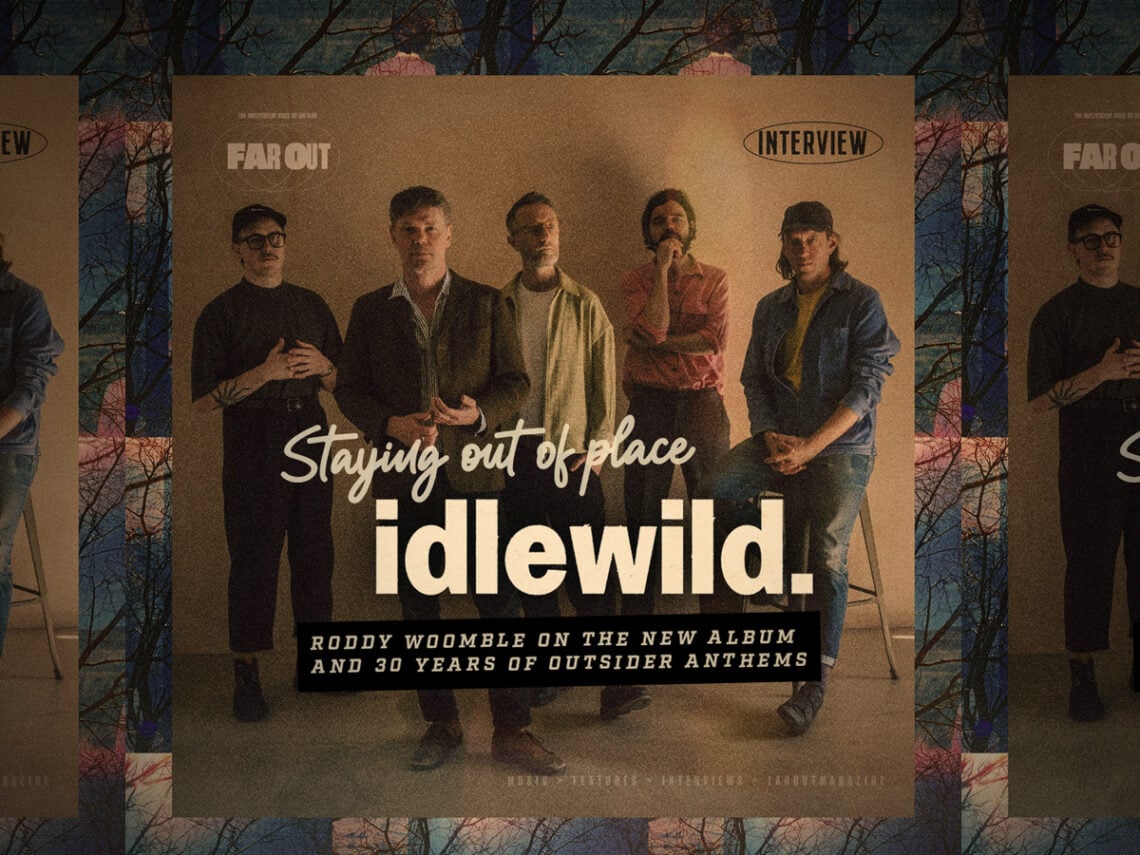
Staying out of place: Idlewild’s Roddy Woomble on the new album and 30 years of outsider anthems

“We were apparently a Scottish emo band and we didn’t even realise it,” says Idlewild frontman Roddy Woomble, chuckling at just one of the many descriptive tags attached to his band over the past 30 years.
The fact that few of those labels ever stuck is a testament to a career spent consistently chasing good tunes over pervasive trends—an ethos that ironically made Idlewild something of a beacon for Scotland’s next wave of heart-on-the-sleeve indie rock bands in the 2000s and beyond, including Frightened Rabbit, The Twilight Sad, and We Were Promised Jetpacks.
“Yeah. I think that’s one way the band has become culty,” Woomble muses, “and I don’t mean that in a negative way. People that like Idlewild really like the band. And people that don’t listen to us usually have no idea who we are, even though we were sort of a mainstream band for a couple of years in the UK.”
As they prepare to release their self-titled tenth album, a first in six years, Idlewild still feel like they exist in a sort of liminal space, simultaneously still the energetic Edinburgh punk band that signed to Parlophone Records in the late 1990s – the introspective pop melodicists who reached number three on the UK charts with 2002’s The Remote Part – and the more atmospheric experimentalists of 2019’s Interview Music. Unlike a lot of their own former labelmates, they never fully “arrived” nor “fell off”, never sold out to their fans’ disappointment, nor broke out to the level of arena rock ubiquity, despite touring with the likes of Pearl Jam and REM.
“We were on a label that was really supportive,” Woomble says of Parlophone, which released four Idlewild albums at the same time that Blur, Radiohead, and Coldplay were under the same tent. “But yeah, we were definitely at the bottom of that pile… There were a lot of bands around that time that started a little after us, who were just kind of surpassing us. And we’d be thinking, ‘Well, our songs are as good as these bands, so what’s wrong with us?’ [laughs] There was something about our band that didn’t quite click with exactly what people wanted in the mainstream.”

He continued, “Naturally, we were drawn more toward left field bands and underground rock ‘n’ roll, punk rock, that kind of thing. That’s where Idlewild were from, really. But we made a concerted effort to try and make it as radio-friendly as possible on The Remote Part. And obviously, it didn’t really work for us in that same way…but, perhaps it did.”
Woomble hesitates here a moment. It might be because there’s a windstorm outside during our Zoom call, lightly rattling the windows of his home on the normally peaceful Scottish island of Iona. Or it could be that Woomble, at 48, wants to be sure he puts his band’s unique career track into proper perspective.
“In some ways, the fact that the spotlight was never quite on us allowed us to be a band for 30 years and to make interesting music, and to still be friends, and all that kind of stuff,” he says, “So, yeah, I think it has worked out the way it was supposed to.”
While Idlewild’s six-year gap between Interview Music and their latest album might seem like a significant hiatus, the band have been through this rodeo before, following a similar timeline between 2009’s Post Electric Blues and 2015’s Everything Ever Written. Geography is usually the primary obstacle these days, as original members Woomble, guitarist Rod Jones, and drummer Colin Newton, along with somewhat newer additions of the past decade, bassist Andrew Mitchell and keyboardist Luciano Rossi, all live in different places. The original plan was to record a follow-up to 2019’s Interview Music pretty swiftly, but Covid-19 took care of that.
Woomble spent much of the next few years working on solo projects, but a decision to celebrate the 20th anniversary of Idlewild’s best-known album, The Remote Part, with a special tour in 2022 really galvanised the band and gave them a clear vision heading into their following recording sessions.
“I think that was quite important,” Woomble says of the 2022 tour, noting that he hadn’t been a fan of album-centric nostalgia gigs beforehand. “For us, it was a thing that helps you realise how much your music might have soundtracked a certain point in people’s lives. You’ve made something together that’s really had an effect on other people. So we came off those shows really feeling good about the band and feeling really positive about the music that we could make together. I think that probably went into a lot of the new songs, and the fact the new album is self-titled, we’re kind of referencing ourselves now a wee bit.”
It might seem odd that it would take the 20-year anniversary of one record to finally open a band’s eyes up to the impact they’ve had on the people who love them, but Woomble has a quick explanation for that.

“Because we’re Scottish, we’re very self-deprecating,” he says. “As a nation, you don’t really celebrate yourself that way. It takes a lot for us to actually acknowledge that what we’ve done has been good for people.”
Across all the various “eras” of Idlewild, for lack of a better career-spanning term, the most consistent thread has been the frontman’s point of view; which has resonated with fans who tend to feel more like the wallflowers at the party, yearning for connection but often turned away or turned off by the usual paths available for doing so.
The lead single and opening track off Idlewild, ‘Stay Out of Place’, certainly hits those same notes, effortlessly transporting the crunchy guitar hooks and rebellious spirit of the band’s 2000 album, 100 Broken Windows, into a very satisfying new place. Now sung by a man twice the age he was then, but far more clear-eyed about where he is going and grateful for where he’s been, warts and all: “If I run away, it’s OK. It’s OK / It’s important that we’ve stayed out of place / But I’m glad that we stayed here for a while”.
“The most memorable Idlewild songs are kind of outsider anthems of a sort,” Woomble explains. “That’s the kind of person that I felt I could identify with all through my life; musicians, artists, characters in films and novels. And I felt like that myself a wee bit—not in a negative way, almost in, kind of, an empowering way. Songs like ‘You Held the World in Your Arms’ or ‘Little Discourage’, or ‘American English’, to an extent, they’re all about looking at the world from slightly outside, or on the fringes of things. And ‘Stay Out of Place’, I suppose, is one of those Idlewild songs in that tradition.”
Idlewild will be hitting the road in the UK this autumn to support the release of the new album, which officially drops on October 3rd via V2 Records. Playing live is something Woomble doesn’t take for granted, even after three decades of doing so. In fact, the concert experience—whether as the performer or as a fan—is something he describes in almost magical terms.
“I think if you’ve been a band for a long period of time, and you don’t play that often, whenever you go onstage, there is a certain celebration aspect to it for the people that are there and for us playing,” Woomble says. “Obviously, to a much more massive degree, you can see that with these Oasis shows that are happening in the UK at the moment. They’re just sort of reigniting everyone’s love for music: being in the crowd, and everyone singing the same song.”
He explains where the joy comes from, noting, “It’s a really interesting way of being able to literally become young again in that moment, and the same goes for the people in the crowd. If you’re really into a band and you go and see them, when the dykes go down, you’re locked into that world for that period of time they’re onstage, and you’re really ageless. It could be 1999 or 2025. It’s all there in the songs.”
