


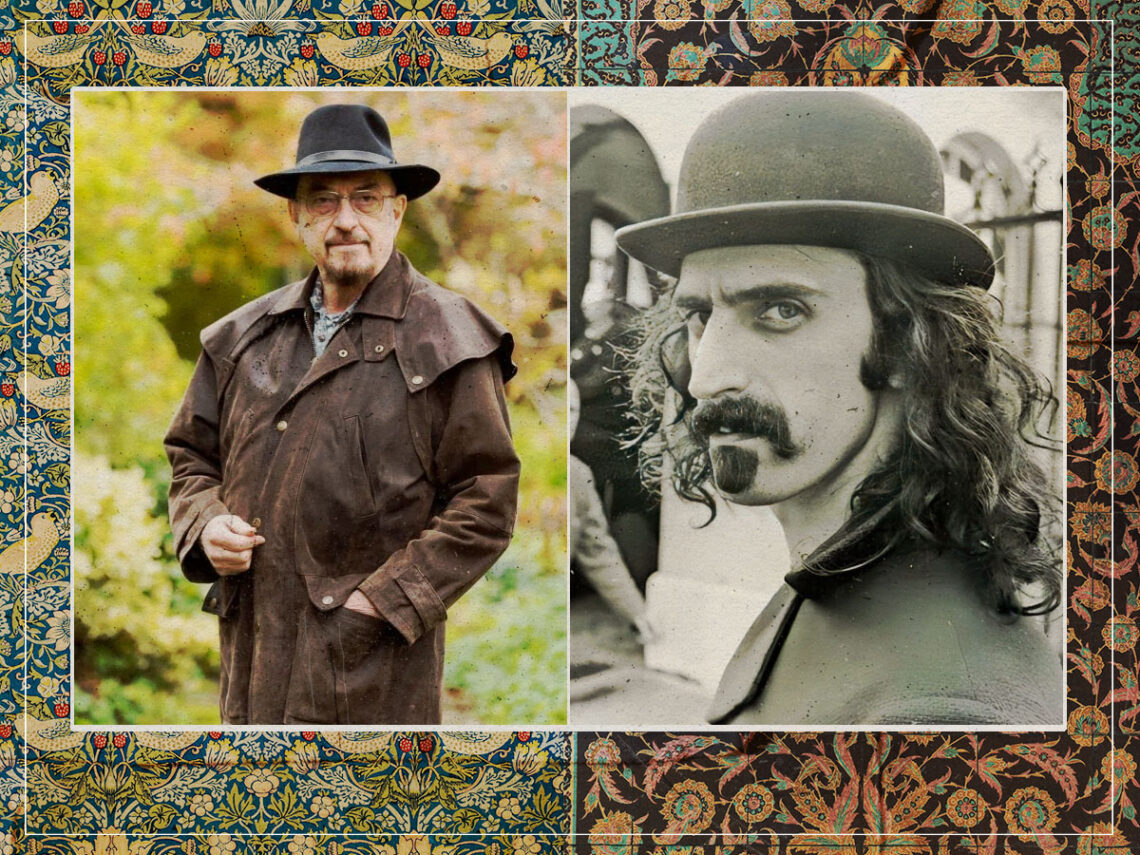
“I was embarrassed”: Ian Anderson’s regret about Frank Zappa

The sad nature of mortality is that no one ever knows when the end will come. Even with the longest illnesses and all the time in the world to prepare, no one can truly know when they’ll be called to the other side. There’s no clear deadline for all the goodbyes and last words, so it’s easy for the chance to slip by ungrasped. Jethro Tull’s Ian Anderson knows that devastating feeling first-hand.
On the surface, it seems like a strange request that on his deathbed, pioneering artist Frank Zappa wanted to talk to Anderson. Zappa had a hand in the careers and lives of so many. As a leader in the world of weird, avant-garde rock, he had his Mothers of Invention, his girl group The GTOs, his three creative children and a whole hoard of friends, peers and students that had been touched by his impact. Surely, as his prostate cancer worsened and the end neared, his time was busy with a long list of emotional goodbyes and monologues delivered to him about his importance.
But he had one request; “When Frank Zappa was terminally ill, I received a message to say he would like me to call him,” Anderson recalled, adding, “I’d never met him. I was a fan, but my instinct was he really didn’t like Jethro Tull, so it was a little odd.”
It was a little odd. Zappa had been outspoken on his feelings towards Anderson’s band, and they weren’t pleasant. Jethro Tull broke out in the aftermath of Mothers Of Invention’s landmark debut record Freak Out, meaning that two years after the fact, the band were always painted with a kind of cynical, ‘copycat’ colour.
That’s apparently the root of the issue. Along with the likes of Pink Floyd or Led Zeppelin, Zappa didn’t seem to take too kindly to British progressive rock bands who were becoming big exports in the US while his own American band were struggling to make ends meet. “People like Frank Zappa were rather disdainful of the British invasion; they felt somehow threatened by it,” Anderson recalled. “Zappa spoke rather badly of Jethro Tull,” he continued, “The memories I have were quite personally upsetting because I was a huge Frank Zappa fan. But he badmouthed us a couple of times publicly and that was a bit hard to take.”
Throughout their lives and careers, Zappa and Anderson danced a strange dance around one another. Anderson was, and still is, a major fan of Zappa’s and acknowledges his impact on the music world. In return, Zappa seemed almost threatened by Anderson, which, in some ways, is a kind of flattery. But they waltzed around; they never met or spoke. Then, in 1993, the request came through from the deathbed.
But with all that history and the total unknown of what Zappa wanted to say or how it might be left, Anderson couldn’t seem to stay on the line. “I dialled the number three times, but each time I hung up in a panic; I was embarrassed – what do you say to a dying man?” he remembered.
“A few weeks later he died,” Anderson continued, describing it as one of his biggest regrets from his career. In the end, it seemed that Zappa simply wanted to use his final days for connection and reconciliation as the musicians said, “From what I heard, he’d wanted to talk to a few people, just to say hi, and I was one of them.”
Really, there’s no use in dwelling on what could have been or could have happened. Just as the nature of mortality is random, the nature of life is that we’re all feeling our way through in the dark, making the moves that seem right at the time and needing to keep looking forward, rather than back at the various different paths behind us. However, if Anderson could retrace his steps, he would have lasted longer than the dial tone as he said, “It wouldn’t have changed anything, except I would have had my first and last words with one of the great original composers and performers of rock music history.”
