


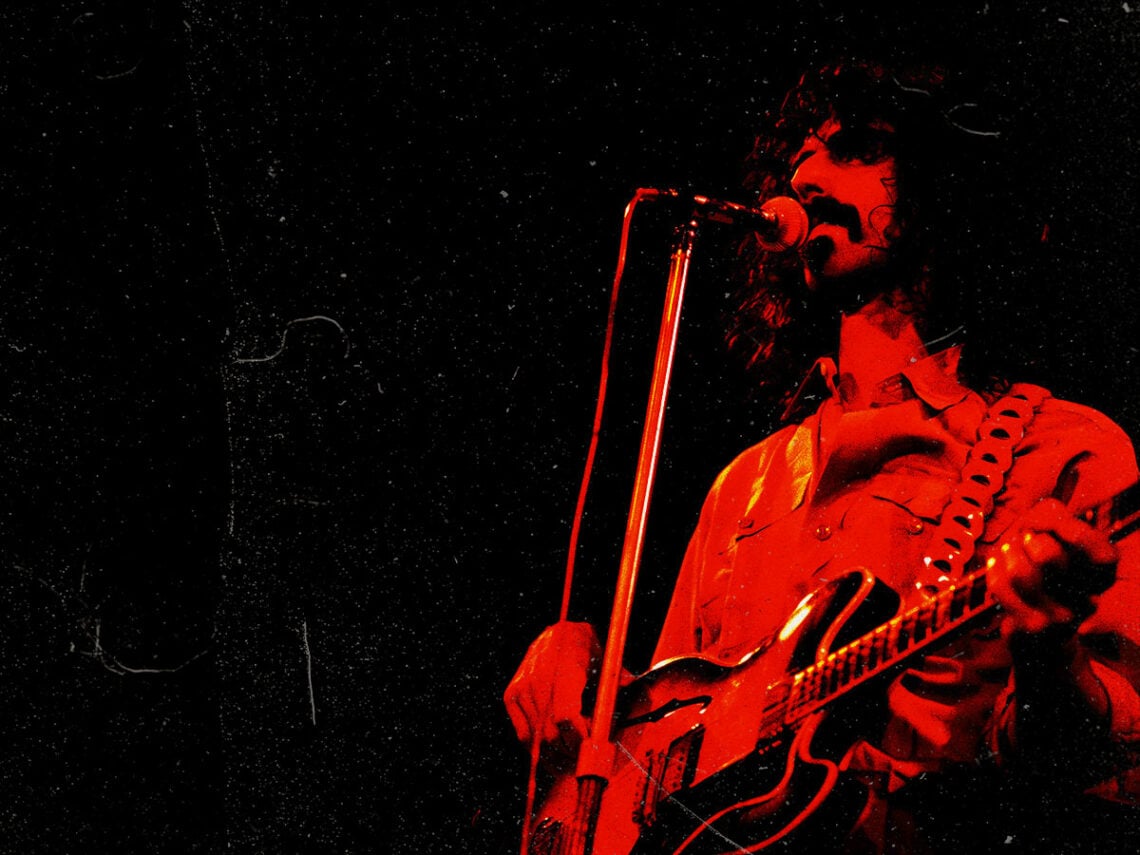
Ian Anderson knows why Frank Zappa really hated Jethro Tull: “He was rather unkind”

While his music was never described as popular, Frank Zappa made such violent ripples within his unique corner of the musical map that very few are unaware of his lofty presence. As a true musical visionary, Zappa drew on rock, jazz and classical influences to create a diverse oeuvre both as a solo artist and with his band, The Mothers of Invention.
Zappa’s area of expertise was sparsely populated, but if one was to relate contemporary rock artists to his style, prog-rock bands of the 1970s, such as Led Zeppelin, Pink Floyd and Jethro Tull, would be more suited candidates than, say, punk or glam rock groups.
Like Zappa, prog-rock outfits were noted for their attention to detail and fearless embrace of complexity and creative experimentation. Prog-rockers may have famously clashed swords with the simplicity of punk, but in contrast, musical proximity was at the root of Zappa’s hatred for groups like Jethro Tull.
Jethro Tull are one of the most popular groups to emerge from the British prog-rock scene of the late 1960s and ’70s. Their distinctive style drew from hard rock, folk, and classical influences, and understandably, bandleader Ian Anderson has long admired Zappa. However, the feeling doesn’t appear to have been mutual.
Why did Frank Zappa hate Jethro Tull?
Zappa was ever a straight down the line kind of guy. he was, of course, happy to shoot from the hip and tell you to your face exactly what he thought of you or your band, but those reasons could change over time, evolve or become extinct altogether. Bands like The Beatles and The Velvet Underground caught his ire for different reasons, but he also seemed to like both bands, too.
But, it seems to be universally agreed that he had an issue with Jethro Tull. Some people hav suggested that it might be because Zappa, a pure innovator in the world of rock music, felt perturbed by the band’s perceived status as prog-rock saviours. Speaking to MTV in 1984, Zappa said, “I would say that progressive rock is anything that doesn’t sound like regular rock. Regular rock is everything that sounds like itself. All songs that sound the same. Everything on MTV. Everything on the radio. That’s “rock.” Progressive rock is stuff that doesn’t sound like that.” But as the interviewer lists out a run of traditionally agreed prog-rock bands like Procol Harum, Traffic, Pink Floyd, Genesis and Jethro Tull, the most commendation he can give is that “sometimes” they are being generally progressive.
But, if you were to ask Ian Anderson why he was never a fan of Jethro Tull, the band’s leading man had a simpler explanation, and it was rooted in some jealousy.
“Sadly, I never got to meet Frank Zappa; we nearly did,” Anderson recalled in a radio interview with BBC Radio 2. “And I actually read that he didn’t like Jethro Tull at all back then in the 70s. He rather resented the fact that us British bands Led Zeppelin, Jethro Tull, Deep Purple and so on. We were going over there [United States] and making tons of money. Seemingly while he was struggling to run his band.”
He went on to explain that he was invited to speak to Zappa while he was dying of cancer but never took him up on the offer because he was fearful of what the American might say, as Zappa had been “rather unkind” about Tull in the press. He was also worried that he would be unable to find the right words to say to a dying man whom he didn’t know.
“So he was rather unkind to some of us in the press, which was a shame because I was a big Frank Zappa fan at that point,” Anderson said. “I was in fear of taking up the invitation to call him shortly before he died. I’ve got a message from one of his musicians that I knew, that said ‘Frank wants to speak to you, he wants you to call him.’ I thought ‘How do you speak to a dying man? You know, picking up the phone talking to someone for the very first time in what turned out to be the last weeks of his life.”
Frank Zappa tragically succumbed to his illness in 1993 at the age of 52. Listen to the late icon’s classic song ‘Cosmik Debris’ below.
