


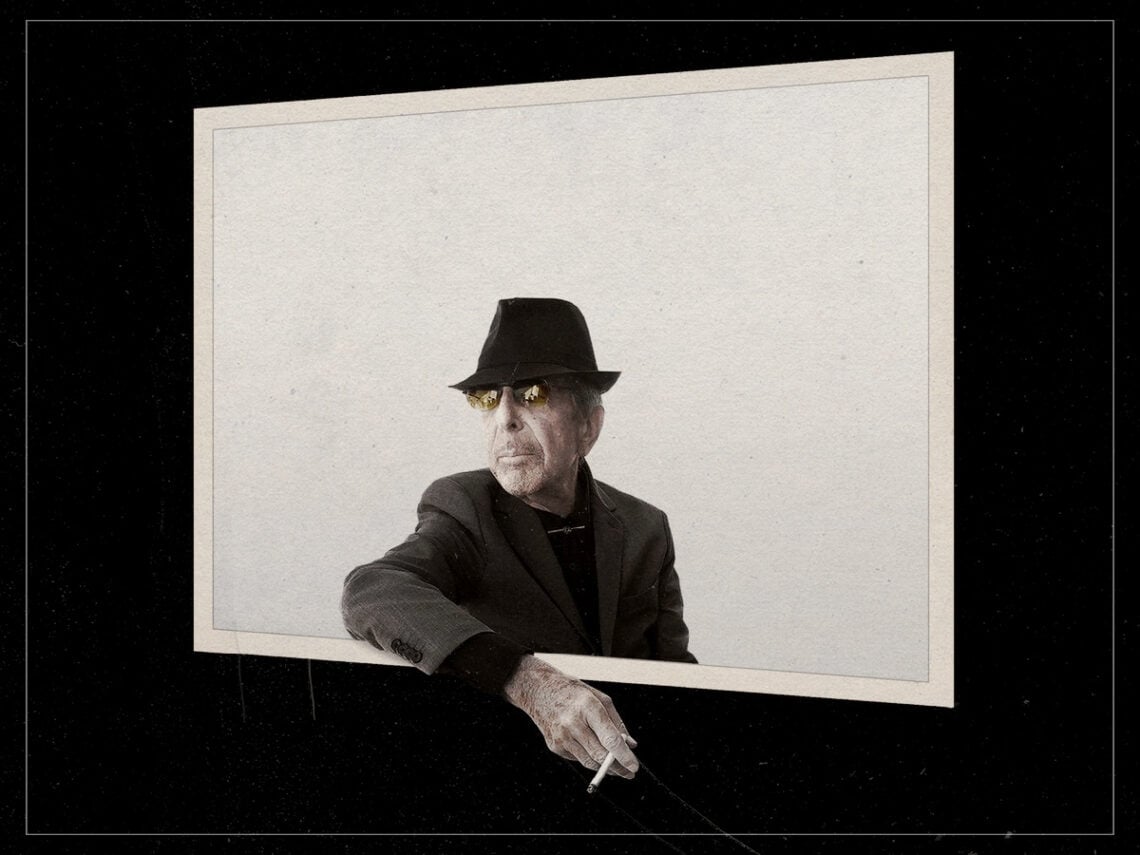
How Leonard Cohen and ‘You Want It Darker’ truly defined 2016

If 2016 felt like a cinematic slow-motion collapse of the old world order, it was David Bowie and Leonard Cohen who provided the soundtrack before bowing out.
We’ve seen final albums before, but rarely have two titans of the avant-garde choreographed their own departures with such devastating precision within the same 12-month span, and while they operated in varying sonic universes, both Blackstar and You Want It Darker served as the bookends to a year that felt like it had been written by a particularly nihilistic playwright.
It was a year of seismic political shifts, an unrelenting parade of cultural icons passing away, and a general sense that the floor was dropping out from beneath the global psyche, which began with a theatrical explosion in the form of Bowie’s Blackstar, serving up a cocktail of jazz-fusion, art-rock, and occult mystery. The Starman was looking back at Earth from a distance, turning his own mortality into a piece of performance art, offering a chaotic, beautiful, and vibrant goodbye released just two days before his death, punctuated by his haunting cry of “look up here, I’m in heaven”.
But as the months rolled on, the vibrance and warmth he had left fans with began to wither and fade into a stark, cold reality peppered with palpable anxiety, a feeling that the old guards of wisdom were departing just as we needed them most, so of course the public looked for someone to alleviate the tension, to offer a glimmer of hope, and in stepped Cohen, staring his own impending death in the face, declaring instead, ‘You Want It Darker’.
Arriving in October just as the year began to freeze over, You Want It Darker, his 14th and final studio album, was the antithesis of Bowie’s celestial exit, serving no theatricality here, no Lazarian rising from the grave, but a guttering candle, the shadows slowly lengthening around him, speaking truth to a God he was finally ready to meet.
“Hineni hineni / I’m ready, my Lord,” he sings, a Hebrew declaration of “Here I am”, with the title track’s choral singing and rhythmic, minimalist pulse reminiscent of a funeral march, but the lyrics a brutal dismantling of religious and social comfort. When he growls, “If you are the dealer, I’m out of the game”, he is talking not just about his own failing health or his complex relationship with faith, but also resigning from a world that he deemed to have lost its mind.
He wasn’t wrong, either, as around the album’s release, the geopolitical dominoes were already in freefall: the UK had been blindsided by the Brexit vote in June, and the US was spiralling toward its most polarising election in living memory, and while the pop charts desperately tried to keep the party alive with tropical house and neon-drenched escapism, You Want It Darker was the true soundtrack to the zeitgeist on fire.
When Cohen rasped, “A million candles burning for the help that never came”, he gave a voice to people around the world who felt abandoned in one way or another. The track feels like he is demanding a final audience with the divine, via a gravelly interrogation of ‘Is anyone there? Is anyone going to help? Have you seen the state of things down here?’ If God does indeed exist, one can only imagine that Cohen gave them a formidable piece of his mind when they came face to face.
In an act of eerie timing, the singer passed away on November 7th, 2016, the day before the polls would declare Donald Trump the winner of the 58th US presidential election. He was done, had delivered his warning, stepping into the wings just as the curtain fell on the world he knew, and that record has never quite stopped spinning, because the darkness it described has never quite gone away.
