


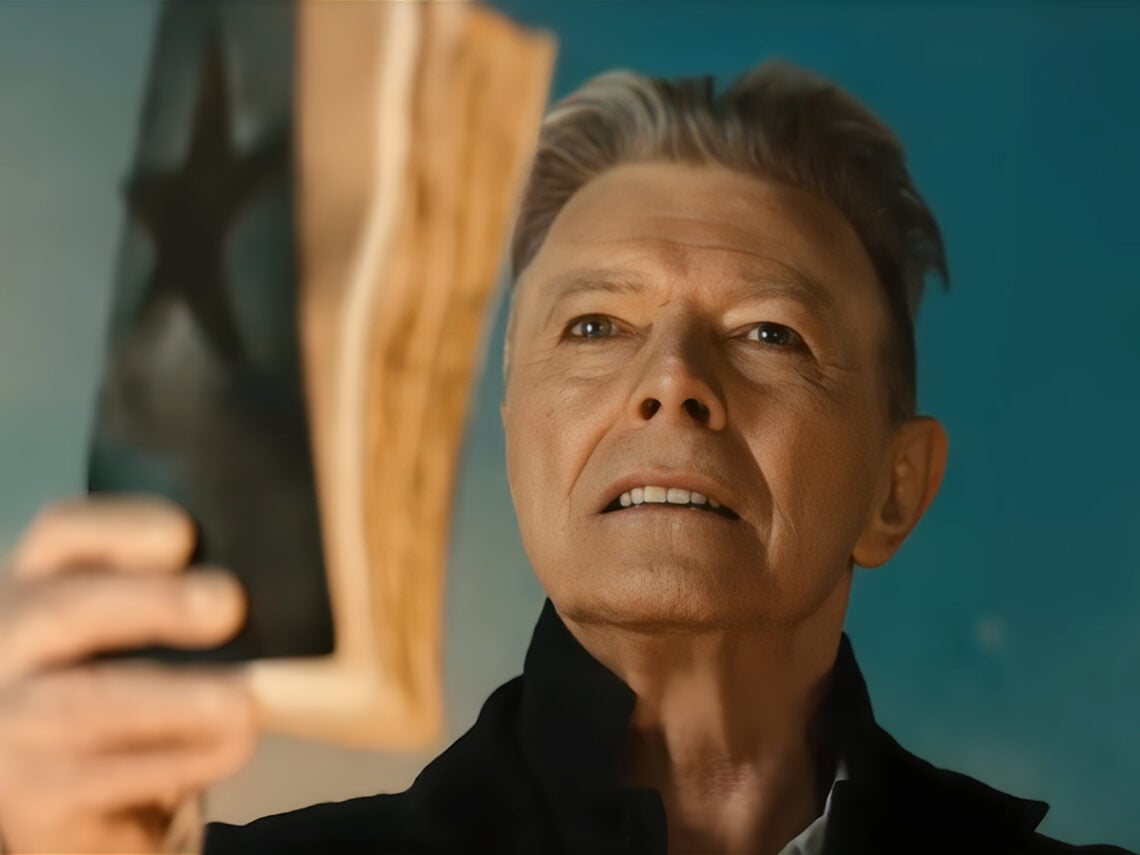
Major Tom is dead: David Bowie, ‘Blackstar’, and the art of moving on

The reality was that, despite the fact he never revealed it to the outside world, David Bowie knew he was dying.
His cancer diagnosis, around 18 months prior to his passing, was kept in the strictest confidence among the closest quarters. But even still, for a man who gave so much to the world and dedicated his lifetime to redefining rock music, he clearly felt it would be remiss for him not to say some sort of goodbye, even if the real intentions didn’t materialise until afterwards.
Blackstar was the bookend to an unmatched back catalogue, the symbol of the image in itself a full stop to every warbling letter, story, and lyric Bowie ever sat down to write in his lifetime. But within this, its eponymous lead single was far more of a sign of things to come than audiences at the time perhaps realised.
Of course, it’s very easy to state that this was the man’s farewell, his reckoning to death, and his magnum opus bundled into one, mainly because all of the above are true. However, it simply wouldn’t have been the mark of Bowie if it didn’t also hold up the warped looking glass to the decades which had passed by, revelling in all the technicolour glory, and sometimes fear, of the characters who had come before.
From the very moment he uttered the words of “Ground Control to Major Tom” in ‘Space Oddity’ in 1969, it signalled lift-off for a career that would fly beyond the stratosphere. But within this was the character himself who continued to reappear over the course of Bowie’s many different exports, reminding him of the reality beyond the space age dream.

Of course, over the years, Major Tom became synonymous with both the highs and lows of drugs, referenced as a “junkie, strung out in heaven’s high, hitting an all-time low” on ‘Ashes to Ashes’. Bowie’s own interpretation of this role and significance continuously changed over time, but with Blackstar being the mortal ending point, it became symbolic of so much more.
It shouldn’t be forgotten that although he played a formative role in Bowie’s sonic universe, Major Tom was far from the musician’s only fictional creation. Obviously, there were those like him and Ziggy Stardust that bore an indelible imprint on his canon, but there were also the short-lived Pierrot or The Thin White Duke, who only appeared for brief snatches of time throughout the entire catalogue.
Yet despite Bowie plainly having preferences for some personae over others, as they dictated some of the most iconic points throughout his tenure, the whole idea was that he was never too precious about any of his crafted creations, no matter how precious they may have seemed. Each had their own narrative, and by the time you reached the end, the story was simply done.
To all intents and purposes, this was spelt out pretty clearly within ‘Blackstar’, where the video depicts the character dead inside his astronaut suit. It was the perfect circular narrative that brought the end of Bowie’s career right back to where it started, after Major Tom had spent the past half a century circling space before finally being laid to rest.
There’s a patent poeticism in Bowie’s intentions behind this, as he was aware of facing his imminent demise, but it also signified something both frivolous and equally ambitious in his artistic outlook, which should be championed more in music than it is right now.
Every move seems to be a permanent brand matter – that if you create one image or persona, you’re duty-bound to stick with that for the rest of your career. But not only does it not really work in practice, but it becomes hugely boring for the audience to see the same tropes reeled out again and again.
The fact that Bowie lacked an ego when it came to his creations was part of the reason he was in a constant shroud of innovation and excitement. When a character no longer worked or served its purpose, it was time to go, and there was never a sense of regret within that.
We seem to have lost sight of the fact that this was something Bowie did on a regular basis, given how shocked the Gen Z masses were when Charli XCX admitted she was ready to kill the Brat era. Whether you loved or loathed that heady time in music, you have to admit that it would be embarrassing to watch the singer, even in as short a timeframe as five years from now, trying to rehash those halcyon days of sex and cocaine and ‘Apple’ dances.
In this sense, she was absolutely right to set the end of the era ablaze and define a clear-cut end point, regardless of whether it was a deliberate embodiment of Bowie’s ideals or not. Major Tom is no Brat girl, of course, but it’s this notion of freedom and lack of pretentiousness that is bound to serve artists better in the long run.
So, with Major Tom dead and the rotten apple core now thrown in the trash, there’s no way of knowing what comes next. If Bowie had been here to see how the last ten years in music have unfolded, it’s difficult to know what he would have made of it.
You could imagine he would have looked down on the creative dirge of all these continuing narratives, however. Bring back episodic moments, fleeting characters, motifs that don’t need to have a transcending impact. That sonic bravery may not ever resurrect Bowie, but it might mean the legacy of Major Tom forever lives on.
