


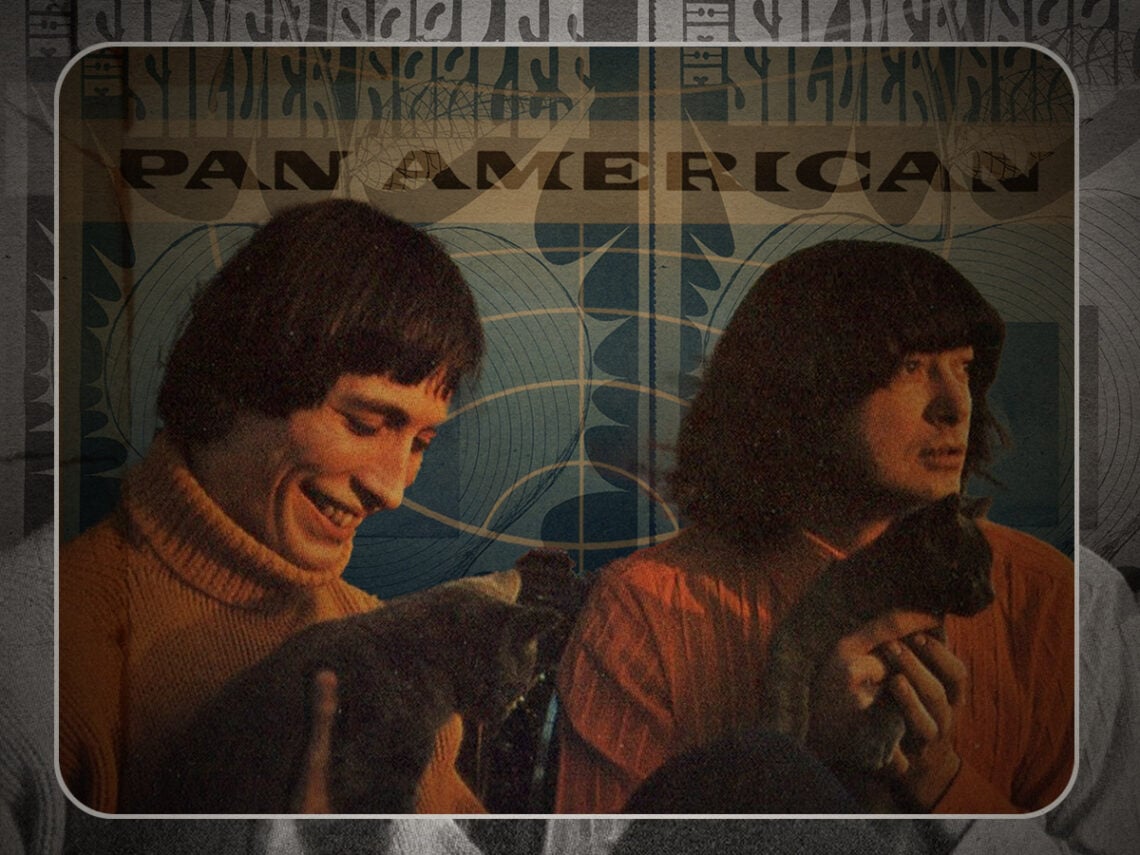
‘Contact’: How Pan Am curtailed the rise of electronic music and killed the band John Lennon called “the next big thing”

Ever since The Tornados released their pioneering space-rock record, ‘Telstar’, alongside the murderous producer, Joe Meek, electronic music has been curiously connected to transport.
In 1968, that meant transport of the grandest sense: sending man to the moon. Such soaring ambition, equally, lent a booming hand to the aviation industry. Not everyone could reach the lunar orbit, but humans were suddenly scaling the skies in their droves. We were making progress. But progress in its earliest stages is always when it is at its most terrifying, too.
At the start of the jet age in 1960, airline travel had rocketed from roughly 28million affluent passengers to a whopping 106million of the masses. Yet, Pan Am had a notable problem if it wanted to sustain this lofty growth, and 1968 really rammed that home. Alongside the buzz of whizzing through the clouds towards your destination in double quick time, there was a fear of plummeting from those clouds in an even quicker time, miles and miles from your destination.
That fear ended up curtailing the rise of electronic music in a very curious manner. In a strange way, it was the transport industry that launched Silver Apples, a duo from New York often known as the first electronic band. The old audio oscillators that Simeon Coxe used to create electronic melodies over Danny Taylor’s drumming were often discarded testing equipment for engineers in the aviation, radio, and navigation industries. So, you could say that Silver Apples were born from tests that went right, and they were killed by tests that went wrong.
Because after they went against the counterculture grain and invented a crazy new sound, they were quickly heralded for their innovation. Contrary to many ‘forgotten band’ tales, Silver Apples weren’t too ahead of their time. While Coxe would comment that audiences took about ten awkward minutes to figure them out, within no time, they were whipping up a futuristic party.
This saw them not only receive praise from the likes of Jimi Hendrix, John Lennon, and Andy Warhol, but they also found themselves booked to play the iconic Moon Landing watch party in Central Park following the release of their debut album on the fabled day of July 20th, 1969. The future didn’t just seem bright for Silver Apples, the future seemed like the Silver Apples.
Their far-reaching sound perfectly personified an age of technological progress more so than any of their peers. So, why did it all go pear-shaped? Well, sensing the kinship with the industry, Pan Am figured that a partnership might be a bright idea. In a bid to encourage greater aviation travel, the airline decided it would be wise to get on board with the hip sound of the future.

So, they lent the band the use of a cockpit for the sleeve of their second album, Contact. This sophomore release was set to go further than their experimental debut, refining their sound and pushing it to greater pioneering heights. With man headed to the moon and science a boon, Pan Am wanted to get you onto one of their flights soon.
But an asterisk still loomed over this soundbite. Regardless of what hippies with oscillators and the backing of a Beatle hailing them “the next big thing” might imply, the future still held plenty of perils. This came to the fore just weeks before the release of Contact when Pan Am Flight 217 plunged into the ocean while approaching Caracas from New York.
There were no survivors, and a ripple of fear resonated on TV coverage. The cause had simply been pilot error amid disorientating lighting conditions. Such accidents were routinely causing minor dips in the rise of aviation travel. So, when PR for Pan Am spotted that on the reverse of the Contact record sleeve, the Silver Apples duo were sat amid a plane wreckage with a banjo, they went ballistic.
Despite high praise, the band were still only signed to the notably independent Kapp Records, which had no cash for a lofty legal battle, and given the unfortunate timing, Pam Am were up for a very lofty fight indeed. The album was recalled from shelves, the band were banned from playing live, and any promotional money was pulled in favour of Kapp, ensuring that they weren’t sued out of existence.
“We disappeared as much into the woodwork as you can,” Coxe conceded. The band were over. And so was the rise of electronic music. While many people had already been inspired by the oscillations of the Silver Apples, most of these acts simply incorporated the sound into a traditional band setting. That’s not what the Silver Apples did, though, particularly with Contact. They were electronic music.
Their music was built from the circulatory system of industry itself. They might have abandoned traditional instrumentation almost inadvertently when their old blues bandmates turned against Coxe’s curious passion for atonal oscillators, but that set them apart as a futurist severance from the past. But the one thing that they couldn’t get away from was marketing, and the same forces that had experimentally launched the Silver Apples, the machinery of modernity, the aesthetics of flights, and beeps, wheezes, and beats, of future potentialities, also erased them in error.
Like the passengers who tragically took the plunge a few months before them, the Silver Apples were never seen again, and electronic music would have to wait another eight years before the same idea that they were working on would be picked up by Donna Summer, Giorgio Moroder, and Pete Bellotte, and ”the sound of the future”, as Brian Eno put it, would once again resonate with ‘I Feel Love’.
