


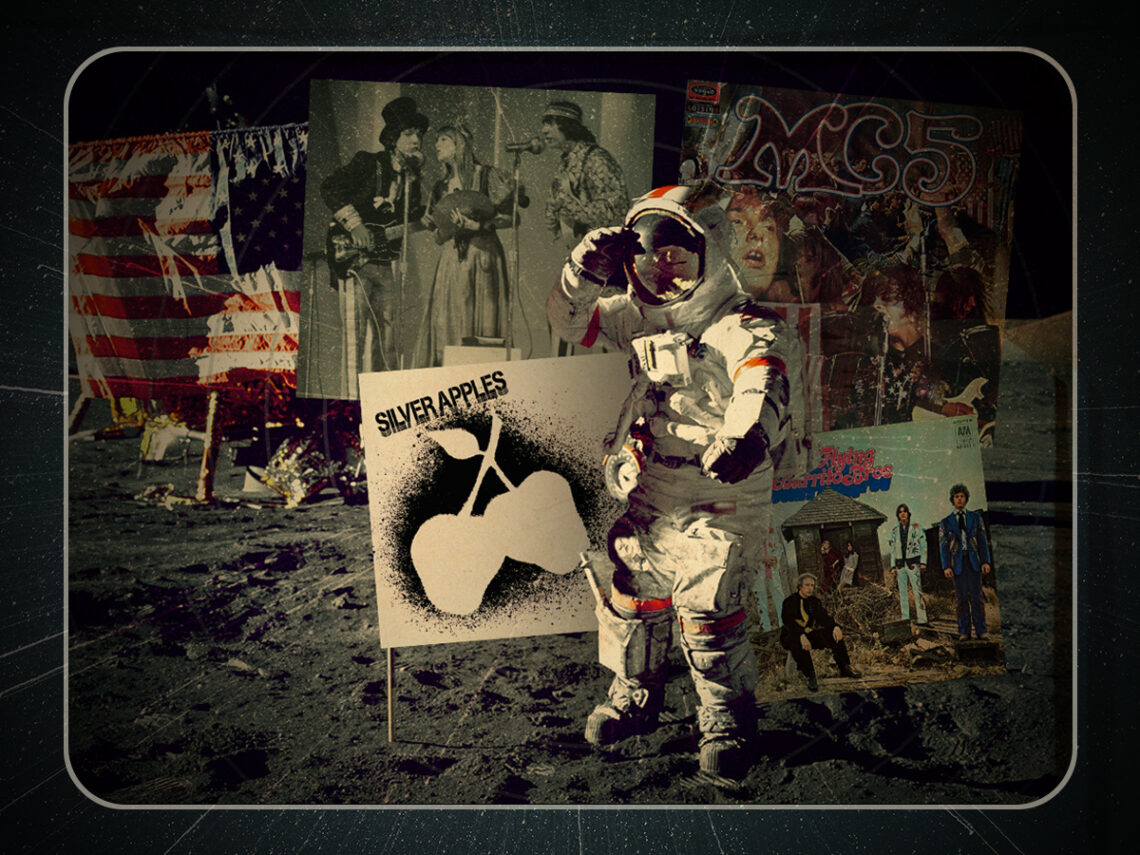
February 1969: The month four new music genres were invented by four classic albums

It was February 1969 and things were taking a turn towards the strange: a probe was sent to mars, the first 747 made its inaugural flight, The Front de libération du Québec bombed the Montreal Stock Exchange, the last ever edition of the Saturday Evening Post proved society was heading towards television, Richard Nixon was sworn in as president, Diane Crump became the first jockey to compete against men, and music was reinventing itself.
As the swinging 1960s came to a close, a wellspring of invention was in the welter of the weird, old zeitgeist. The previous year had ended with a breathtaking broadcast from the lunar orbit, but it was equally marred by unrest. This peculiar mix of hope and uncertainty ushered artists towards the future, crafting sounds that captured the desire for a brave new world with a level of invention that seemed confident that such a thing was possible.
That odd mix of utopianism and agitation is writ large across the masterful Contact by Silver Apples. Their self-titled debut album had already earmarked a proto-electronic future for music. It was rife with strange oscillations and loops, but if that felt like an experiment, then Contact asserted itself as the refined offspring fit for public consumption.
As biting lyrics are incorporated alongside familiar instrumentation like the rickety banjo, a strange straddling of contemporary sounds and the future are flung into the hydraulic mixing bowl of the Silver Apples sound. That is nearly always how the sounds of summers to come arise: when the world we know meets one that we don’t half way.
Sadly, the album’s influence would be slowed as their Kapp label saw its promotion money put towards legal fees instead. The cover for the record displayed the group in a Pan Am cockpit, while the back of the record found them plucking banjos amid wreckage. Given that 1968 had brought about two major crashes for the airline, they were keen to protect their image and somewhat threw the book at Silver Apples, curtailing the rise of electronic music in the process. But there is no doubting that Contact was a different type of ground zero.
However, this desire to seize upon a transformational future in a hurry hadn’t just impacted the US. Down in Brazil, things were getting equally funky with a fierce pertinence. The nation was divided. Disparate groups were kept apart by design, discouraging unity that can bring about change. But the government hadn’t factored in a figure like Caetano Veloso.
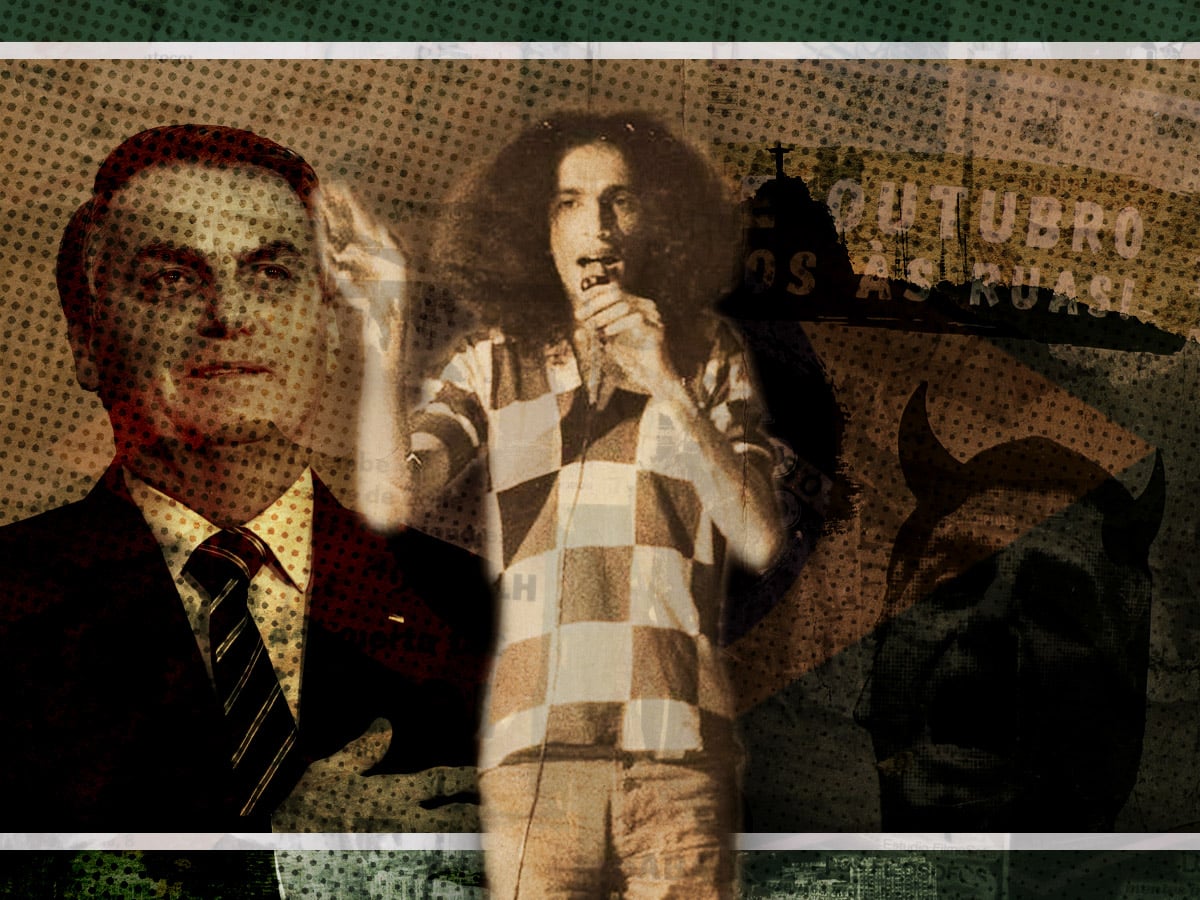
In 1968, this counterculture Christ figure was arrested for ‘desvirilizante’. This antiquated term essentially meant that Veloso was failing to display the macho virility expected of a man by flirting with the androgyny of shoulder-length hair and a dress sense deemed flamboyant by the suited status quo.
However, the authorities were not just interested in his attire. This handsome hippy strummer was starting a movement that the stuffy bourgeoisie really feared. Tropicalismo was Veloso’s brainchild. Essentially, it was an expansion of the mainstream centre of society by virtue of assimilation of ideas a little further to the left of the dial.
In other words, Veloso looked to bring together the mainstay of pop with the weirdness of avant-garde exploration, the timelessness of traditional tunes with the cutting edge of emergent rock ‘n’ roll, the freedom of individualism and a sense of artistic unity. In essence, the movement was as close to a symbol of empathetic solidarity among the disparate columns of Brazilian society as an artistic metaphor can get.
That metaphor was defined by the Promethean album Mutantes by Os Mutantes. Emboldened by the ridiculousness of Veloso’s arrest, the band decided to double down and honour their friend’s vision in a way that just about brought it to fruition. The subversion of traditional folk that they displayed on their debut went into hyperdrive with the band bringing in a theremin, crediting members with hitherto unknown terms like ‘electronics construction’, and the knowable sphere of classical instruments like a Viola caipira.
However, they weren’t the only band risking arrest with their art that fabled February. Back in the States, the MC5 caused quite a stir with their debut album, Kick Out the Jams. This daring, revolutionary classic, often cited as the first ever punk record, was a roughshod reckoning of America. Boldly sporting leftist politics and the iconic pronouncement of the line, “Kick out the jams, Motherfuckers,” guitarist Wayne Kramer even recalled, “people started to be arrested for selling the album.”
Beyond the startling sonics of the music, that sense of something illicit making its way onto the charts was something new within culture. Plenty of Billboard albums had dabbled in politics before this proto-punk breakthrough, but this charged collection made them seem like ‘protest as product’, catching a raw and revved-up sound that seemed more fitting of the rebellion that the Detroiters shouted of.
Alas, radical acts could be mellow too. Rounding out a month of reinvention that also saw more typical releases by the likes of Cream, The Temptations, Vanilla Fudge, and The Monkees, the Flying Burrito Brothers gave the world their debut, The Gilded Palace of Sin. Picking up where the Byrds’ own amalgamation of country and rock had left off, this gem leaned back to invent something close to slacker rock than anything that had come before.
There was a sleaziness and an acquiesced acceptance of the decade‘s slide towards sin in the sordid mix. The record brought about its own wallop of subversion despite being so laid back that it was practically recorded lying down. The novelist Joan Didion recalls the album’s strange new imagining of rock ‘n’ roll, weirdly defining the time more aptly than the fierce frenzy of the likes of Let It Bleed that laid down the line.
As she writes in The White Album, after attending a show where the Burritos unveiled their stoned new sound: “There were rumors. There were stories. Everything was unmentionable but nothing was unimaginable. This mystical flirtation with the idea of ‘sin’ – this sense that it was possible to go “too far,” and that many people were doing it – was very much with us in Los Angeles in 1968 and 1969. A demented and seductive vortical tension was building in the community. The jitters were setting in. I recall a time when the dogs barked every night and the moon was always full.”
With that strange atmosphere abounding among youth culture, a revolution of a differing kind was underway. The ‘Summer of Love’ was out of season, and as the world headed into the ‘Winter of Discontent’, the autumn was evidently filled with transition and change, as artists hunkered down in the witching hour and tried to seize the flitting zeitgeist in myriad ways. Nothing defines that time quite like the singular month of February ‘69, and all the odd musical offsprings that made it a ‘before and after’ moment in our unfurling cultural history.
