


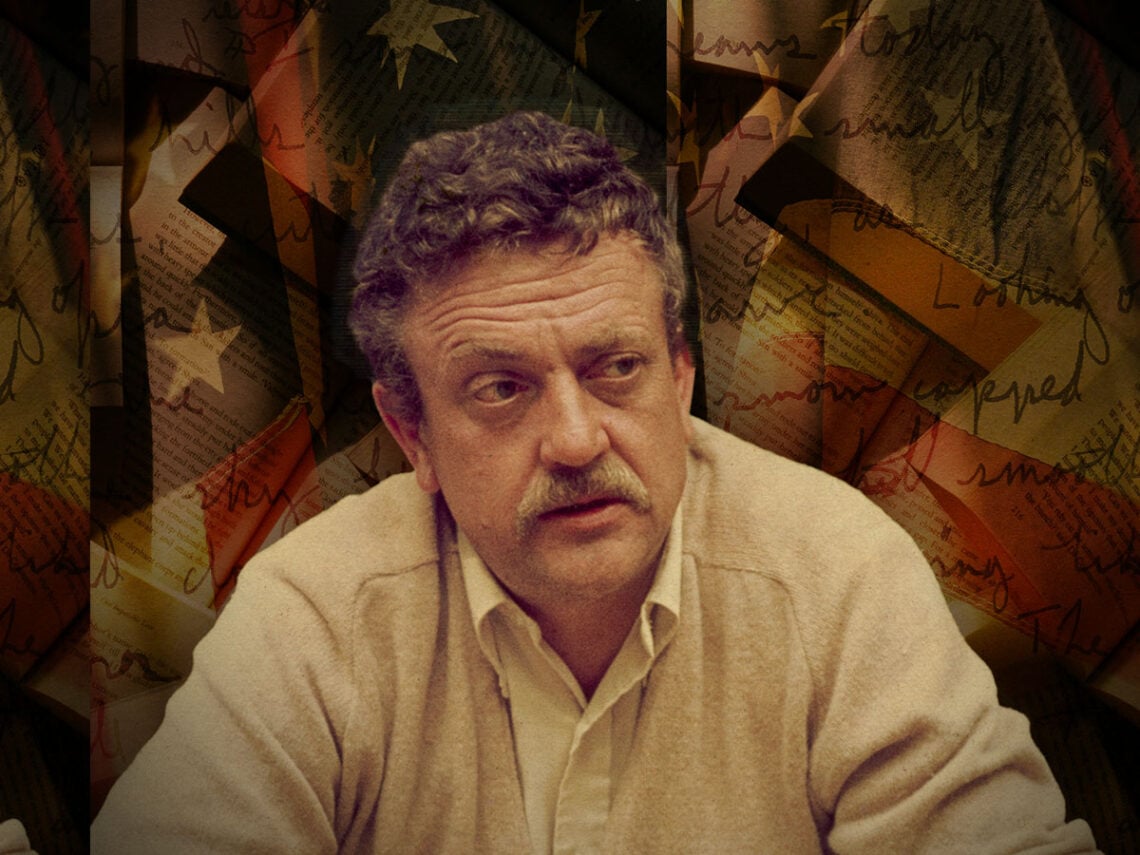
How Kurt Vonnegut foresaw America’s broken democracy

Kurt Vonnegut’s first major novel, Player Piano, was published in 1952, and included the following subtitle on the cover of the first edition: “America in the coming age of electronics”.
Very similar phrases were routinely seen in US magazines and newspapers of that post-war era, but in those articles, technology was typically framed, much like in today’s incessant advertisements for AI tools, as an approaching glory from on-high, consequences be damned.
Player Piano was effectively raining on that parade, reminding the happy suburban middle classes of the Atomic Age about the evergreen pitfalls of a state-controlled or machine-based society; the same stuff Franz Kafka, George Orwell and Aldous Huxley had yammered on about in the previous generation.
The book was inspired by Vonnegut’s own time working for the gigantic American manufacturing corporation General Electric after returning from World War II, and seeing how new innovations in automation were rapidly changing what President Eisenhower would famously call America’s “military industry complex”.
“They had a computer-operated milling machine built to cut the blades [for jet engine rotors], and I was fascinated by that,” Vonnegut recalled to Playboy magazine in 1973.
“This was in 1949, and the guys who were working on it were foreseeing all sorts of machines being run by little boxes and punched cards. Player Piano was my response to the implications of having everything run by little boxes. The idea of doing that, you know, made sense, perfect sense. To have a little clicking box make all the decisions wasn’t a vicious thing to do. But it was too bad for the human beings who got their dignity from their jobs.”
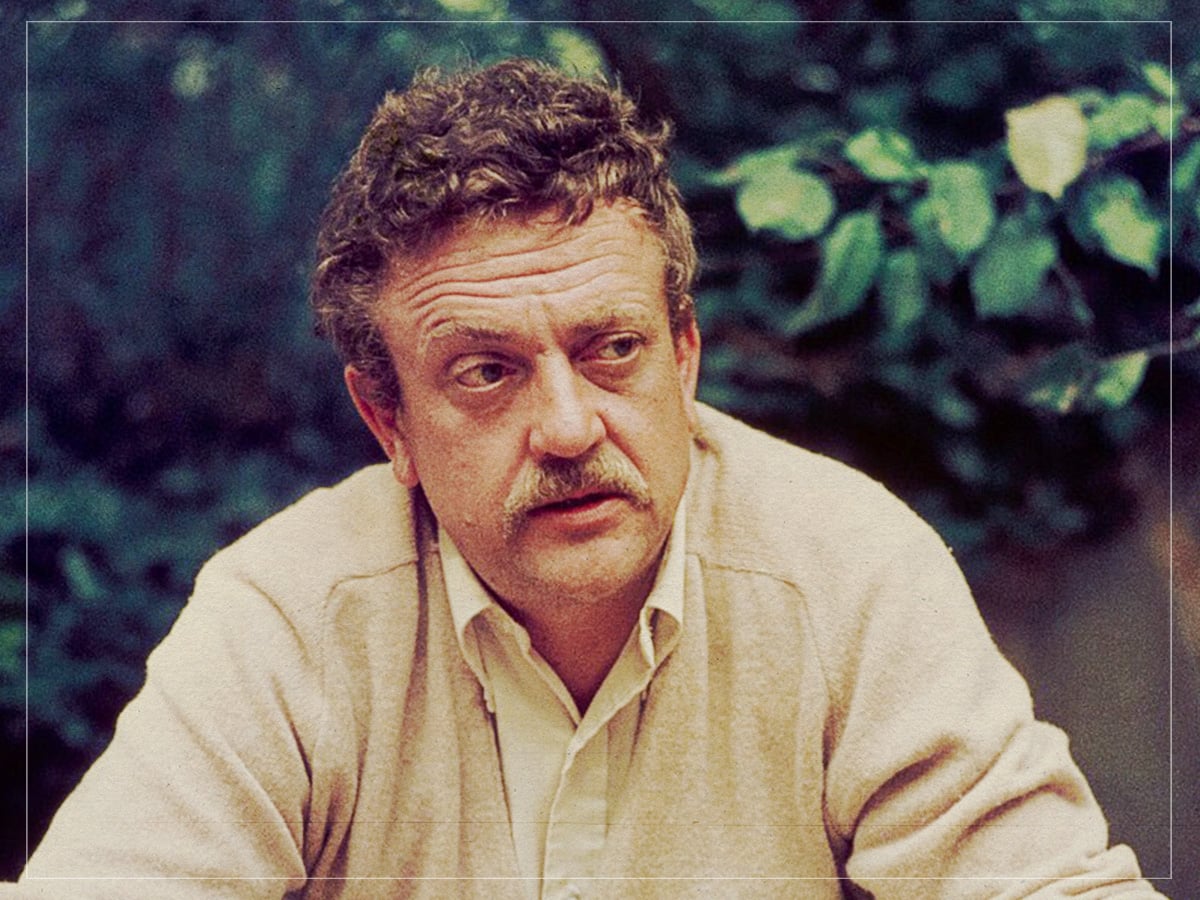
Vonnegut had a different background to a lot of literature’s other celebrated dystopian doom-predictors and cynical satirists. Born and raised in Indianapolis, he had a soft, southern drawl to his voice that many people from Indiana (a decidedly northern state) inexplicably possess, giving him a bit of a folksy Mark Twain persona.
He wasn’t entirely the salt of the earth: his father and grandfather were prominent architects, and Kurt himself studied biochemistry at Cornell and anthropology at the University of Chicago. Still, the humble Midwestern American worldview that formed during Vonnegut’s childhood clearly informed all of his work, as he questioned society not in the tradition of the snooty urban intellectual, but as a formerly optimistic subscriber to the ‘American Dream’, slowly awakening to the inherent flaws in the system.
In the summer of 1944, several months after discovering that his mother had died from an overdose of pills, Vonnegut, at the age of 21, was sent off to Europe, where he found himself fighting with the US Army in the Battle of the Bulge. Not long after, he was captured by German forces and became a prisoner of war in Dresden, living in a slaughterhouse and hearing the nightly bombardment of the city outside.
These events would provide a major part of the plot for Vonnegut’s best-known novel, 1969’s Slaughterhouse-Five, but the trauma and horrors he witnessed in the war were unavoidably part of many of his works, as was the profound disappointment he felt when those events didn’t seem to teach everyone the lessons one might have expected.
“The day the war ended,” Vonnegut told the Chicago Tribune in 1990, “for a magical 24 hours, it all could have been so good. I had such high hopes for the planet and so did everyone else, after everyone had sacrificed so much and behaved so well… But we went on manufacturing weapons that are so powerful. And now we have this huge generation of crack babies and utterly demoralised poor people of all colours. The fact that Americans would willingly wreck this country, it’s unbelievable.”
During the age of Trump, many Americans have longed to hear from some of the revered social commentators of the past, the people who often helped put the country’s confusing hypocrisies and contradictions into perspective, to see what they’d make of this current moment. Trying to construe these things from old interviews or brief passages in novels can be tricky, which is why some figures, like the late comedian George Carlin, have been posthumously re-animated online as spokesmen for two opposing sides of the same argument: both an ‘anti-woke’ proponent of free speech and a ‘woke’ critic of punching down jokes.
Vonnegut, who died in 2007, is certainly susceptible to this kind of treatment, as well. Maga supporters could look at Vonnegut’s dismay over the state of the country in the 1990s and 2000s and suggest that he would have become a Trump voter, eager to “drain the swamp” and return the country to its post-war potential. So long as Kurt would have stayed in his right mind, though, that feels like a highly unlikely development.
In many of the essays he wrote and interviews he gave in his last few years, he expressed his feeling that the “game is over” for mankind; that we’d already killed the planet through our obsession with fossil fuels. He also wrote about the consistent, seemingly unavoidable rise to power of people without empathy: psychopathic personalities, or “PPs”, as he called them.
“What has allowed so many PPs to rise so high in corporations, and now in government,” Vonnegut wrote in his memoir A Man Without a Country, “is that they are so decisive. They are going to do something every fuckin’ day, and they are not afraid. Unlike normal people, they are never filled with doubts, for the simple reason that they don’t give a fuck what happens next.”
That certainly sounds familiar.
Vonnegut’s observations about the trajectory of America, its psyche, and its leadership, were already fairly gloomy even as far back as the 1960s, when he was at a career peak with Slaughterhouse-Five, connecting with young audiences and discussing the hopes of his children’s generation, the rock and rolling Baby Boomers, to make a better world.
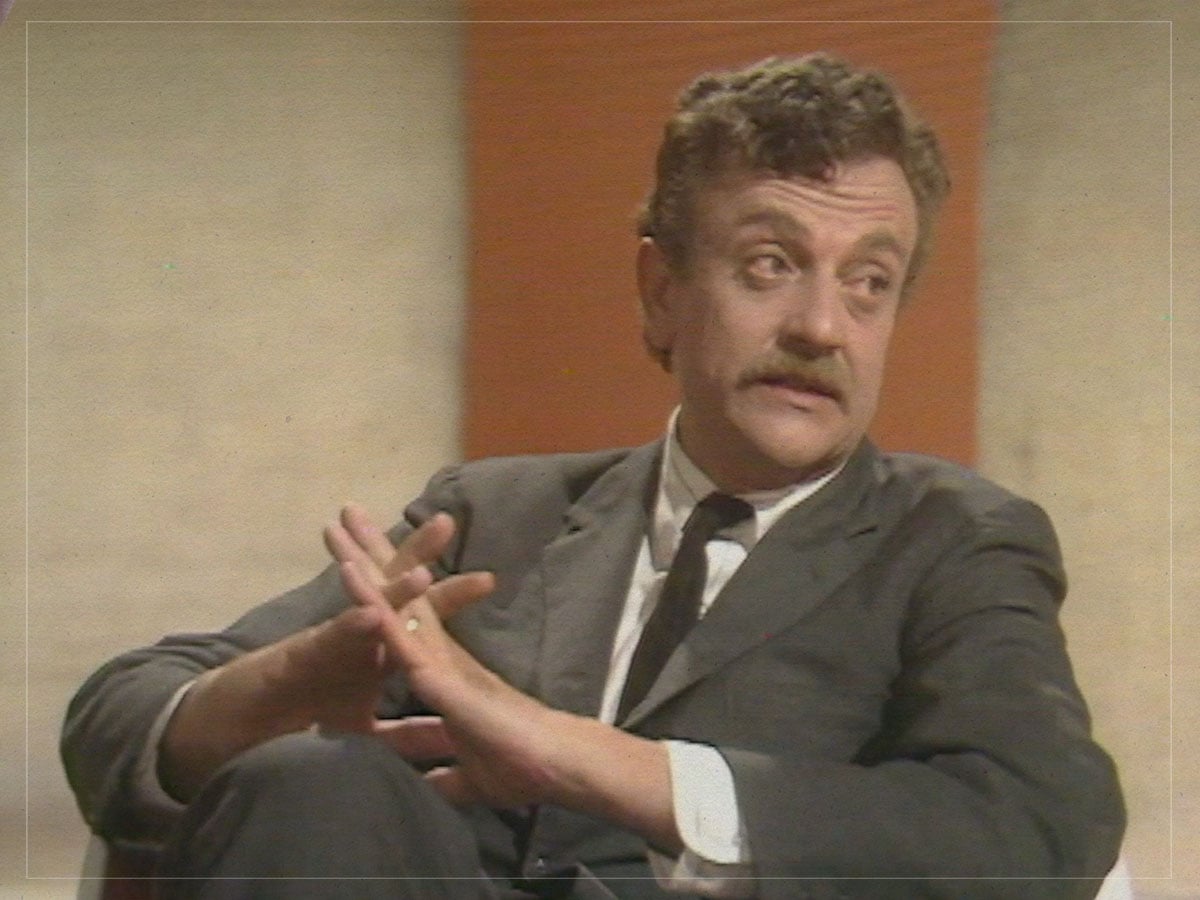
“There is a fear in them, in their entire generation,” a 47-year-old Vonnegut said in a 1970 TV interview with the BBC’s James Mossman.
“There’s a fear that they will somehow be perpetuating the system, which they see is an evil system, when they really want to see it broken.”
“Part of the American tragedy now,” he continued, “is that we have constructed a collapse-proof government, and nobody should build that sort of thing. It does not have to respond, and it’s so enormously strong and impersonal now that it can’t respond. I think the framers of the Constitution envisioned a government which could be overthrown under certain circumstances, and they encouraged people to think of overthrowing it in case it ever became unjust. But now it is so dependent on machinery, you know, you must overthrow computers; you must overthrow great machines…and it can’t be done.”
What he might not have anticipated was future politicians’ use of the principles of an overthrow as a means of securing their own place within the existing system. The illusion of rebellion, of “draining the swamp”, rallies the people in the same fashion as an actual overhaul of power, but denies them the benefits of a real revolution.
Vonnegut still had hope for the future in his middle age, believing, as he’d witnessed during the war, that people could do great things when put in the most difficult positions, that their resourcefulness would come through. He did worry, though, that the American psyche, unlike any other, was oddly vulnerable to surrender, even despite the country’s mighty position in the world at the time.
Speaking of his own experience as a POW, the writer noted that Americans had a reputation among military leaders for behaving “the worst” while in captivity, with one theory suggesting that soldiers from other countries had grown up with more of an open acceptance of failure and death, whereas the Yanks were shielded from such things.
“This was true in Germany,” he observed, “as there were prisoners from practically every nation in the world in Germany when I was there. The Americans were the dirtiest, as they would stop brushing their teeth, they would stop washing; they would get running sores; they would get diseases that other prisoners of war did not get, as they became totally demoralised… Americans cannot stand to lose. There’s something about their upbringing that leads them to believe that they are to win or to quit. Americans are very good soldiers; they’re good infantrymen. But in defeat, something in them collapses; it’s almost as though they can’t go home again having lost.”
Of course, in the ensuing decades, a solution was finally found for this problem: just never admit you’ve lost.
