


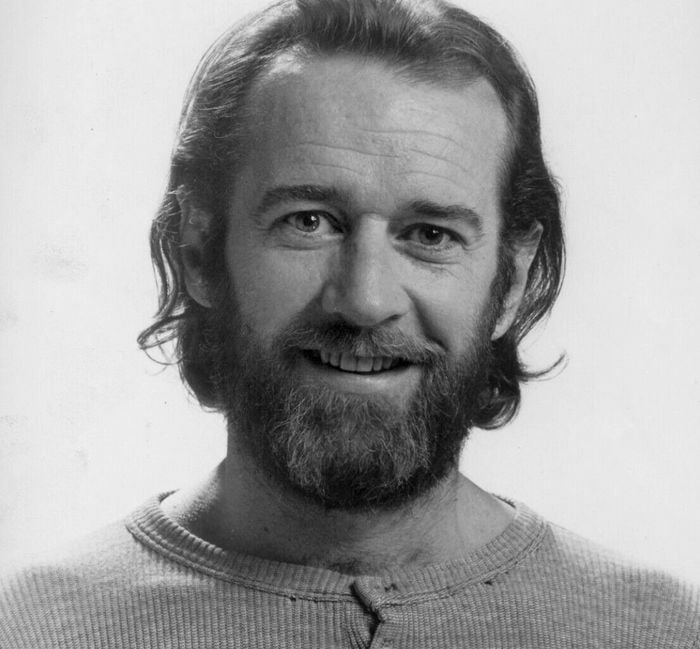
The musicians that inspired George Carlin to be more than just a comedian

George Carlin was considered a truly influential figure in stand-up comedy. He became a counterculture legend, and his work often reflected on politics, psychology and religion. Carlin was such a big name that one of his routines led to a law being passed that allowed the American government to censor material on the airwaves.
Carlin said that he began to appreciate the power and use of the English language through his mother. When his career began to take off in the 1960s, it came at a time when the counterculture movement was starting to take form. As such, it played a significant effect on Carlin.
Discussing this time in his life, he once said: “This dissonance was inside me, and in the period this is happening all through the sixties, the counterculture was forming, the free speech movement was started in Berkeley. The hippies were growing into a force, and peace, love, flower power, pot-smoking, and anti-authority were ringing. Throw over the establishment, burn down the math building. Wow!”
Carlin added: “So I gravitated toward that because I was that person really, and the people I hung around with were that way. The kids and the musicians I knew in the late ’50s had gone through that transition; they looked different, and their music changed, and I’m listening to people like Buffalo Springfield and Bob Dylan. I’m listening to these people, and I realise these artists are using their talent to project their feelings and ideas, not just please people.”
Indeed, the emergence of Dylan and Neil Young and Co. had begun to affect the society of America at large, and many people started to question their roles in society and wanted to take back power from the authority figures that ruled over them.
Carlin said: “I suddenly was able to see my place and to realise I was in the wrong place. In 1967, the summer of love, the peak of the hippie movement, I was 30. I was entertaining people in nightclubs who were 40 and were at war with their kids who were 20. There was a generational war. I was in the middle of it. I’m like, what the fuck am I doing over here? These are the people who will at least understand me and give me a chance.”
He added: “So it took two years; I didn’t go to the mountain and come back different. I didn’t do whatever those people do when they go away and come back new suddenly. It took two years to change, and it happened on television. I had denied that part of myself, and it came into full flower. I never became a really big success until that. I probably had 200 television shows by that point, and I still wasn’t realised as a comedian. I hadn’t let myself grow, and later I found that I was more than just a comedian.”

Never Miss A Tale
The Far Out Bob Dylan Newsletter
All the latest stories about Bob Dylan from the independent voice of culture.
Straight to your inbox.