


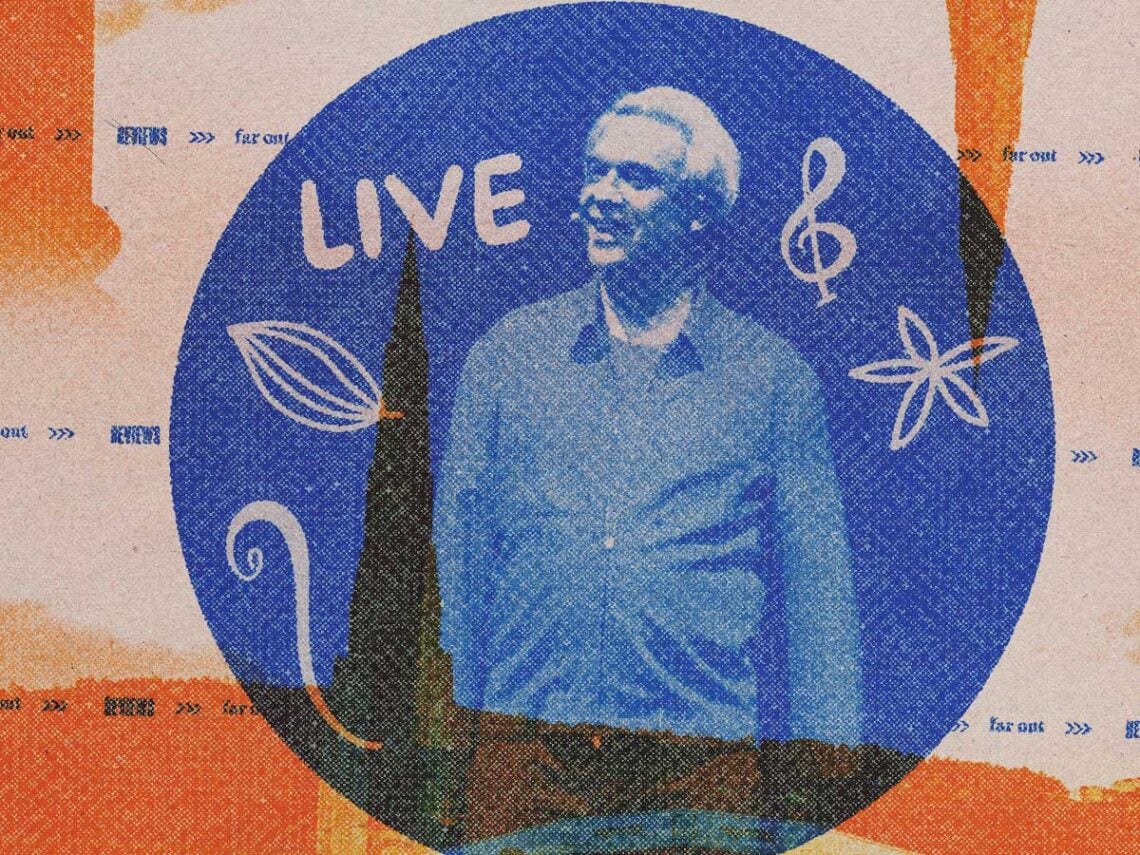
How David Byrne distilled the art of new punk in a small town in West Yorkshire

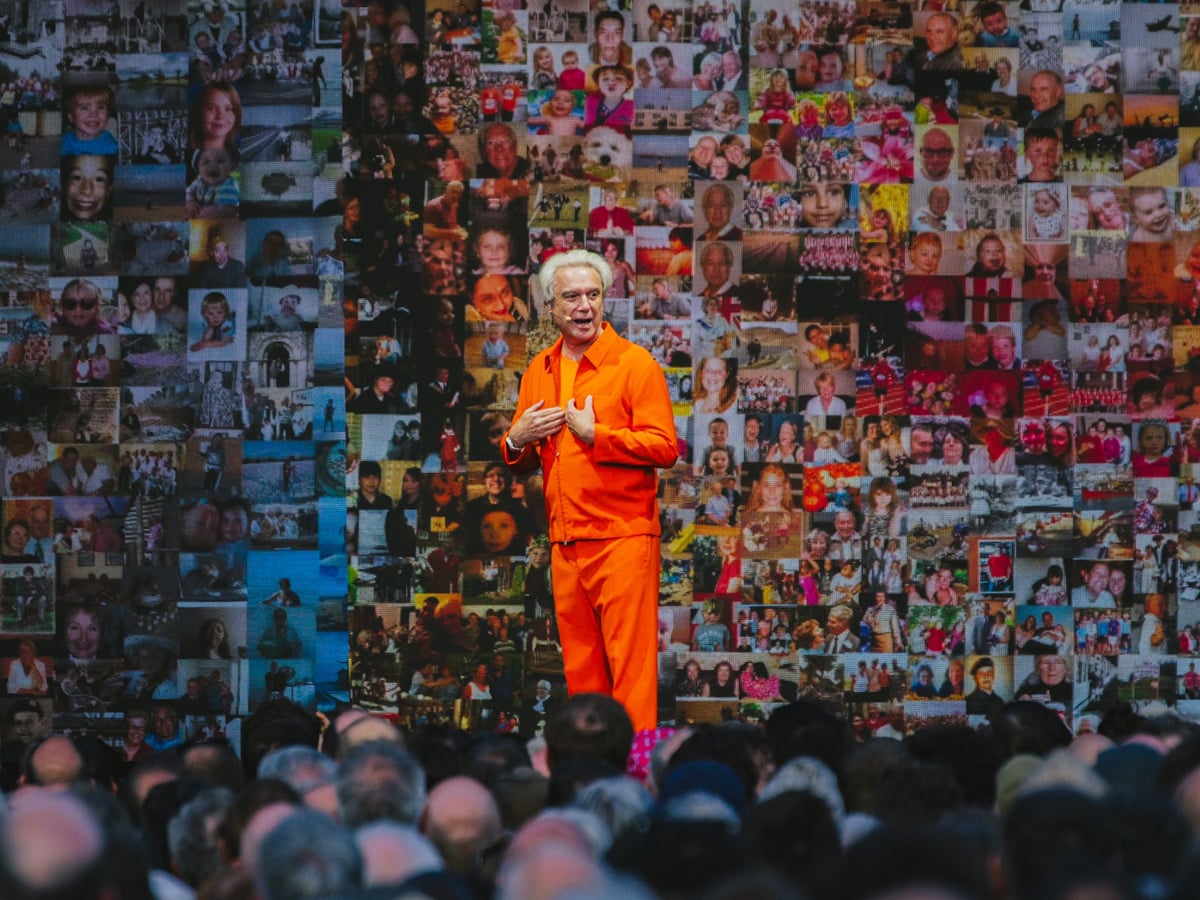
During his show at Halifax’s The Piece Hall, David Byrne paused to recite a quote from actor and writer John Cameron Mitchell. “Punk used to be yelling and making a big noise, but now this is the resistance,” he said, “These days, love and kindness are a form of resistance”.
It’s an intriguing moment that somehow seems to stand apart from the rest of Byrne’s pre-song drabbles, and one that immediately reminds you just how much of a music veteran he actually is. After all, his origin story is defined by the emergence of a band in a scene where punk aggression was rife, only for the band to turn a full 180 and embrace art-rock with a bite.
In this new age, Byrne continues to embrace the same sort of punk he always embraced, with music that presents an alternative, a simple kindness, or a “resistance” to the deep-rooted binaries that are currently splitting the world in two. “I’m trying, in my own way, to show that there is an alternative [to being divided],” Byrne previously explained to ABC News, “We do it through a music show”.
In the mid-1970s, Talking Heads emerged in New York’s new wave punk scene as a direct antithesis to the stereotypical punk ethos. In a CBGB talent pool that also boasted the likes of the Ramones, Television and Blondie, Talking Heads was formed from a patchwork of art-school visionaries who viewed music and music expression as a living, breathing art form that could bridge gaps between entire cultures and communities.
They didn’t exist in a vacuum, per se, as Talking Heads’ version of punk was never solely about opposing it or shunning it entirely. Instead, it was, in their own way, and possibly without even acknowledging it themselves until much later, a form of artistic resistance centred around a gentler and more joyful approach that placed the simple art of fun above all else.
But that wasn’t all that there was. Talking Heads were never just about an infectious groove and the promise of a good time, nor were they solely about Byrne’s supposed garbled ramblings about how he perceived the oddities in the world around him. Instead, they were a culmination of four artistic outliers at the Rhode Island School of Design, creating music that was defiant because it was a genuine and oftentimes surreal response to the opposing forces around them.
Or, in this case, it was a stark diversion from the preachy, confrontational teeth of old punkish attitudes and a plunge into absurdist enjoyment. It acknowledged the cracks in society and chose to dance and feel optimistic in the face of it, even though little else made sense. Now, decades later, Byrne continues that legacy, fighting back with joy and kindness, and an unforgettable show that could easily dazzle even the more traditional punk loyalists who still possess a one-track mind when it comes to everything it stands for.
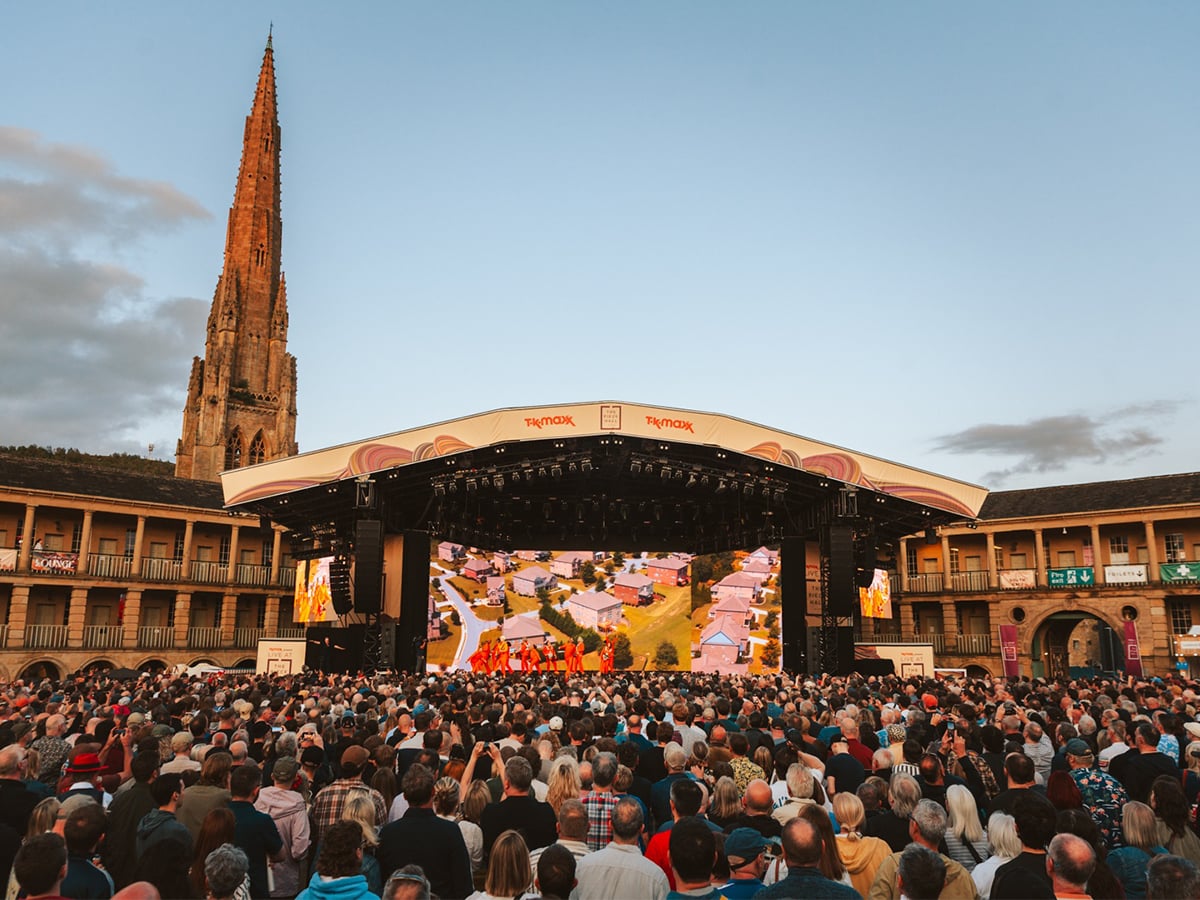
At Halifax’s The Piece Hall, there’s a natural intimacy to sharing the same space with around 6,000 strangers. En route to the venue, the small Yorkshire town backdrop feels almost like stepping into some sort of alternate reality, worlds removed from the original setting in which Byrne first stepped out as part of new wave’s freshest force all those moons ago. But something about it felt weirdly fitting, too.
That’s perhaps because nothing Byrne has done has ever truly made sense, and although that’s one of the most endearing aspects of his personality, it’s also part of the reason why he became one of the most significant musicians in history in the first place. He has a natural ability to make the abstract feel normal, the same way he makes visuals of people wearing large, anthropomorphised animal heads feel barely out of place, as was the case during ‘Like Humans Do’.
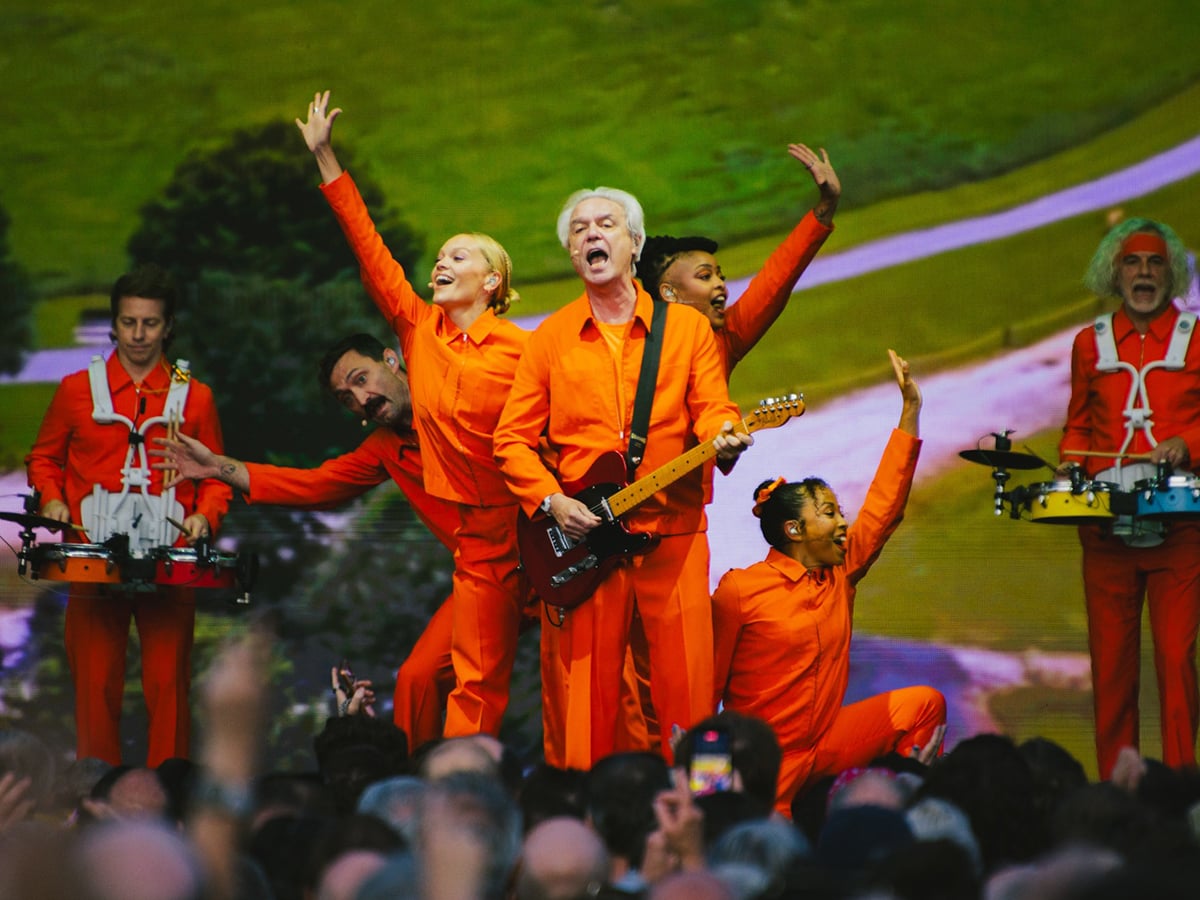
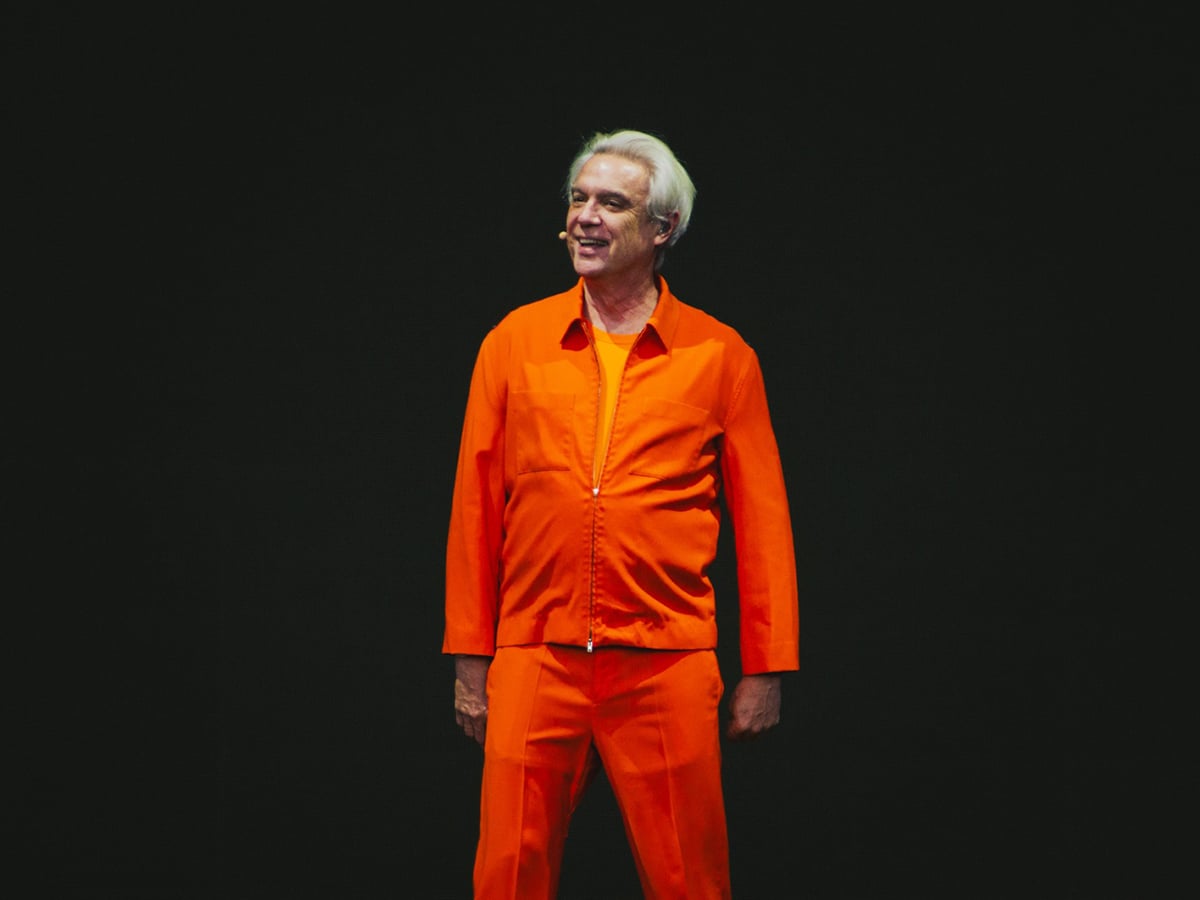
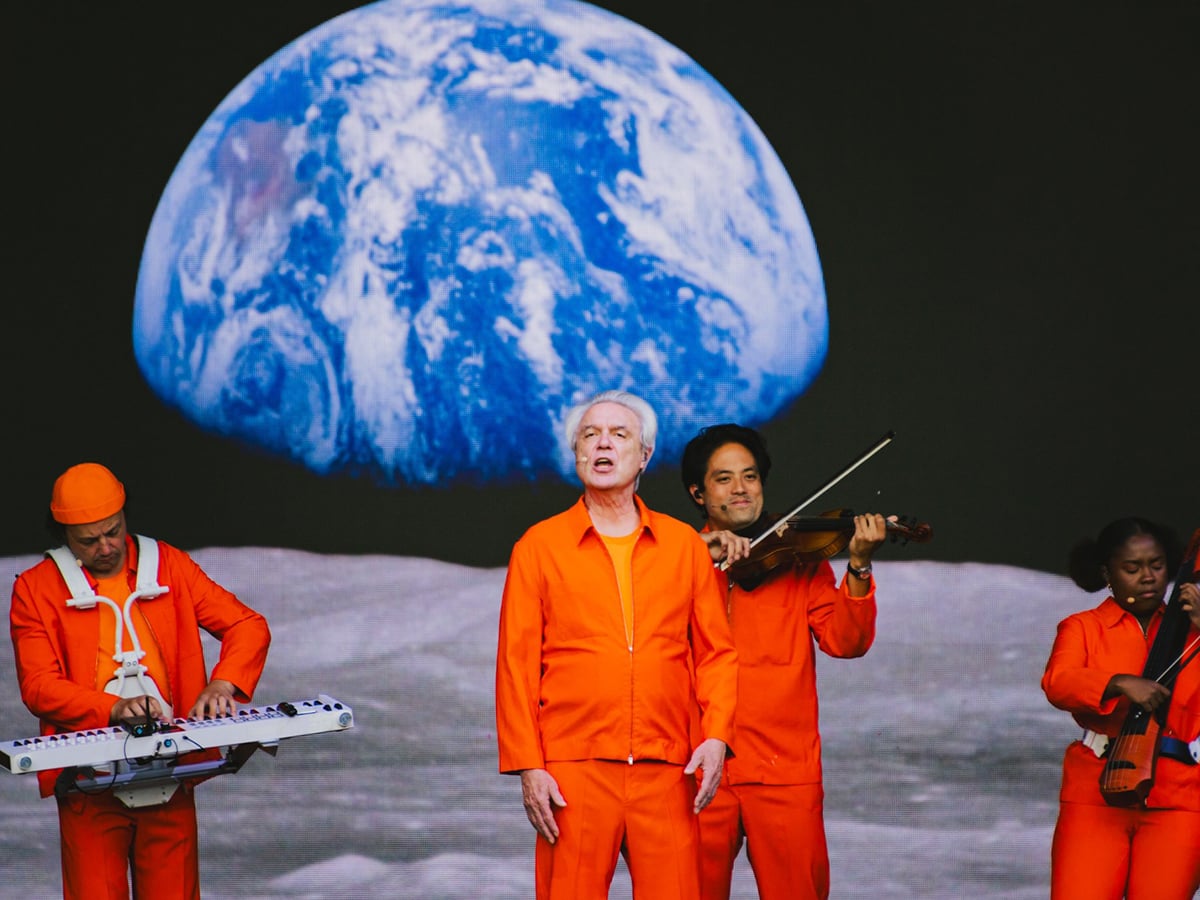
As such, the show is a glorious spectacle of everything that makes Byrne great, with the accompanying ensemble in bold, orange suits highlighting the power of community and having fun among seas of like-minded people. The live renditions of Byrne’s latest material, from the blunt rumination on modern-day binaries in ‘Everybody Laughs’ to the love-baffled ‘What Is The Reason For It?’, is compounded by this relentless quest for love and connection through music and, by extension, the ultimate realisation that even through attempts to make sense of the world, there’s always this: live music and togetherness.
It’s a realisation most of us probably all have at the same time as the soft chimes of ‘This Must Be The Place’ settle over the crowd like a warm blanket, with words that hit more now than they probably ever did in 1983: “Home is where I want to be, pick me up and turn me round…”
That is the true spirit of new punk; this new age of punk that doesn’t shout, yell, or hurt or harm, nor does it see the ugliness in the world and vow to be even uglier. Instead, it does precisely what Byrne mentioned was a core principle of finding meaning in the hustle and bustle of life, which is existing for one perfect evening among thousands of other people with great music and the strangely comforting smell of cheap cherry perfume and overpriced pizza.
Where the punk of the old CBGB community carried aromas of grimy, gritty New York rebellion, new punk at Halifax’s The Piece Hall was distilled with love, kindness, and above all, orange suits and the charm of small Yorkshire towns.

Never Miss A Beat
The Far Out Punk Newsletter
All the latest Punk content from the independent voice of culture.
Straight to your inbox.