


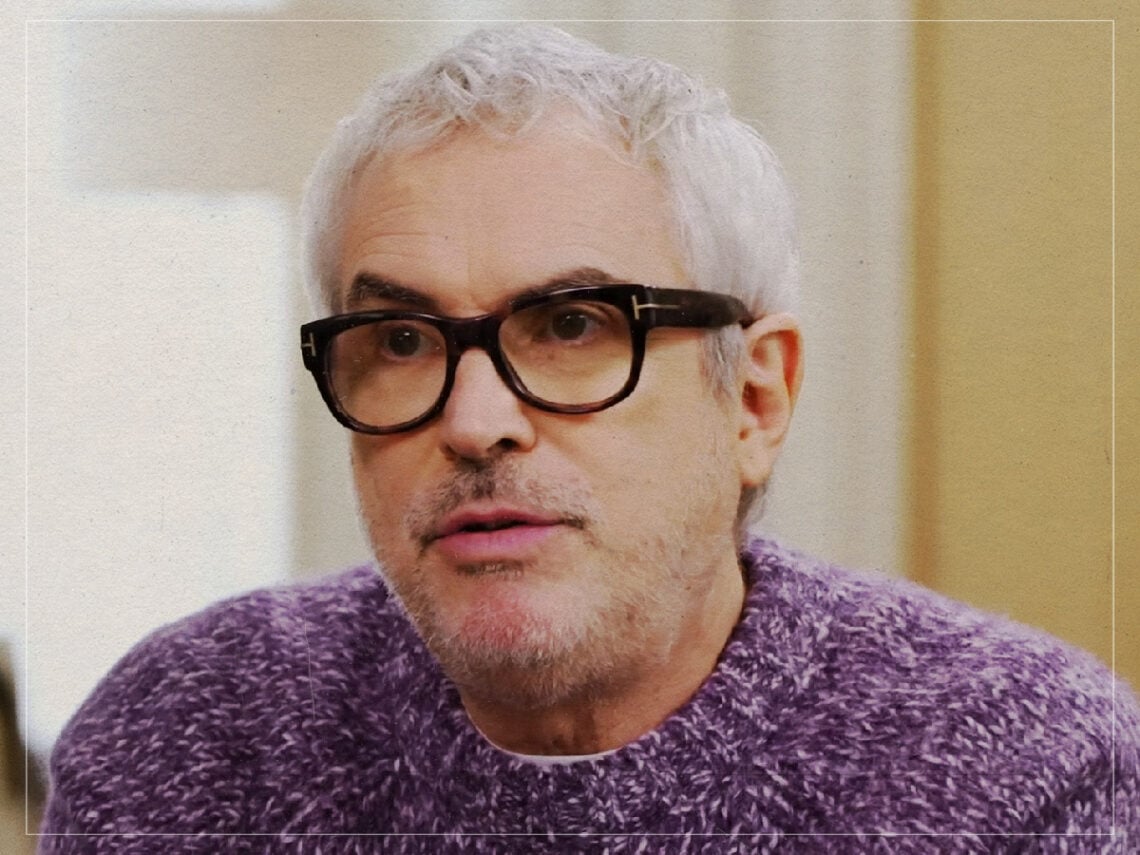
How “crap” teen movies inspired Alfonso Cuarón’s finest work: “Something really interesting at their core”

Sometimes, inspiration can strike from watching a load of rubbish. In fact, watching something bad can often be more inspiring than watching something good, because you suddenly get hit with the drive to try and make a movie that’s much better.
For Alfonso Cuarón, it was the experience of watching a bunch of bad teen comedies that led him to create his own coming-of-age story instead, taking the skeletal makeup of the genre – sexual exploration, close friendships and fallouts, class divides – and transforming this into something a lot more unforgettable. The result was his fourth film, and arguably his best, Y tu mamá también.
Released in 2001, the film saw Gael García Bernal and Diego Luna play two best friends, Julio and Tenoch, whose girlfriends go away for the summer. At a wedding, they meet Maribel Verdú’s Luisa, who is married to Tenoch’s cousin, and they invite her to travel to the beach with them. She’s slightly older than these teenagers, and she initially turns down the offer, but then something changes, and she embarks on a journey that we only come to realise the importance of by the end of the movie.
Cuarón told Little White Lies how the movie came about, citing his teenage son as being partly responsible, “My son was in New York, and we’d go to movies together all the time; sometimes I would choose the movie, and other times he would. And basically I had to see a lot of crap, and a lot of teen comedies.”
Studying these, typically American, teen movies, Cuarón noticed patterns of vulgarity and strong uses of character archetype, which he felt brought an inauthenticity to the teen story that he wanted to correct.
“The problem with the teen comedies is that there’s something really interesting at their core: they’re so moralistic, and they have a phoney and overly respectful sense of character,” the director said.
“You don’t have to make fun of the characters or invent clever plots to humiliate one or the other, or have them stick their dicks into a pie.”
Alfonso Cuarón
Cuarón doesn’t shy away from explicitness in Y tu mamá también, with the opening scenes showing the characters having sex with their girlfriends – and we see a lot. In another scene, the pair masturbate while lying on diving boards, and in another, we see them in the shower. Rather, the filmmaker brings intimacy that feels honest and strikingly real – it’s a little messy, but never as crass as some American Pie dick-in-dessert situation.


The characters in the film aren’t particularly likeable either, and they squabble over women, seeing sex as something coveted, highly important – yet at the same time, something they treat rather flippantly. Their minds change, their standards aren’t set in stone. One minute, the boys hate each other; the next, they’re kissing. It’s one of cinema’s most fascinating coming-of-age stories, because, above anything, it’s rather bittersweet. And isn’t that the emotion we struggle to comprehend the most?
“I was lucky, because when my son was ten, I made A Little Princess, which, in a way, was a film for me; and then I wanted to do a teen movie for him because, of course, he ended up being a teen,” Cuarón said. So, Y tu mamá también was born out of wanting to make a teen movie that actually left a lasting impression, which he certainly achieved – even if Cuarón had a nightmare getting the movie screened without fighting against censors for an appropriate age rating.
