


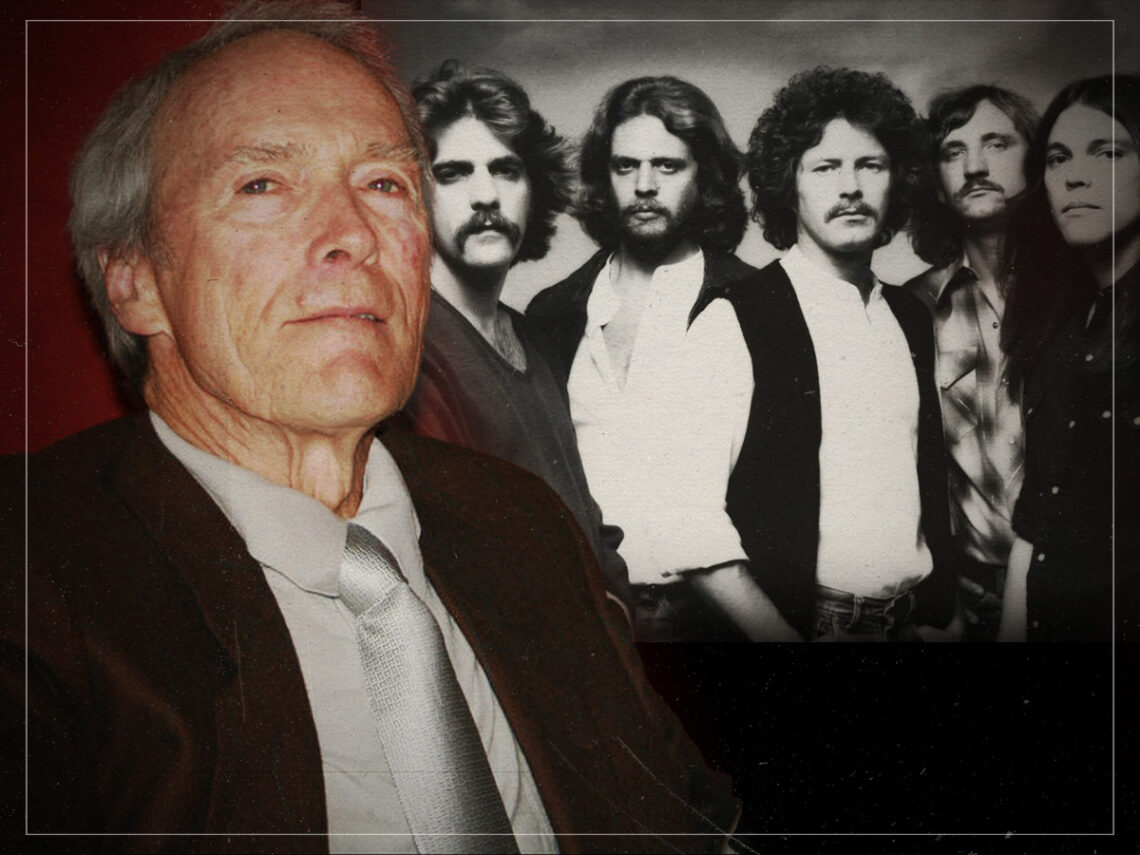
“My wildest dreams”: How Clint Eastwood inspired an Eagles’ farewell album

For a band who warned us about the pitfalls of California, the Eagles sure know how to make the most of all its vices.
Hotel California may have provided a window into Los Angeles’ seedy underbelly, but the band weren’t viewing it from the outside. They were right in there, in the hotel lobby, shaking hands with fellow celebrities who are also willing to turn a blind eye, so long as fame protects their lifestyles. Eagles really were, for all intents and purposes, the band of Hollywood in the golden era.
So it’s unsurprising that it was one of the titans of cinema who encouraged a member of the band to re-enter the studio and make one more record. Rather aptly for a band I’m accusing of being the beneficiaries of fame, the tale of Eastwood’s involvement in the band’s recording begins in 2000, when Glenn Frey attended the AT&T Pebble Beach National Pro-Am golf tournament in Monterey, California. Very rock and roll.
“They have a party on the night before the tournament starts, for the 2,000 people who work for free all weekend,” Frey explained in 2012. “And Clint [Eastwood], who’s the head guy there, asked all the singers and comedians if they’d do a little show – this has been going on since the days of Bing Crosby and Bob Hope – so of course I said, Sure.”
Eastwood had very specific demands for Frey and how he wanted the setlist to look. There was a desire for Frey to bring a little bit of Eagles to the party, but also to pay tribute to some artists from yesteryear.
He added, “And then I got a note saying, ‘Clint would like you to do two songs: one of your hits, and something from the 1940s’. I was a bit taken aback. But I did a Tony Bennett song (1962 hit ‘I Left My Heart in San Francisco’) and it fitted my voice.”
Unbeknownst to Eastwood, he had just inspired Frey’s next record as his experience singing a Tony Bennett song awakened a new style of songwriting within him. Soon after the party, Frey was considering how that evening had shaped his style when Michael Bolton came along and confirmed his suspicions, telling him that his voice perfectly suited that material.
It was after Bolton asked him if he had made any material of that ilk and Frey realised that he hadn’t, that he sought to rectify that. But it wasn’t until 12 years later that Frey acted upon it, laying down the parts that would become his final album, After Hours.
While the record would never compete with some of his earlier works, written during the heyday of Eagles’ chart domination, it was an appropriately relaxed collection of jazz and swing-inspired classics that marked the slow retreat of a legend. Moreover, it cemented his place within the legacy of Hollywood, paying homage to the sounds that built the industry and kept heavy-hitting names like Clint Eastwood musically satisfied.

Never Miss A Tale
The Far Out Clint Eastwood Newsletter
All the latest stories about Clint Eastwood from the independent voice of culture.
Straight to your inbox.