


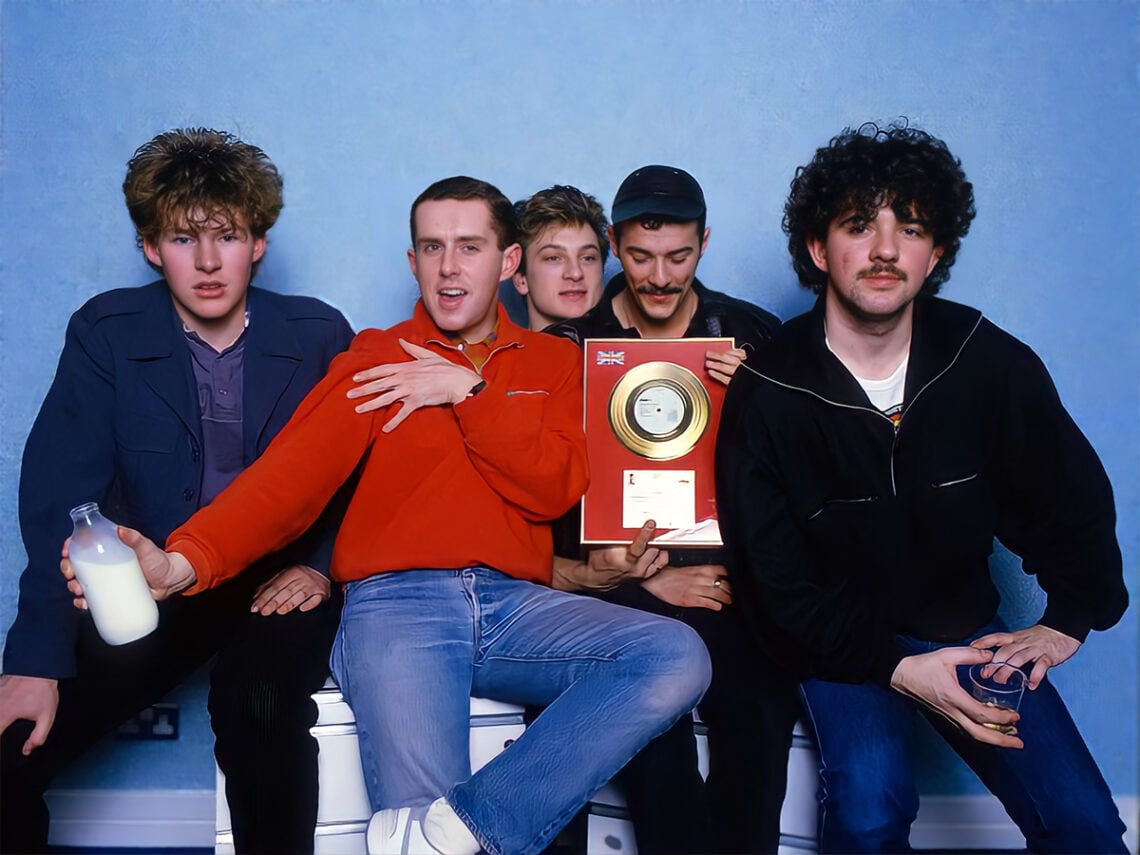
Wilton’s Music Hall: The London nightclub where Frankie Goes to Hollywood created their most controversial video in 1984

You knew Frankie Goes to Hollywood were a force here to stay, mainly because they released ‘Relax’ as their first ever single.
It’s a tried and tested way of turning heads – write the smuttiest lyrics you can think of, and turn them into a song. Of course, it’s been done thousands of times before with varying degrees of success. But when Holly Johnson got off his rickshaw and entered the smoky underworld of a gay nightclub in the 1980s, it gave the notion a whole new meaning.
The facts of ‘Relax’, its controversy, the BBC ban, and its rebellious chart success are all things which have gone down in a sense of smug infamy ever since the song was first released back in 1984. Yet it also somewhat puts things into context – we think of that era as a sort of shimmering, progressive utopia. The response to the track told quite the opposite story.
Yet if the lyrics weren’t already risqué enough, the band knew exactly what they were doing when they decided to take things up a notch and record their most controversial video to go along with the song. In an homage to themselves and the backgrounds they came from, filming it in one of London’s most inimitable S&M gay nightclubs became almost the default option of choice.
It was a turn of events for the location in question, the Wilton’s Music Hall in London’s east end, which dates as far back as the 1690s and even, at one time, found itself to be the heart of the Methodist missionary hub. Transforming it into a world of sex, gender fluidity, and freedom was something that only a genius mind like Johnson could conjure from his wildest imagination.
But it also spoke an important truth about the mantra of Frankie Goes to Hollywood and where they found themselves at that specific point in time. The frontman and his backing singer, Paul Rutherford, were two of the first ever openly gay pop stars at a moment in history when the walls seemed to be caving in on that very community.
Their outspokenness, let alone their lack of inhibitions about putting their cards on the table from the very first moment, was not only transformative for the audiences who could relate to them, but also revolutionising for those who couldn’t, at least on the face of it. The extent of the uproar spoke for itself – yet for as long as the wider world kept shouting, they were only going to keep partying.
Quite frankly, Frankie Goes to Hollywood could have come in, ruffled some feathers, and then left to never be seen again, because in terms of sheer impact, ‘Relax’ had more than done its job. In the act of bringing this often unspoken, castaway world to the brightest centre of the limelight – for five weeks at number one, no less – it signalled a changing of the times.
Obviously, it’s not as if one song changed the course of LGBTQ+ history for good. But if you were to look for the physical locations where huge acts of rebellion were made, Wilton’s Music Hall has to be close to the top of the list. Johnson and his rickshaw have a lot to answer for on that front.
