


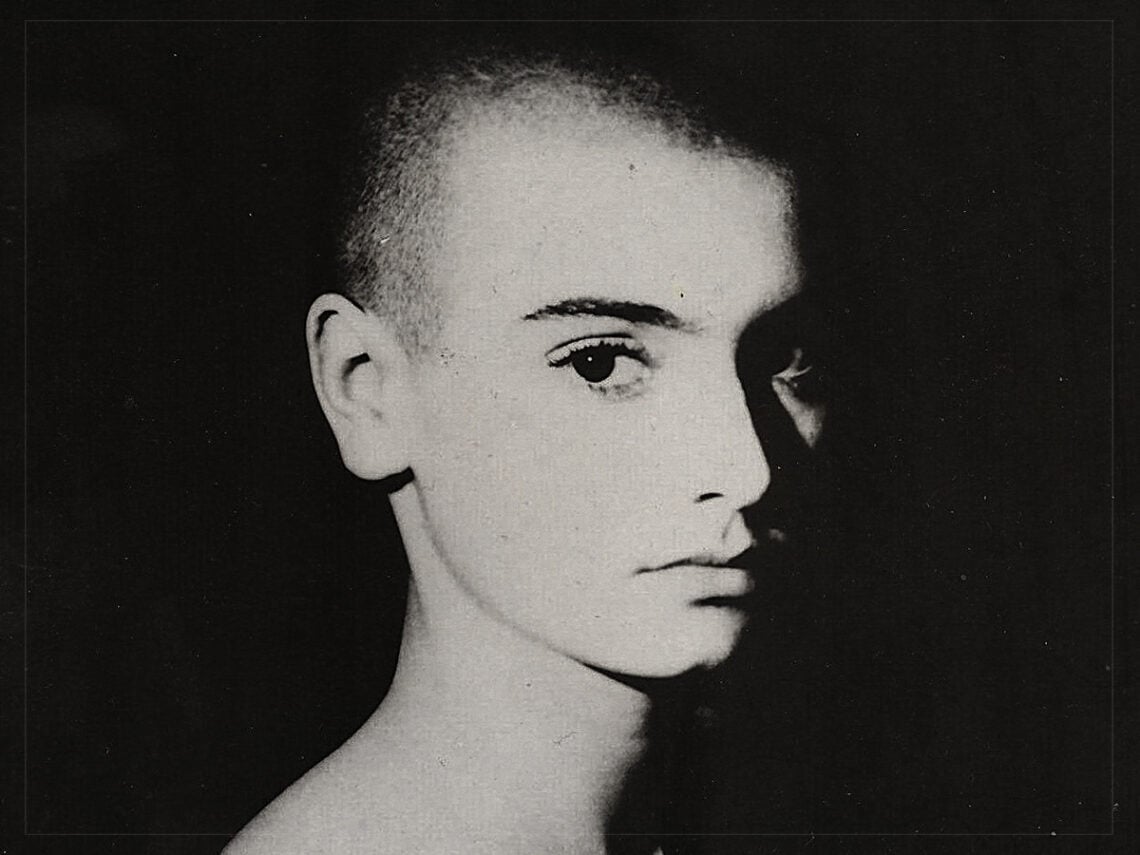
Sinéad O’Connor made her Hollywood home impossible to find: “I would have gone mad”

“Fame is a curse… it was the worst phase of my life, which I thank God I’ll never have to go through again,” Sinéad O’Connor once said, as someone who was famously never shy of facing a controversy.
Don’t lie: who just thought of the image of her on Saturday Night Live? You’re obviously not wrong, but it’s also part of the problem – there was a time before those world-altering events of 1992, and O’Connor was not afraid of making her views known at those points, either. In many ways, the SNL incident was only the tip of the iceberg in what had been a mounting pile of statements.
Two years prior to that storm ever breaking, the singer was already making waves in the music world, but this came at a hefty price. Her album I Do Not Want What I Haven’t Got was released in 1990, boasting ‘Nothing Compares 2 U’ as its lead single, and suddenly, the quiet young star from Ireland was being blazed on every front possible.
That would be intimidating for anyone in those circumstances, but as time went on, O’Connor became more and more averse to the conditions she found herself in. Fame forced her to set up shop in America, but against the backdrop of a country whose every landscape and custom she inherently disagreed with, it made her just as much a polarising figure as her music was popular.
Indeed, she actually refused to appear on SNL at that time because of the host Andrew Dice Clay’s views on women, and refused to perform if any of her shows played the US national anthem, citing the country’s music industry as racist. But when Frank Sinatra said he wanted to “kick her in the ass”, it effectively forced her into hiding.
The LA Times profiled O’Connor at the time, winding their way to an obscure home in the Hollywood Hills, based on Spanish architecture, but that was barely able to be found by the average map-reader. That was exactly the place where they found the singer in her solace, saying she was “happy” with the year she’d had but still had many swirling conflicts at play.
“The year was also very painful,” she admitted. “A lot of awful things happened to me as a result of seven months of touring and the success of the album… The good thing was I could go on stage every night and scream my heart out when I needed to… If I hadn’t had that, I would have gone mad.”


The concept of hiding away in the heart of Hollywood may seem at odds with one another, but it was always in O’Connor’s naturally stylish way to make the biggest of statements with seemingly the most minimal fuss. By a year later, she had left the States and returned to London, speaking volumes about the resentment that brewed for her in America just from the sheer fact of her being there.
It returns to the notion that O’Connor was famous, but not because she wanted to be. In her world, it was a necessary evil in order to communicate certain messages for a time – but then, when enough was enough, she no longer needed to fill that space. Hiding was not the coward’s way out, but instead a decisive choice that was instrumental for her to weather the storm.
