


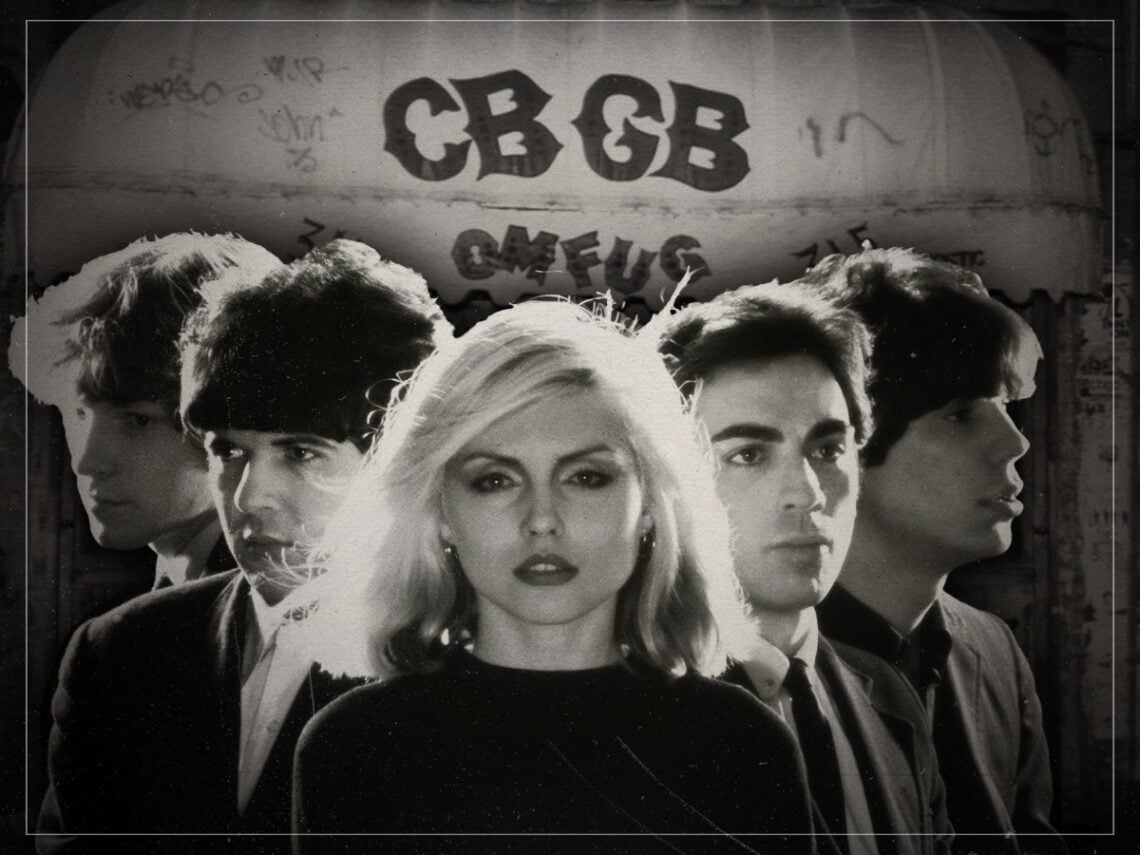
How CBGB gave Blondie their best mistakes

Very few acts are fully formed from the beginning of their careers, and it often takes a dedicated commitment to trying new things and gradually improving in order to become a widely respected rock group.
Blondie, who formed in New York City at the height of the punk and art rock movement of the 1970s, seemed to know exactly what they wanted to do from the outset in an artistic sense, but that doesn’t mean that they had managed to find their groove instantly. Like many other bands of their ilk, they needed the time and space afforded to them to be able to grow as a band, and when it came to releasing their debut single, ‘X Offender’, in 1976, they’d come close to achieving this perfected sound.
This song, along with other early singles, showed incredible promise, but like many other acts, they had truly needed the two years beforehand to be able to let their ideas and identity gestate, getting to know each other musically and creatively so that they could establish what was going to function for them as a group.
Much like many other bands, what they needed was a safe place for them to be able to work out what was good for them, where they could improve, and where they could ultimately become the band who were synonymous with the birth of the new wave movement. Some of their contemporaries fell by the wayside because they weren’t able to find this or harness the connections they’d made to turn it into something beneficial, but for Blondie, they were fortunate enough to have somewhere they could turn to.
For many other similarly minded acts, they had a playground in CBGB, a venue that served as the birthplace and meeting point for many acts from the same scene, such as the Ramones, Television and the Patti Smith Group.
It had worked for others, so there was no reason it couldn’t work for Blondie, and their decision to become regular performers at the legendary New York club was ultimately the lifebuoy that helped them through this tricky teething period to become a prominent fixture in the scene. Drummer Clem Burke noted that it was perhaps the only place where they could have possibly had the capacity to grow in a 2022 interview with Vinyl Writer Music, and argued that it was the perfect place to test out their ideas.
“When we would play CBGB, maybe 100 people – that were mostly other musicians – would be in the audience,” he explained, acknowledging how important the community surrounding the venue had always been.

“For me, CBGBs was a workshop that basically enabled us to make our mistakes in public,” Burke added. “Very few of those moments were captured on video because, obviously, there were no cell phones with cameras and things like that. We were able to work through our original music in front of a minimal audience and get the feedback that we needed to continue.”
It might seem daunting to get up in front of a room of other musicians who have the potential to brutalise you and your artistic ambition, but if you were after a focus group who will help nurture you and let you know where you can improve, then there probably wasn’t a better place for any budding punk-adjacent act in the city than CBGB.
