


How Bob Dylan made David Crosby want to quit music: “I knew I couldn’t match that”

I don’t think we fully appreciate just how good the 1970s were for music. After one well-known band had dominated the decade before, the floodgates of creativity were certifiably opened, and the world was receptive to a wider spectrum of ideas. Be it soul, funk, disco, or punk, every genre was brimming with innovation, and so the unique greatness of certain musicians was sort of paled into mediocrity. A musician like David Crosby and his achievements in that decade were enough to change the course of music history, but when released alongside his peers, it was greatness that was hard to truly recognise.
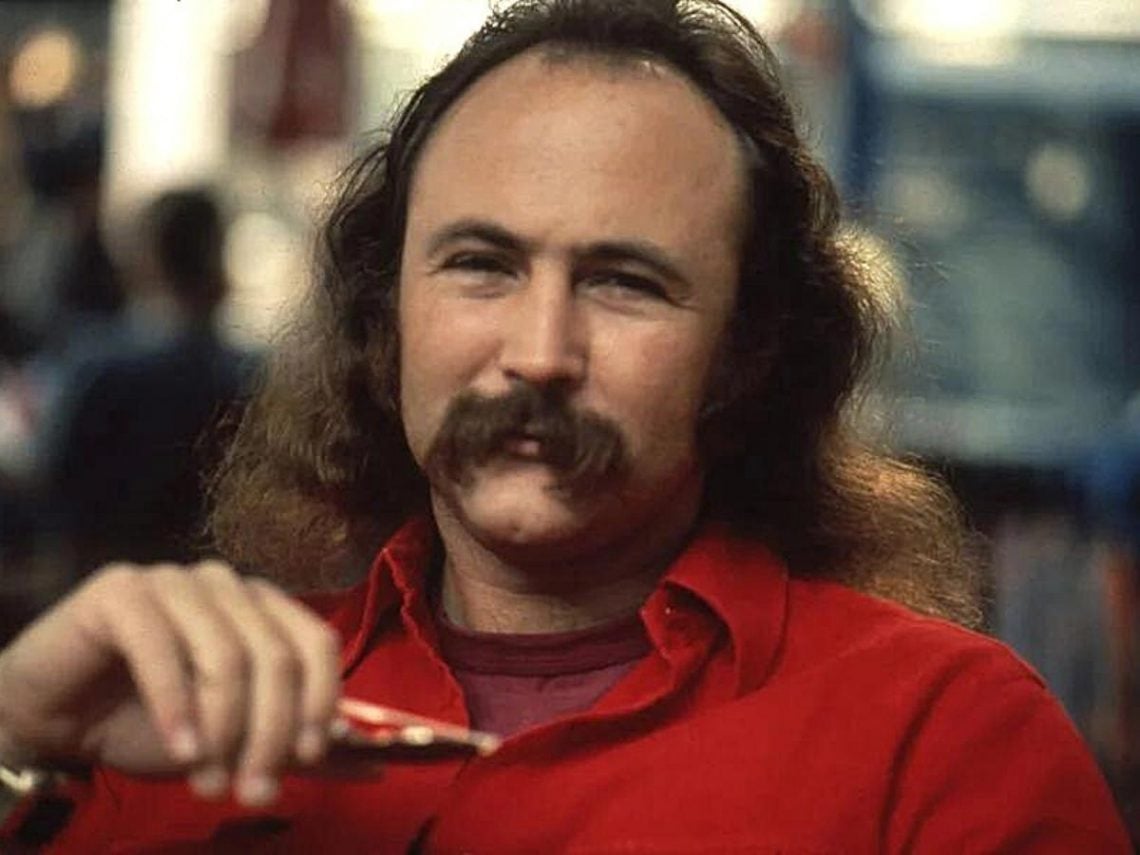
But despite what the moustached icon was doing with Crosby, Stills, and Nash, or perhaps what Marvin Gaye had achieved with his seminal album What’s Going On, there was still one musician who rose above the ranks. Even in the prolific 1970s, when greatness was cropping up on every street corner, Bob Dylan was operating head and shoulders above the rest.
Ever since his debut album in 1962, the world has been confronted with his unwavering greatness, and the course of original songwriting has forever changed. Alongside The Beatles, he was the yardstick against which all original melodies and lyric writing would be measured. Come the turn of the decade, his mercurial genius was globally recognised, and musicians had come to terms with the fact that whatever piece of innovative art they may release would soon be eclipsed by whatever style Dylan felt like putting his hand to.
Perhaps it was what led an artist like David Crosby to soul-search in the foothills of Laurel Canyon, to find his musical counterparts in Stephen Stills and Graham Nash, and to create a harmonic line-up that quite simply couldn’t be matched. As a solo artist, Crosby knew his own work would forever be in the shadow of the great Dylan.
He was confronted with something in the mid-part of the 1960s, recalling, “The first time I saw Bob, I was still a folk singer, and Bob was still a folk singer.”
He added, “He was playing at one of the big clubs in the Village. He was playing there and I snuck in. I sat there and I listened to him and I said, ‘Well, shit, I can sing better than that.’”
“Then it penetrated to me what he was singing,” he continued. “I listened to the words. Then I thought seriously about just quitting the business and taking up another line of work. I knew I couldn’t match that.”
It was a fact most artists had to confront in that ten-to-15-year period of Dylan’s relentless greatness. To accept frankly that music truly wasn’t a competition, but instead a medium in which their authenticity could be shared. And it was what Crosby initially perceived in Dylan’s performative scratchiness that made him so hard to chase down; his imperfections were brutally authentic and emotionally raw, which paved the way for an innovative style of artistic expression. Dylan couldn’t be caught or replicated for his skill, but for his mercurial nuance that made him a transcendent artist.

Never Miss A Tale
The Far Out Bob Dylan Newsletter
All the latest stories about Bob Dylan from the independent voice of culture.
Straight to your inbox.