


How Baltimore shaped John Waters: “So dangerous”

Where we’re from shapes us, whether we like it or not. We can try to pretend that we’re not from some boring town where nothing happens, instead naming a nearby city as our place of origin, but that would be to reject the place or country that we’re forever tied to in some way or another.
For John Waters, pride in his native city of Baltimore has always been strong, so much so that it has come to define his entire oeuvre as a filmmaker. Of course, he started making films with his Dreamlander pals in the city, utilising a minuscule budget to shoot short films like Black in a Black Leather Jacket, transgressive even all these years later. This expanded into feature length films, with Multiple Maniacs and Pink Flamingos sending shockwaves across America as Waters dug his teeth into the most disgusting and filthy aspects of humanity, dog shit and all.
There seemed to be nothing off-limits for the filmmaker, who depicted acts as heinous as rape and murder through his subversive lens, usually led by his muse, Divine. As Waters gained fame and subsequently earned slightly bigger budgets, Waters predominantly kept his films situated in the Baltimore area. Hairspray is the most obvious example – with the later musical version even featuring a song called ‘Good Morning Baltimore’ – but pretty much every Waters film is set in his precious city.
He paints the place as one full of weirdos and criminals, honing in on the strangest elements of Baltimore that he witnessed growing up. Whether that’s an entirely accurate depiction of the city is up for debate, but you can hardly dispute Waters’ endless dedication to bringing a vivid portrayal of eccentricity to the big screen. His version of Baltimore is as twisted as it is strangely full of love.
Talking to the Guardian about his city, he once revealed his childhood fascination with crawling the sewers of Baltimore, explaining, “So dangerous now I think about it, but that was my first journey.” It’s this mix of strange characters and the griminess of the city that has long left a lasting impression on Waters, so naturally, Baltimore’s nightlife has been a significant influence on his work, too.
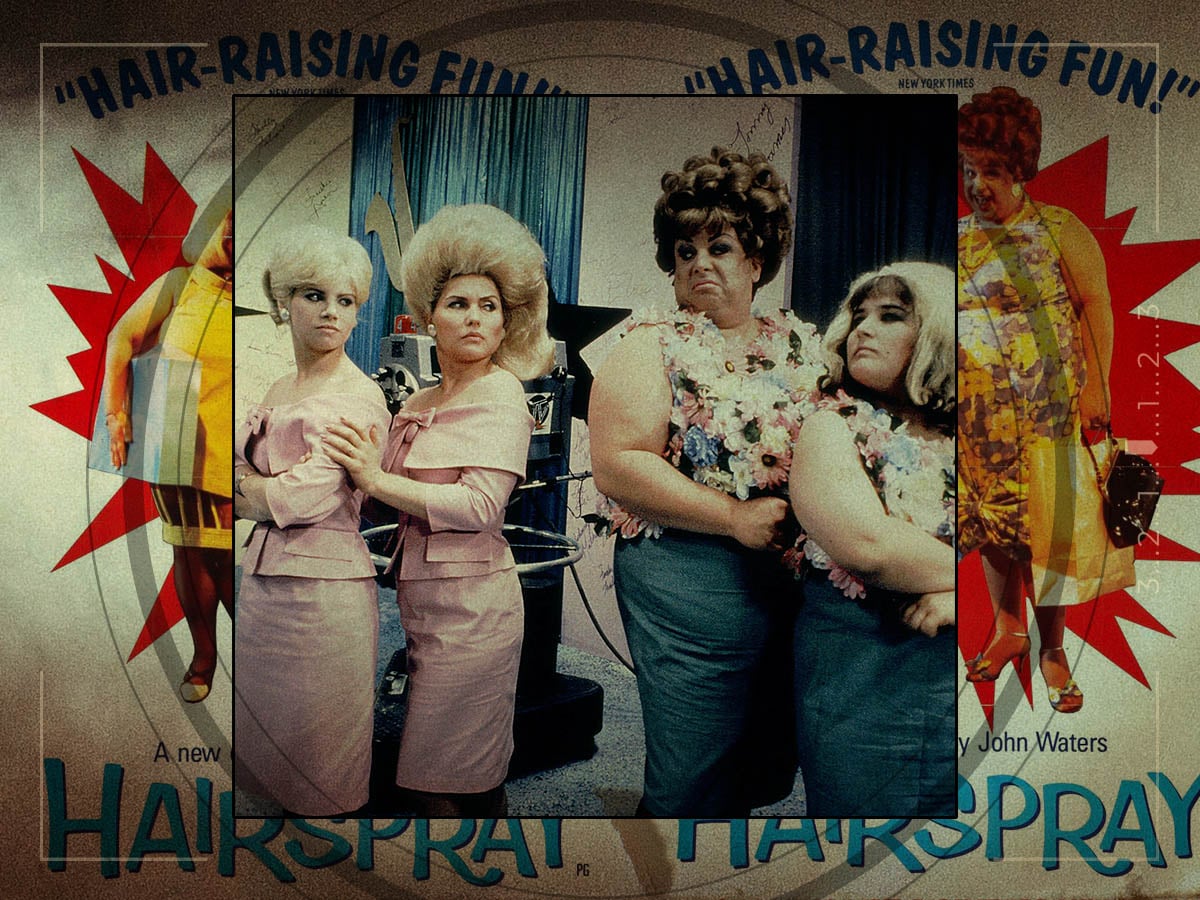
Baltimore, with its mix of suburban respectability, which is closest to Waters’ middle-class upbringing, and its predominantly working-class community, has always been a melting pot of culture. For a young Waters, his exposure to the city’s less prosperous side subsequently inspired the characters who came to define his films. He revelled in a specific aesthetic that irrevocably tied his films to Baltimore culture, specifically his own take on the ‘Hon’.
This specific brand of working-class woman is brought to life in Hairspray, beehives and cat-eye glasses, standing as a symbol of a slightly trashy, but captivating kind of glamour. When conjuring up characters, he often looked to the sleaziness of Baltimore’s bars for inspiration, where unforgettable men and women worked or stopped for a drink – perhaps they were dolled up to the nines, or maybe they were a gay biker looking for a leather-clad hunk. Waters admired them all.
“Any gay people I know go to the hipster bars; they don’t go to the gay bars. Start your night at the Club Charles and then you can meet people to go other places. The Charles has been Baltimore’s favourite cool hipster bar forever. There’s also a real biker bar I like called the Holiday House, where I filmed A Dirty Shame,” Waters said in the same Guardian article, describing the influence that these real places have had on his work.
Sometimes, real people became parts of his films, too, like Edith Massey, a bartender he met working in Baltimore’s Fell’s Point. He first cast her as herself in Multiple Maniacs, then allowed her to play characters in Pink Flamingos, Female Trouble, Desperate Living, and Polyester. She was a true Dreamlander, essentially playing slightly elevated versions of herself each time.
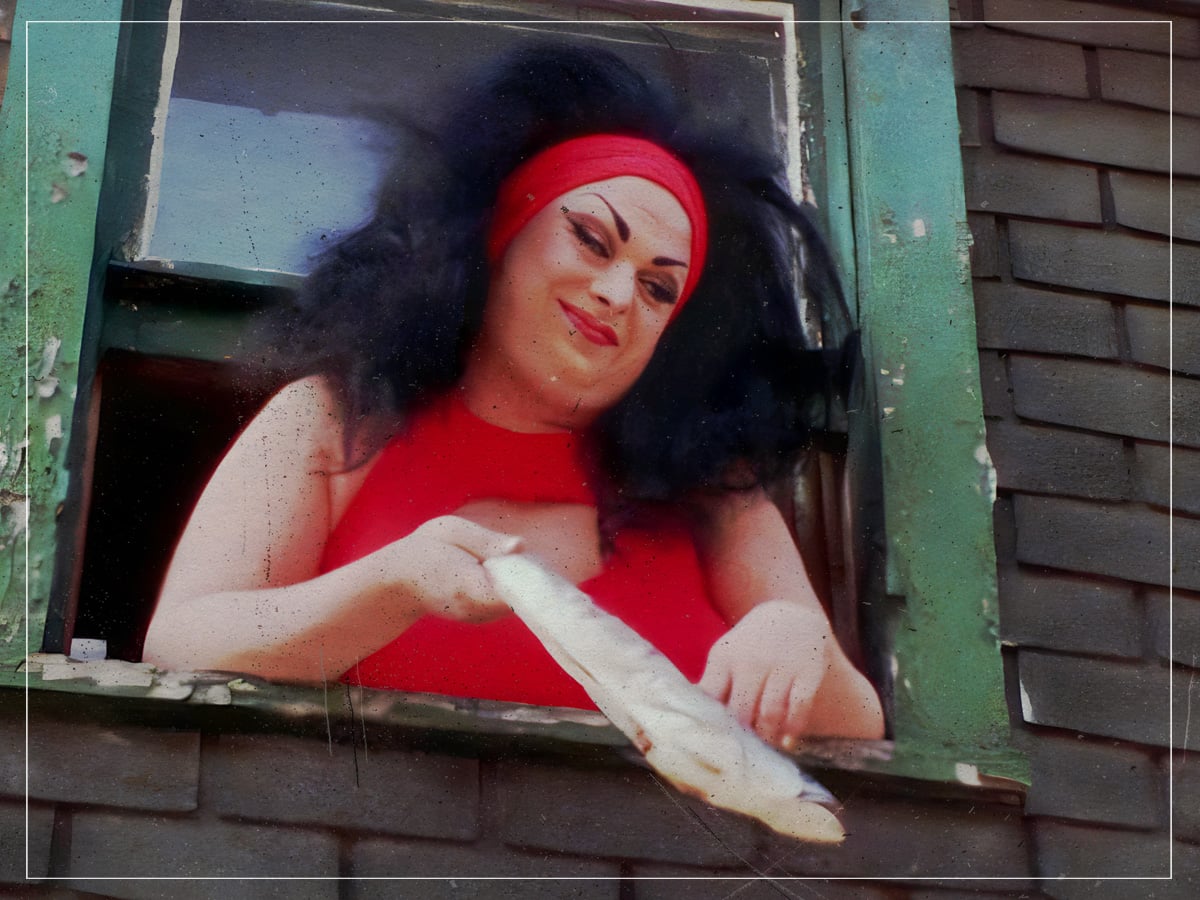
Pecker, which feels like a love letter to the city, celebrates these unique people, with Edward Furlong’s titular character photographing local Baltimorians as a hobby, only for snobby New York art people to take an interest in his working-class subjects. You can certainly see the parallels between Pecker and Waters. It’s one of his lightest films – there might be rats having sex and teabagging jokes, but really, it’s a movie dedicated to art and to Baltimore above anything else.
With every film, Waters casts a loving eye to the city that raised him, even if he was initially trying to scare the local hippies and conservatives with his grotesque films. He wanted to shock suburbia, but he could never betray Baltimore, it had done too much for him. It was in Baltimore that he met his best friends, like Mink Stole and Divine, and where he observed the strange and perverse world that flicked a switch in his brain.
Moreover, Baltimore’s own The Buddy Deane Show was the inspiration for Hairspray, a dance show that a young Waters would watch religiously, just like Tracy Turnblad. Taken off the air following a dispute over having African American dancers appear on the show, Waters was directly inspired by the local event when he penned his own film.
Similarly, another event from his childhood – the murder of Carolyn Wasilewski, who was part of Baltimore’s ‘drape’ subculture – inspired Cry-Baby, which captured the city’s youth during the height of countercultural rebellion.
Waters came to love every side of Baltimore, even its most strange and bewildering residents, whom he so eloquently details and interviews in his book Role Models. Who knows what a Waters movie would look like if he had grown up somewhere else? Thank God he immersed himself in Baltimore, though, because he has crafted one of the most bizarre yet beautiful careers from it as a result.
