


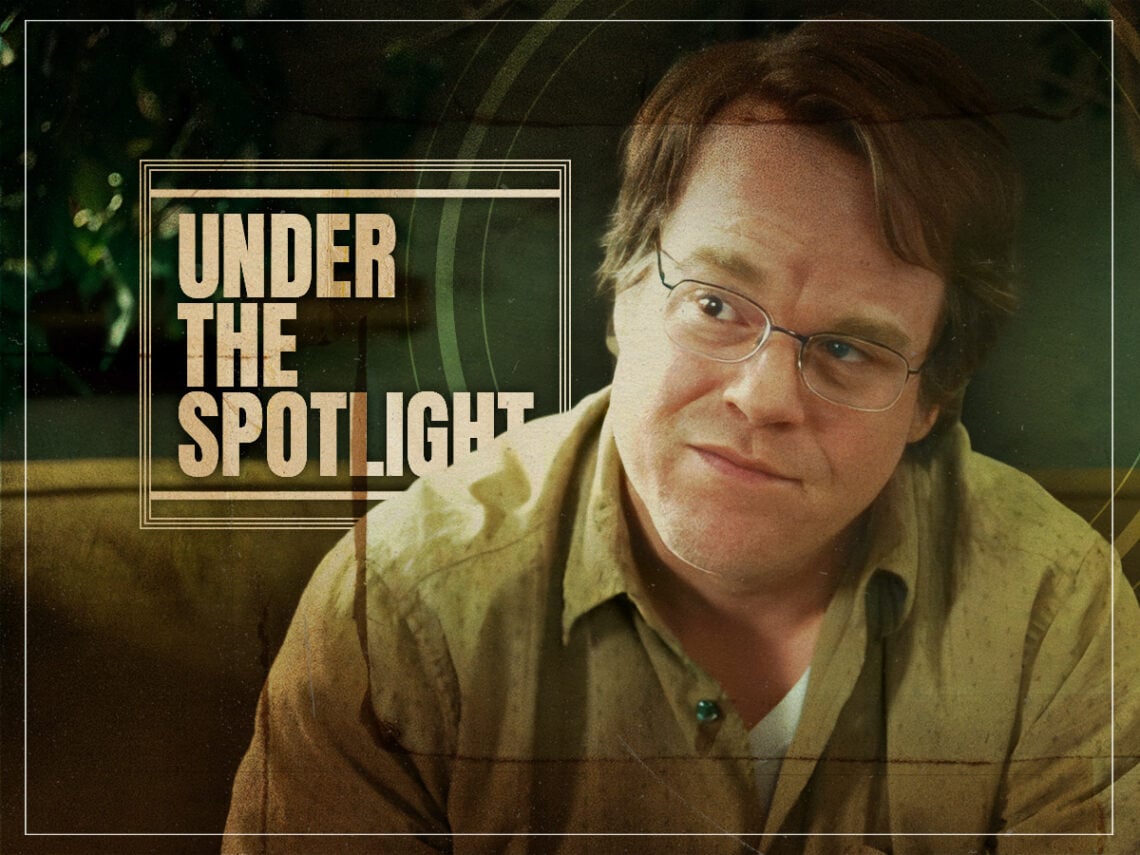
Under the Spotlight: the haunting legacy of Philip Seymour Hoffman in ‘Synecdoche, New York’

Whether within the confines of Hollywood movies or in real life, we all have dreams that haunt us. Some of them feel so far-fetched that they’re almost painful, and others feel obtainable despite not being achieved, which is also weirdly painful. We have outlandish ideas that slowly fizzle into memory, the longing attached to an old desire that now just brings a pang of regret or resentment, a feeling of ‘not enoughness’. The inescapable notion of what could’ve been?
This is a struggle common but not unique to artists: a project you were once so determined to make or a script you said you’d die to see on the screen. But alas, part of adult life is letting go and learning to mould your dreams into real life, making them slowly less fanciful and more obtainable. Because that is the less painful thing to do. However, in the case of Caden Cotard, he does not choose this option; instead, he opts for something else.
Charlie Kaufman’s directorial debut, Synecdoche, New York, follows the life of theatre director Caden, who begins the process of creating a life-size replica of New York for his play — a magnum opus that becomes his lifelong creative project. The film interweaves his personal life with the pursuit of this project until the two become completely entangled and unrecognizable, unable to separate fact from fiction as he writes each and every one of his personal experiences into the script.
However, Caden is never satisfied with his work, constantly workshopping and changing the play so that it perfectly replicates the nuances and drama of everyday life, escalating the production and set design of his play until it consumes and takes over everything, becoming bigger than New York itself. His life is completely swallowed by this project, becoming so paralysed by the idea of failure and obsoletion that he drags out the creation of this work until it is never finished, dying before the play is completed.
The film stars the great Philip Seymour Hoffman in the lead role, someone who is so caged in by his own insecurities that he cannot find the freedom to finish any piece of work. We deeply pity and relate to him in a way that we don’t want to, reminded of our own doubts and limitations that prevent us from reaching our potential. He lives in a sea of ideas that he keeps drowning in but is seemingly unaware that he’s sinking, determined to keep going despite the fact that he is moving backwards by not making the thing.
The final scene of the film shows Caden before he dies, walking around the crumbling warehouse that once reflected his biggest passion and is now a harsh wake-up call to the dreams he never reached. Ultimately, he was too afraid to take a risk and be vulnerable in sharing the ideas that he so deeply cared for with the world. And when compared to Hoffman, both men couldn’t be more different.

Hoffman was making bold choices and taking risks up until his death, always going to places that other actors would be terrified of, putting everything on the line for the perfect performance. He gave each ounce of his soul and being to each character, and even with all the incredible work he did, I can’t help but think of what he might’ve done if he were still alive today. There’s an unintentional mirroring with Hoffman’s own life in Synecdoche, New York; someone who devoted themselves to their craft and seemed to be immortal through the legacy of their work, until it all suddenly ended.
We can never really be aware of our own precariousness within this world; we live out the rhythms and routines of everyday life, thinking that we have endless time to complete every goal and desire, but even the people who seem endless in their passion and talents do not know when their time is ending.
Time is a mystery, and we always think we have more of it than we do. And when faced with one man who knows he’s at the end of his life and hasn’t achieved anything, and one man who doesn’t know he’s nearing the end and has achieved everything, it reminds us how cruel life can be in its humour. We worry about the character on screen, not knowing that the man playing him is also running out of time.
But even when I watch it, and these details now feel so poignant and hard to ignore, it’s soothing to think about art’s comfort despite the innate struggle and challenge to push it off the ground. Even when dealing with our suffering, the pursuit to bring others joy is what makes it feel worth it. And when I watch Philip Seymour Hoffman in that final scene, I think of a man with his depths and mysteries who is simply doing his best to deal with his pains, someone who seemed to brim over with life and intensity in the work that he did, but coincidentally mirroring his impermanence in the world as he tries to make other’s happy through one great performance.
