


The meaning behind Charlie Kaufman’s ‘Synecdoche, New York’

For those seeking an exploratory voyage into the labyrinth of the human psyche, Charlie Kaufman‘s Synecdoche, New York offers a profound and often puzzling journey. Much like the mind-bending voyage of Andrei Tarkovsky’s Stalker or Stanley Kubrick’s 2001, Kaufman’s film confronts us with a dense matrix of symbolic cues and coded questions, all culminating in an ending that has left many viewers pondering its layered meaning. Let’s unpack this complex conclusion and decode the metaphysical messages concealed within.
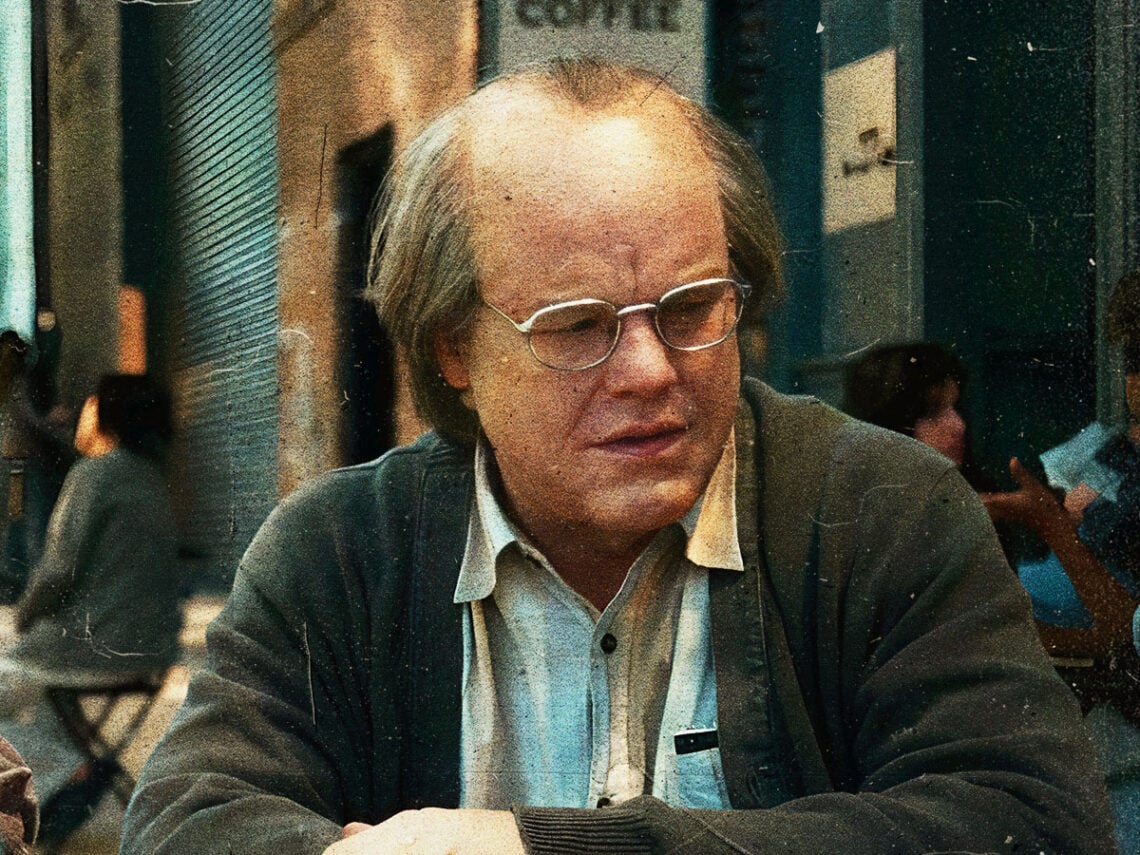
Set in the eponymous city, the film tracks the life of Caden Cotard (played wonderfully, as always, by the late Philip Seymour Hoffman), a theatre director grappling with his mortality while striving to create an honest work of art. As his life unravels, the lines between his magnum opus, a large-scale theatre production within a life-sized replica of New York, and his own existence begin to blur. This narrative device, called “synecdoche”, where a part represents the whole, encapsulates the complexity of the film’s existential theme.
As the film progresses, Caden’s obsession with creating a ‘real’ representation of life leads him to a meticulous and constant revision of his work. His fixation on an unattainable perfection, on capturing every possible detail of life in his art, becomes a metaphor for the inherent impossibility of fully grasping and controlling the course of one’s life.
Towards the end of the film, Caden’s endless creation takes over an enormous warehouse, with numerous people living out their lives as part of his grand production. Yet Caden, now old and frail, having wondered in isolation among the catacombs of his urban creation, feels he has failed. He has not been able to fully capture the essence of life within his art, symbolising the inevitable dissatisfaction and sense of unfulfillment that come with seeking absolute control and perfection.
Caden appoints a new actor to play himself, relinquishing his directorial control and becoming a part of his own production. This act can be interpreted as Caden finally accepting the inevitability of life’s unpredictability and the impossibility of total control. It signals an acceptance of his mortality, a theme that has been haunting him throughout the film. As he navigates the vast set of his own creation, following instructions through an earpiece from the actor playing him, he comes to the chilling realisation that everyone else in the play is dead. He’s the last man standing, alone amidst the ruins of his grand vision, a powerful depiction of the ultimate solitude that accompanies the end of one’s life.
The final words Caden hears are “die”, after which the lights fade to darkness, symbolising his acceptance of death. This culminates Kaufman’s introspective odyssey into the human condition, our obsessive desire for control, and the inevitability of mortality. Kaufman leaves us with the haunting imagery of Caden’s vast, deserted playhouse, a poignant reminder of our own ephemeral existence within the grand stage of life.
Ultimately, Synecdoche, New York is a mesmerising exploration of life’s transitory nature. Its enigmatic ending provokes contemplation of the dichotomy between our desire for control and the inevitability of life’s unpredictable trajectory. Kaufman suggests that only through acceptance can we truly grasp the essence of our existence. Acceptance of what? In the grand scheme of things, we’re simply characters of the cosmic narrative. After all, as William Shakespeare once put it: “All the world’s a stage, and all the men and women merely players.”
